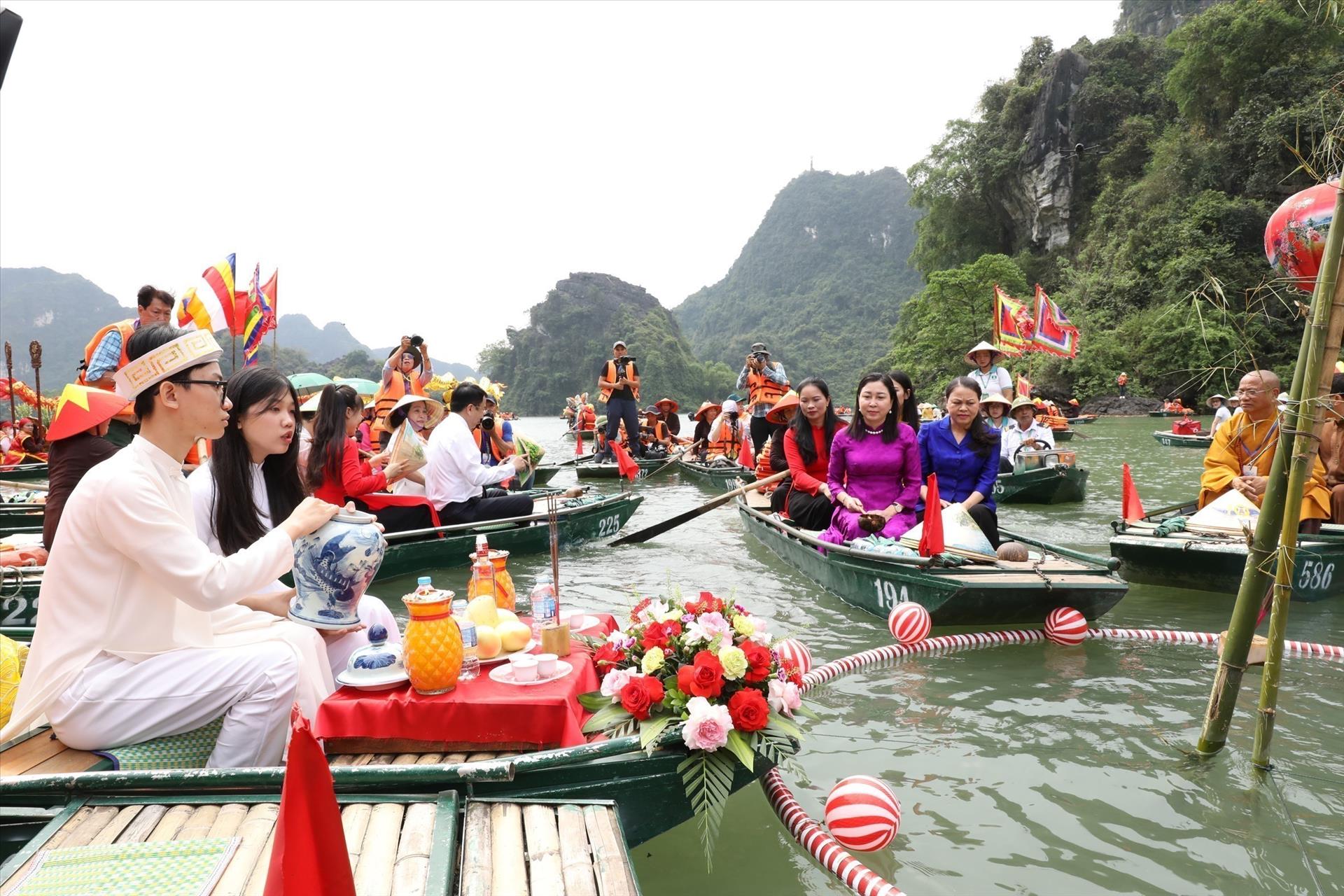
The unique water procession ritual at the Trang An Festival 2026. Photo: VNA
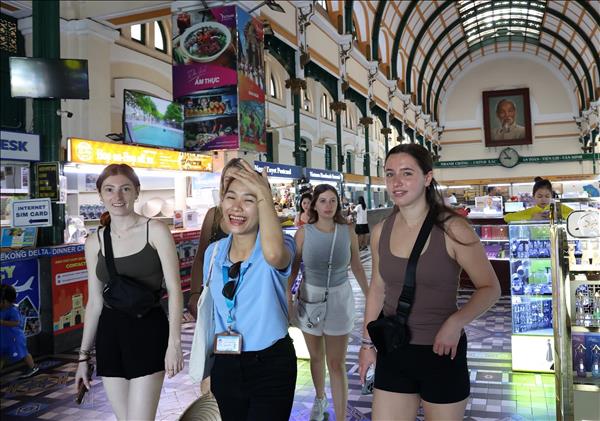
According to the Hanoi Department of Tourism, the capital received an estimated 1.35 million visitors during the holidays, including more than 248,000 international arrivals (around 175,000 with overnight stays) and over 1.1 million domestic travellers. Total tourism revenue was estimated at over 5 trillion VND (189.7 million USD).
A notable highlight was the implementation of visitor support policies aimed at enhancing the travel experience. The city offered free bus and urban railway services throughout the seven-day holidays, covering 128 bus routes and two metro lines, helping ease traffic congestion and facilitate sightseeing.
In addition, the Hanoi Department of Tourism, in coordination with the Ho Chi Minh Mausoleum Command, continued its programme to provide free drinking water, milk, and bread to visitors paying tribute at the Ho Chi Minh Mausoleum. A total of 45,000 complimentary packages were distributed, contributing to the image of a friendly and hospitable capital.
Accommodation services also recorded positive signals, with the average occupancy rate of hotels and serviced apartments reaching about 71.4%, higher than the same period last year. Many high-end accommodations were nearly fully booked on peak days.
At tourist attractions, a wide range of cultural and artistic events were organised, attracting large numbers of visitors. Key destinations such as the Temple of Literature, the Thang Long Imperial Citadel, Hoan Kiem Lake area, One Pillar Pagoda, Thu Le Zoo, and suburban tourism sites in Ba Vi, Soc Son, and Son Tay saw increased visitor numbers, helping distribute tourist flows and reduce pressure on the inner city.
Notably, Thu Le Zoo welcomed around 124,000 visitors; the Temple of Literature received 36,302 visitors; Hoa Lo Prison, 35,900; the Thang Long Imperial Citadel, 23,314; Ba Vi commune, about 40,000 visitors; Ba Vi National Park, 34,507; and Huong Pagoda, 34,820.
Security, safety, and environmental sanitation were strengthened. Inspections at key tourist sites found no violations requiring penalties, and issues such as touting and street vending were largely kept under control.
With synchronised efforts to improve service quality, diversify tourism products, and emphasise human-centered experiences, Hanoi continues to affirm its image as a “Safe – Friendly – Quality – Attractive” destination for both domestic and international visitors.
Meanwhile, the central province of Quang Ngai welcomed an estimated 720,000 visitors during the seven-day holidays, up 62% year-on-year, with total revenue reaching 532 billion VND, a 71% increase compared to the same period last year, according to the provincial Department of Culture, Sports and Tourism.
Most visitors were domestic tourists, while international arrivals were estimated at around 8,000, up 65% year-on-year. The total number of overnight stays hit 418,000, with an average room occupancy rate of about 70%. Some key tourism areas such as Ly Son and Mang Den recorded occupancy rates of 90–95%.
Popular destinations included Mang Den (65,000 visitors), Tan Chau Beach (around 42,000), My Khe Beach (42,000), and Sa Huynh (40,000). Ecotourism, community-based tourism, marine and island tourism, as well as cultural and historical sites such as Chu Mom Ray National Park, Kon Trang Long Loi community tourism village, Dak Uy Special-use Forest, Bo Y International Border Gate, and Dak Rang community tourism village attracted nearly 400,000 visitors.
According to Bach Thi Man, Deputy Director of the provincial Department of Culture, Sports and Tourism, during the holidays, local authorities, tourism businesses, and service providers strictly complied with tourism regulations and related laws. They also upgraded facilities, improved service processes, and implemented safety measures and emergency response plans at key tourist sites. A wide range of recreational and experiential activities was organised to serve visitors./.