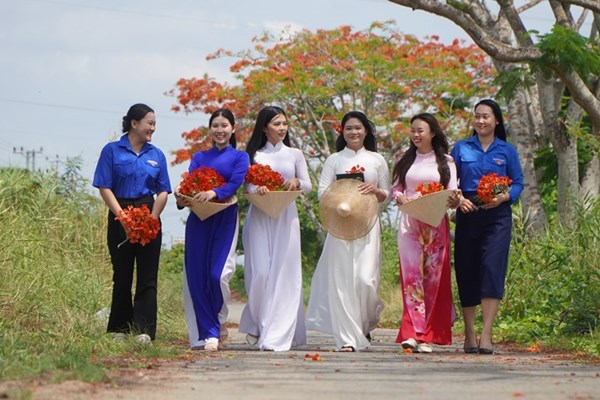
Late March and early April mark the quiet transition from spring to summer in Hue, when the Hue Imperial Citadel takes on a gentle, luminous beauty shaped by the season’s first blossoms.
Within the ancient walls, Ngo Dong flowers—long regarded as the “royal flower” once reserved for imperial grounds—begin to unfurl alongside clusters of plumeria. Their presence evokes a refined elegance, echoing the courtly traditions of the past. Soft petals drift in the warm breeze, settling along moss-covered pathways and timeworn courtyards, where history lingers in every corner.
The blooming season arrives without fanfare, yet transforms the citadel into a tranquil retreat. Golden sunlight filters through old trees, casting shifting patterns across tiled roofs and weathered stone. The faint fragrance of plumeria mingles with the stillness of the air, creating a sensory experience both delicate and immersive.
For visitors, this fleeting moment offers more than a visual spectacle. It is a quiet dialogue between nature and heritage, where the rhythms of the seasons mirror the enduring legacy of the former imperial capital. Each blossom, whether of Ngo Dong or plumeria, seems to carry a trace of memory—of a time when these gardens were reserved for royalty, and every detail reflected harmony and grace.
As the days lengthen and summer approaches, the flowers remain a subtle reminder that even within the grandeur of the past, beauty often reveals itself in the most understated ways.
By VNA/VNP