Turning resolutions into action
Resolution 80: Documentary heritage brought to life through public experiences
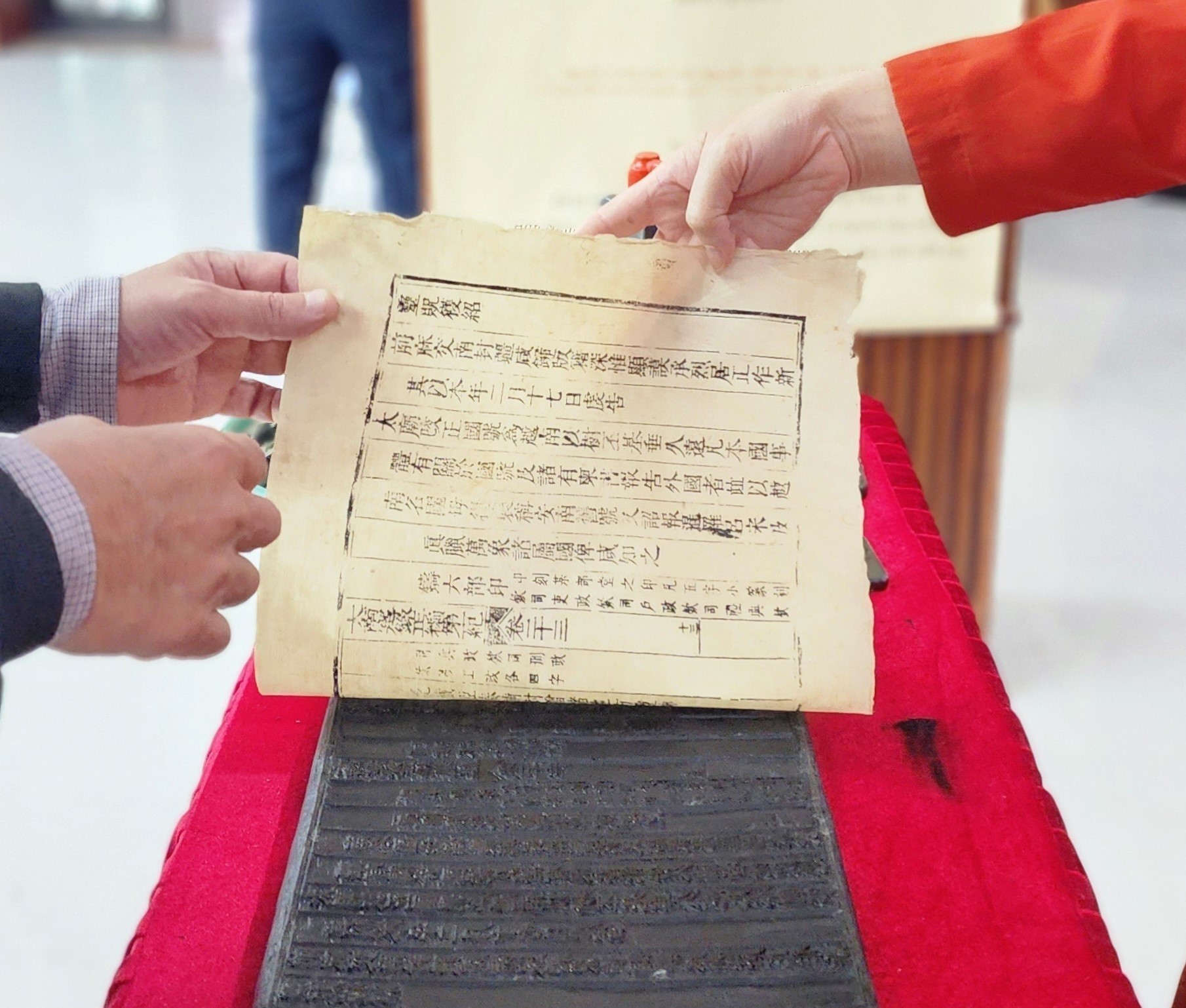
Through hands-on experiences with Nguyen Dynasty imperial records and woodblocks, the exhibition is helping bring archival materials closer to audiences while promoting heritage values in line with the Politburo’s Resolution No. 80-NQ/TW on developing Vietnamese culture.
Spreading documentary heritage values through immersive experiences
According to the State Records and Archives Department under the Ministry of Home Affairs, the exhibition showcasing Vietnam’s world documentary heritage and outstanding national archives welcomed over 2,000 domestic and international visitors, including 35 organised delegations, averaging around 300 guests per day.
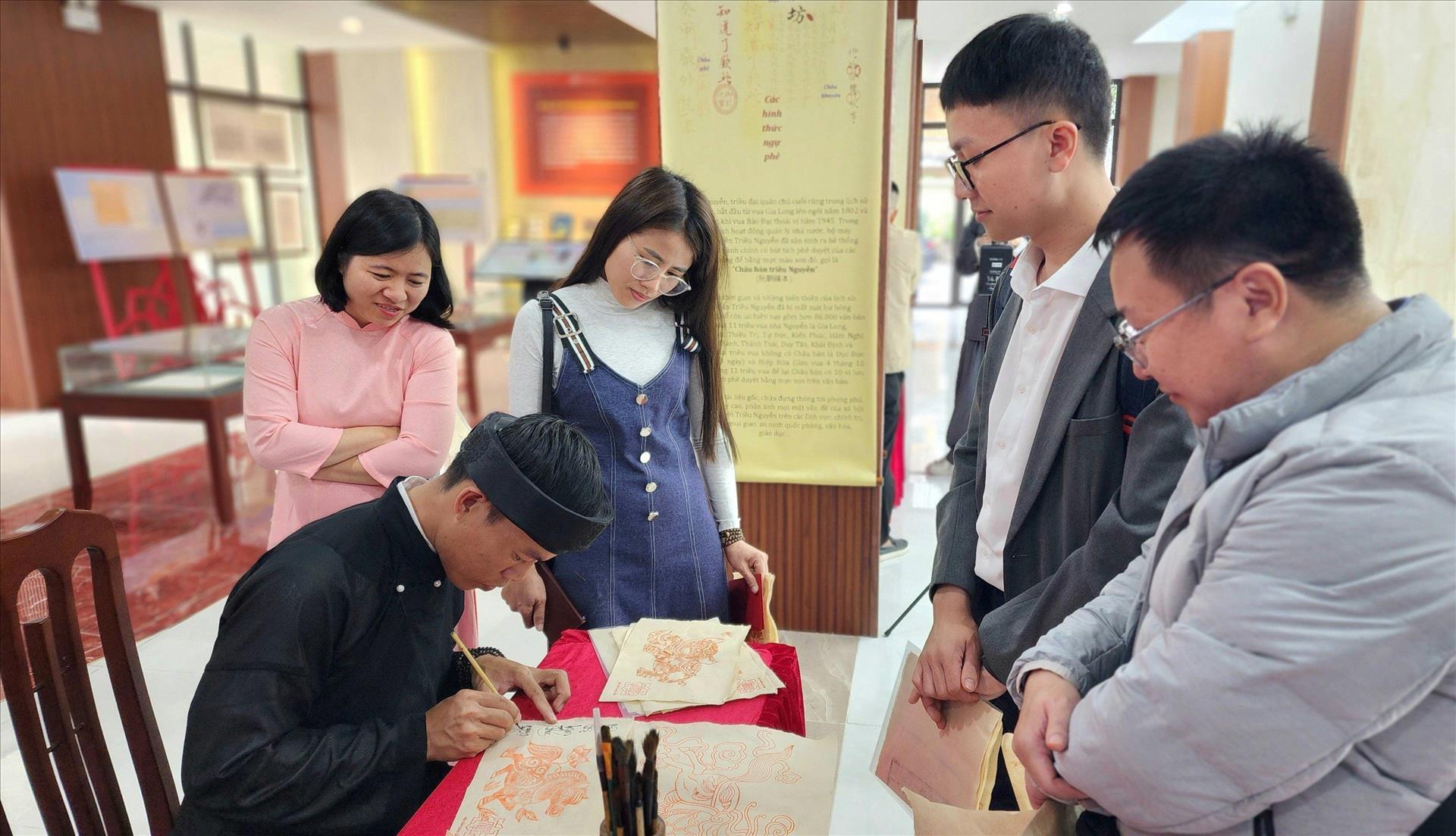
As part of public engagement activities, the event “Admiring Imperial Annotations – Preserving Woodblock Imprints,” held from March 3–8, attracted large crowds. Visitors viewed Nguyen Dynasty imperial documents bearing red-ink annotations and royal seals, while experiencing traditional woodblock printing on do paper and creating souvenir prints.
On its opening day, the exhibition received a 26-member delegation from the Russian Embassy in Vietnam, led by the Ambassador’s spouse Elena Bezdetko and Third Secretary Savin Sergey, along with teachers and students from the embassy’s school. The delegation learned about preservation and digitisation efforts for the Nguyen Dynasty woodblocks and imperial records, implemented in line with UNESCO’s Memory of the World Programme principles.
Guests also viewed documentary films such as “Tet at the Royal Palace” and “The Art of Woodblock Carving,” gaining deeper insight into traditional carving techniques through interactive experiences.
On March 5, a delegation from the French Embassy in Vietnam, headed by Counsellor for Cooperation and Cultural Affairs Eric Soulier, explored imperial annotations and woodblock printing processes and attended the thematic exhibition “Ho Chi Minh: Life and Career through Vietnamese and International Archival Documents.” Soulier praised the interactive format for enabling visitors to “touch history” while expressing strong interest in Vietnam’s heritage preservation methods.
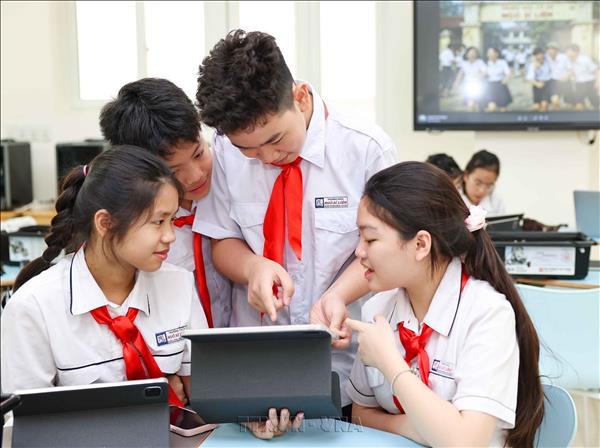
The exhibition has also become a venue for thematic activities by institutions such as the Vietnam Military History Museum and the Vietnam National Authority of Tourism, reflecting growing interest in archival materials for research, education, and cultural promotion. Many Hanoi schools have chosen the space as a learning destination, turning it into a vivid classroom where students explore historical documents, national treasures, and archival materials related to President Ho Chi Minh, thereby deepening historical awareness and cultural pride.
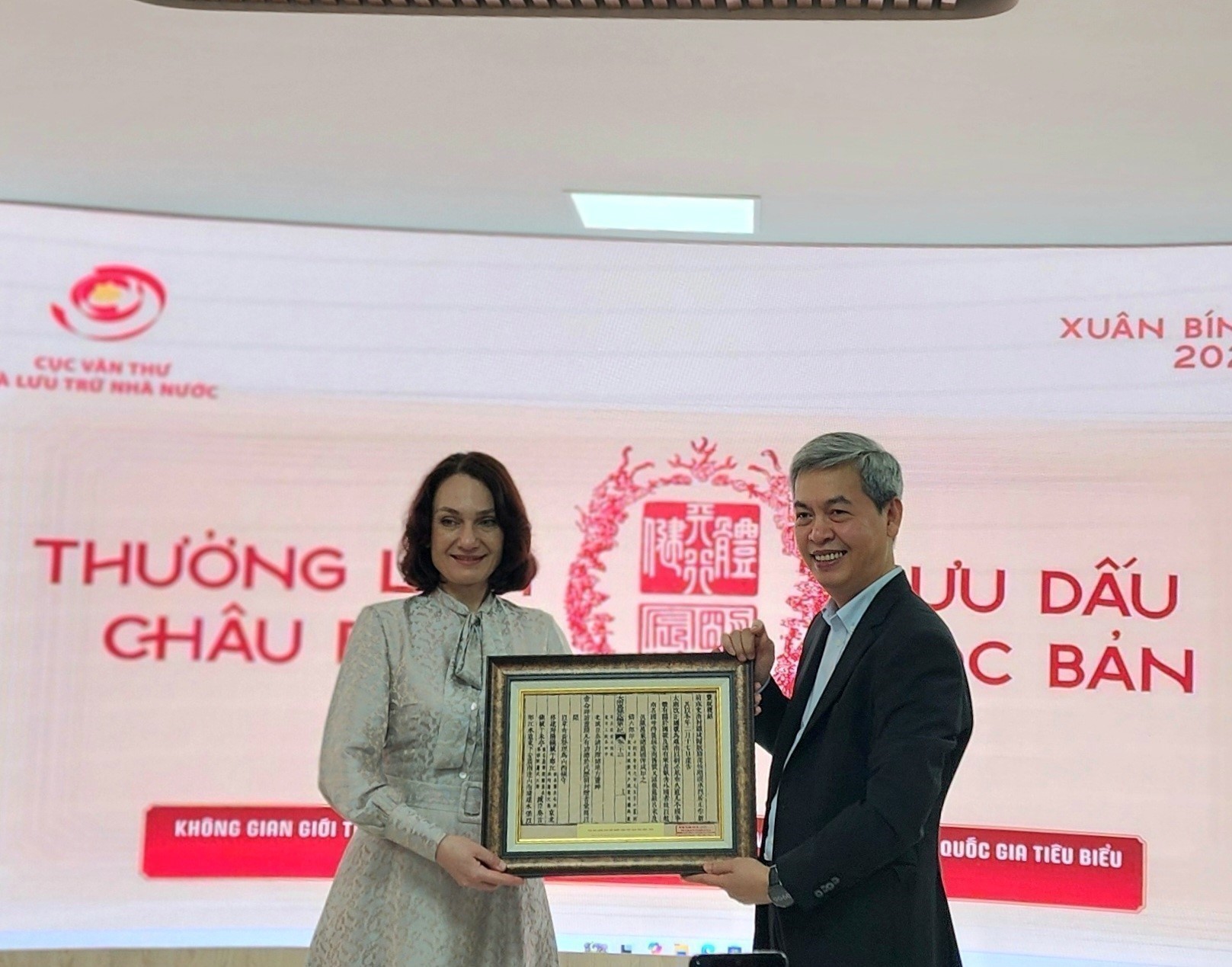
Alongside organised tours, the exhibition continues to attract families and young visitors eager to engage directly with documentary heritage.
Documentary heritage as cultural bridge
Dang Thanh Tung, Director of the State Records and Archives Department, said the programme introduces new approaches to heritage engagement, allowing archival materials once stored in repositories to continue contributing to contemporary cultural life and concretising Resolution 80-NQ/TW on Vietnamese cultural development.
The steady attendance of diplomatic missions, educational institutions, and the public underscores the role of documentary heritage as a cultural bridge connecting history with the present.
Amid digital transformation and new cultural development demands, Tung stressed that the archival sector must adopt a strategic approach linking culture, data governance, and security. Archival institutions should expand from traditional preservation to managing strategic national data, ensuring the safety and integrity of original sources.
When effectively utilised, archival materials not only preserve historical memory but also serve as valuable knowledge resources supporting governance, education, cultural development, and creative industries.
“Only when integrated into the national strategy for cultural development and digital transformation, can archival work become a soft pillar of the national knowledge infrastructure, strengthening governance capacity and enhancing Vietnam’s soft power in the new era,” Tung affirmed./.