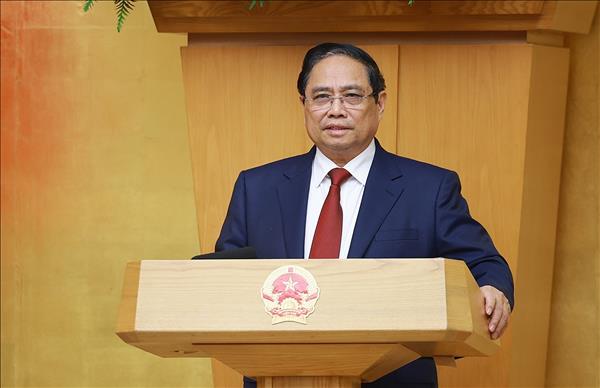

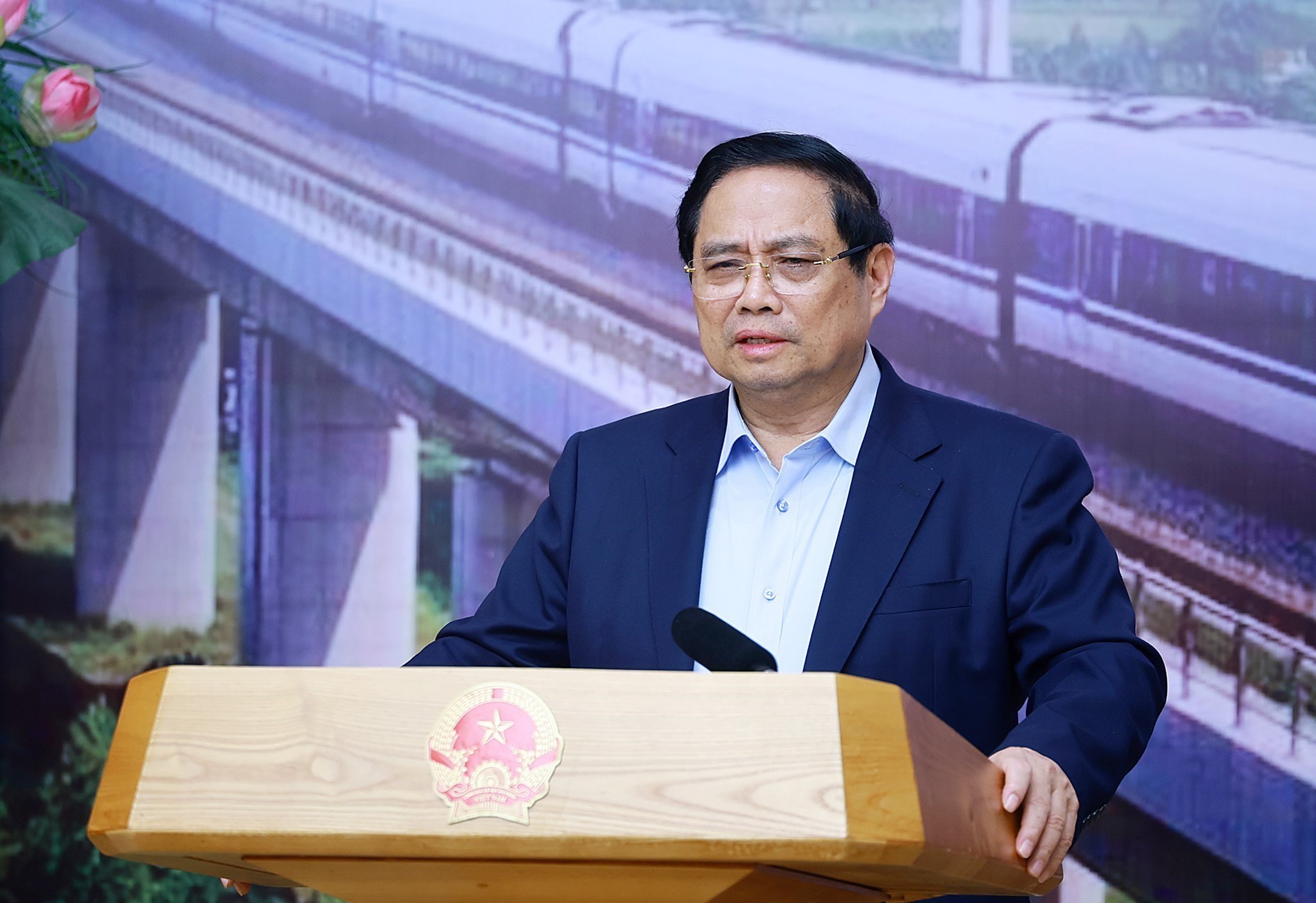
Prime Minister Pham Minh Chinh has called for a thorough review and optimisation of investment efficiency in railway and urban railway projects right from their inception, urging a fundamental change in mindset from being a contractor for foreign partners to assuming full ownership in building a self-reliant, self-strengthening and autonomous railway industry.
PM Chinh made the appeal while chairing the seventh session of the Steering Committee on key national railway projects in Hanoi on March 3, which combined in-person attendance with virtual links to cities and provinces involved in ongoing railway developments.
Master plan for railway development with 100-year vision
The PM commended the Ministry of Construction (MoC), other ministries, agencies, and localities, particularly standing units, investors, consultants, and contractors, for their strong sense of responsibility and resolute commitment. Many had worked through weekends and public holidays to accelerate key projects, delivering encouraging initial results with numerous tasks completed on schedule.
He directed authorities to rally all stakeholders and enterprises to join actively, while continuing to refine railway planning in line with a new development space and a far-sighted, century-long vision. Funding must be diversified across state budget allocations, private investment, foreign loans and community contributions for land clearance. From the outset, investment efficiency in both national railway and urban rail lines must be rigorously evaluated and optimised.
Governing agencies, project management units, consultants, contractors, and especially Steering Committee members were urged to redouble efforts, heighten accountability, and carry out assigned tasks in accordance with legal procedures and proper authority. All projects must ensure progress and quality while preventing corruption, misconduct, and any form of wastefulness.
The Government leader stressed that the selection of investors and contractors must strictly comply with the law to guarantee project efficiency and safeguard public assets. He also ordered an urgent review, update, and revision of the regulatory and technical standards for railways, particularly urban rail, to achieve synchronisation, interoperability, and greater overall system efficiency while facilitating broader stakeholder involvement.
Clearing barriers, accelerating project progress
Looking ahead, he instructed ministries, agencies, localities, and relevant units to press forward with swift and effective action, using tangible results as the sole measure of success in meeting assigned targets.
On the North - South high-speed railway project, he directed the completion of bidding documents for consultancy services to prepare the feasibility study by March 2026. Agencies are to study and select appropriate technologies that best serve national interest, and finalise the selection of consultants in the second quarter of 2026.
The 15 cities and provinces along the route, together with Vietnam Electricity (EVN), were required to work closely with the MoC to urgently finalise and accurately report capital needs for 2026, enabling the ministry to allocate funding plans within March.
For the Lao Cai – Hanoi - Hai Phong railway line, a flagship Vietnam–China cooperation project linking to China and onward to Europe, ministries, agencies, and localities must treat it as a central political task and devote maximum resources to rollout in line with agreements reached by leaders of the two countries.
The six cities and provinces along the route were tasked with promptly completing agreements with investors on level crossings, water supply and drainage solutions, technical infrastructure restoration, material sourcing sites and disposal areas, and architectural designs for stations and bridges. Once boundary markers for land clearance are in place, local authorities must mobilise the entire political system to immediately offer compensation, support, and resettlement, aiming to hand over cleared sites on schedule with adequate funding secured.
EVN is to finalise procedures on power supply agreements for the project by March and promptly deploy sub-projects to relocate electrical infrastructure in sync with the overall site clearance timeline.
Hanoi and Ho Chi Minh City must direct investors and management boards to ramp up site clearance and construction works. Ongoing works must strictly uphold timelines, quality standards, worker safety and environmental hygiene.
For projects slated for preparation and groundbreaking during 2026–2030, the two cities must report to the PM and the MoC on implementation plans for those scheduled to start in 2026 and beyond, expedite all legal procedures and assign clear responsibilities.
Dong Nai province was assigned to coordinate with ministries and Ho Chi Minh City to embark on a railway line connecting Ho Chi Minh City with Long Thanh International Airport under an emergency investment mechanism./.