
Making news
Party leader attends groundbreaking ceremony for Hanoi Medical University elderly health care complex

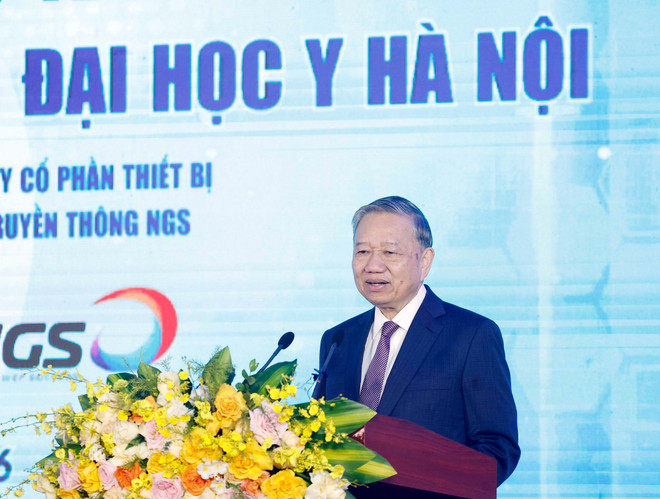
Party General Secretary To Lam on January 17 attended the groundbreaking ceremony for the Hanoi Medical University Elderly Health Care - Medical Complex in Hanoi, as part of activities celebrating the 14th National Party Congress.
The project, developed by a consortium comprising the Hanoi Medical University Hospital (authorised by the Hanoi Medical University), the Hanoi Housing Development and Investment Corporation (HANDICO), and NGS Equipment and Communications JSC, is located at the Hoang Mai campus of the hospital in Hanoi.
Addressing the ceremony, General Secretary Lam underscored the significance of the project, not only for Hanoi but also for the national strategy on protecting, caring for and improving public health, particularly for older persons, as the country enters a phase of rapid population ageing.
The leader reaffirmed the Party’s consistent view that humans are both the goal and the driving force of development, stressing that health care remains a central and consistent political task. For the elderly, health care is not merely a medical issue but a profound humanitarian responsibility, reflecting the care of the Party, State, society and families for those who have devoted their lives to the nation, the community and their own families, he stated. Against the backdrop of rising life expectancy and changing family and social structures, the General Secretary noted that without new approaches, the healthcare and social security systems will face mounting pressure. The Party and State have therefore issued a series of important policies and resolutions to proactively respond to population ageing, identifying health care as a key pillar of sustainable development.
He said the project directly translates major Party and State policies on science and technology development, private sector growth, and public health improvement into action, while demonstrating Hanoi’s determination to apply special mechanisms and policies to implement large-scale projects with long-term spillover effects.
He commended the close coordination among the State, academic institutions, scientists and enterprises, saying it aligns with the Party’s policy of mobilising all social resources for development, with the private sector serving as a key economic driver.
To ensure effective implementation, he called for joint efforts from Hanoi authorities, the Hanoi Medical University and participating health care institutions, and investors in the project. He expressed confidence that with collective determination, the project would be implemented successfully and become a symbol of academic, humane and modern health care in the new era.
The Hanoi Medical University Elderly Health Care - Medical Complex is designed as a multi-functional integrated hub combining high-quality medical services, education and clinical training, scientific research, technology transfer and comprehensive elderly care, forming a synchronised healthcare–education–research ecosystem.
A key feature is its development as a smart, green hospital, applying advanced technologies and artificial intelligence in diagnosis, treatment and governance, while serving as a technological nucleus for Hanoi’s healthcare digital transformation. It will also deploy advanced medical technologies, including organ transplantation, robotic surgery, minimally invasive interventions, stem cell therapy, gene therapy, radiotherapy, 3D printing and high-tech medical imaging.
The project has a total estimated investment of 16.09 trillion VND (612.48 million USD), with phase one scheduled for completion in 2028 and full completion targeted for 2030.
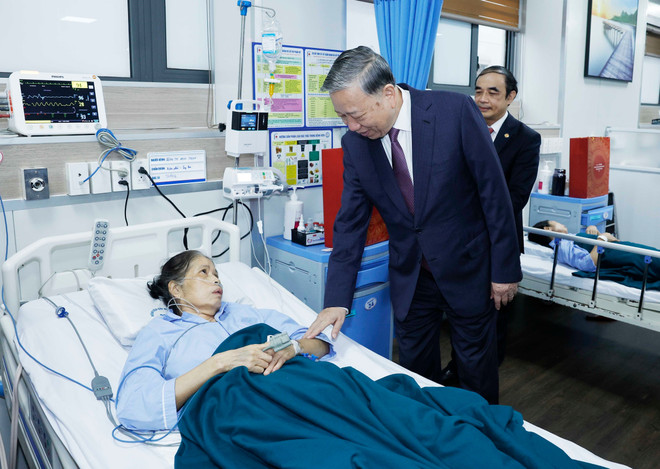
Its core component, Zone 1, covers around 15 hectares, including approximately 12.9 hectares for construction, featuring a hospital complex of about 2,600 beds. At its centre is a 1,000-bed general hospital serving as a hub linking specialised centres in oncology, surgery and transplantation, geriatrics, endocrinology, dentistry and an international medical centre. The zone also includes the Hanoi Medical University’s training, research and technology transfer facilities, serving about 10,000 students.
Following completion of the new hospital cluster in 2028 and patient transfer from existing facilities, the project will continue with the construction of specialised surgical and oncology centres, research institutes, dormitories and lecture halls, with full completion by 2030.
Zone 2, covering about 0.7 hectares, comprises a six-storey podium and two 35-storey towers with three basement levels, providing around 1,100 apartments designed specifically for older persons under advanced international models. Housing options range from independent living to assisted and full 24/7 care, integrated with nutrition and rehabilitation services. The residential area is closely linked to the university hospital’s specialised medical system, ensuring continuous, safe and professional health care, and is expected to be completed in 2028./.