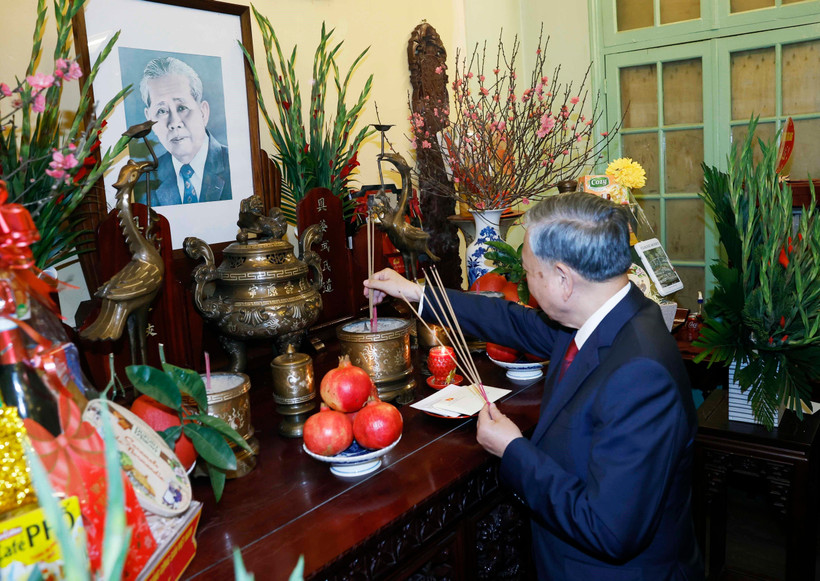
Party General Secretary To Lam on February 10 paid tribute and expressed profound gratitude to late Party General Secretaries Truong Chinh, Le Duan, Do Muoi, Le Kha Phieu and Nguyen Phu Trong, and General Vo Nguyen Giap on the occasion of the 96th founding anniversary of the Communist Party of Vietnam (February 3, 1930 – 2026) and in the lead-up to the Lunar New Year (Tet) Festival.
In the warm atmosphere ahead of Tet, General Secretary To Lam warmly inquired about the lives and work of the families of the late Party General Secretaries, expressing his hope that they will continue to uphold fine traditions, strive for further achievements in their work, and actively contribute to national development.
General Secretary Truong Chinh (1907-1988) was an outstanding and close disciple of President Ho Chi Minh, a steadfast and exemplary communist, a great personality and an eminent leader of the Vietnamese Party and revolution. With 81 years of life and more than 60 years devoted to revolutionary activities, he was entrusted by the Party and State with many key Party and State positions. As Party General Secretary, he was among those who initiated the Doi Moi (renewal) process, with the 6th National Party Congress marking a historic turning point in Vietnam’s revolutionary cause.
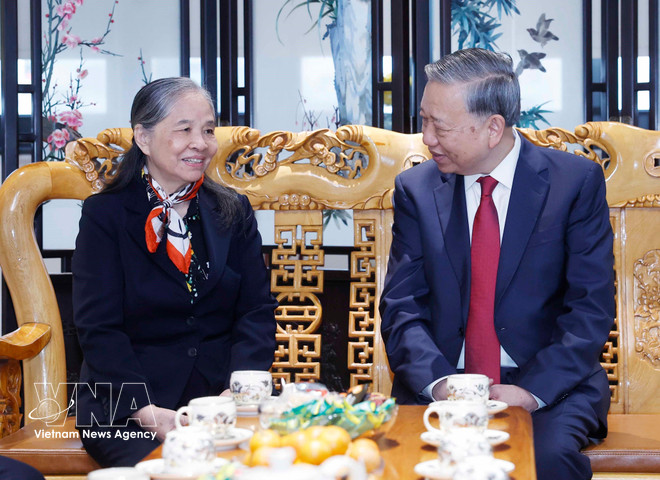
General Secretary Do Muoi was a steadfast communist who devoted his entire life to the cause of national independence, socialism and the happiness of the people. Tempered through resistance wars and national construction and defence, he demonstrated firm political resolve, decisiveness and dedication, contributing many important ideas to major national issues.
General Secretary Le Kha Phieu was a devoted and responsible leader with deep commitment to the Party, the State, the people and the army. Forged through arduous combat and national construction, he consistently upheld the noble qualities of a communist soldier and made frank and constructive contributions to the Party, State and armed forces.
General Secretary Nguyen Phu Trong was an exceptionally outstanding leader, a shining example of studying and following President Ho Chi Minh’s thought, morality and style, and a highly respected communist leader. With profound intellect, he left valuable theoretical legacies on Vietnam’s revolutionary path in the new era, with particular emphasis on Party building, rectification and the resolute fight against corruption and moral degradation.
General Vo Nguyen Giap was a legendary general, a military genius and an outstanding disciple of President Ho Chi Minh. With more than 80 years of revolutionary activity, he made extraordinary contributions to the Party’s and nation’s revolutionary cause. Over three decades as Commander-in-Chief of the Vietnam People’s Army and Secretary of the Central Military Commission, he exemplified creativity in military strategy and the spirit of decisive victory, leading the armed forces to historic triumphs./.