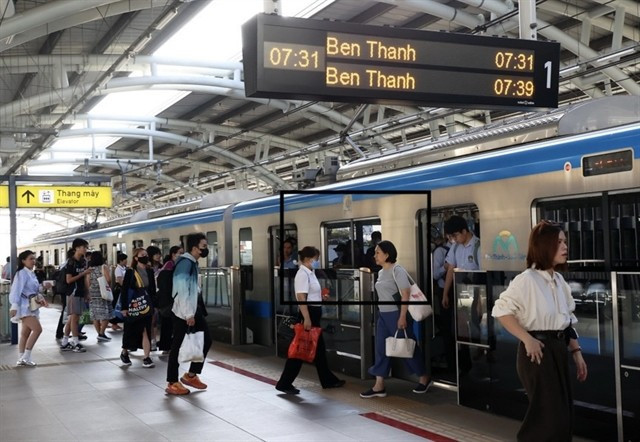
Nearly 19 million passenger trips were recorded on Metro Line No 1 linking Ben Thanh and Suoi Tien in its first year of operation, a figure that has brought joy and a significant boost to public transport in Vietnam’s most populous city.
The number highlights growing public acceptance of mass transit, while also underlining the need for a more comprehensive transport network.
Buses alone cannot fully meet travel demand, and Metro Line No 1 by itself is not sufficient. A system that connects public transport on surface roads, elevated routes, waterways and underground lines is seen as essential to help residents choose mobility options that do not rely on private vehicles.
The success of the metro has also led to encouraging changes around stations. Motorbike parking areas near stations along Line No 1 have had to expand beyond their original capacity, yet they remain frequently full, reflecting strong demand.
Dozens of electric bus routes now connect with metro stations, while several existing bus routes have also seen higher passenger numbers thanks to the metro’s operation.
Positive impacts have been observed on the road network as well. In 2025, congestion along Vo Nguyen Giap street, a major and often busy gateway into the city centre, eased noticeably.
Throughout 12 months of operation, metro services have run consistently on weekdays and holidays, during daytime and evening hours, with three-car trains typically crowded. During peak periods such as major events, National Day and both the Lunar and Gregorian New Year holidays, all 17 trainsets were put into service to meet increased demand.
Passenger convenience has improved through the application of technology. Manual ticketing has been replaced by app-based operations, allowing passengers to tap, scan or swipe. Integrated electronic tickets for both buses and the metro have also been introduced, enabling travel using smartphones.
Meanwhile, Metro Line No 2 and the urban railway linking Ben Thanh with Can Gio have already broken ground, raising expectations for faster and more convenient travel across the city. With advantages such as low noise, no emissions, protection from weather and high safety standards, metro services are steadily gaining public trust.
From the first year’s success of Metro Line No 1, it is widely expected that future urban rail lines will also be welcomed and well used. Many hope that metro projects currently under development will be completed soon to build on and connect with the achievements of the city’s first metro line./.