

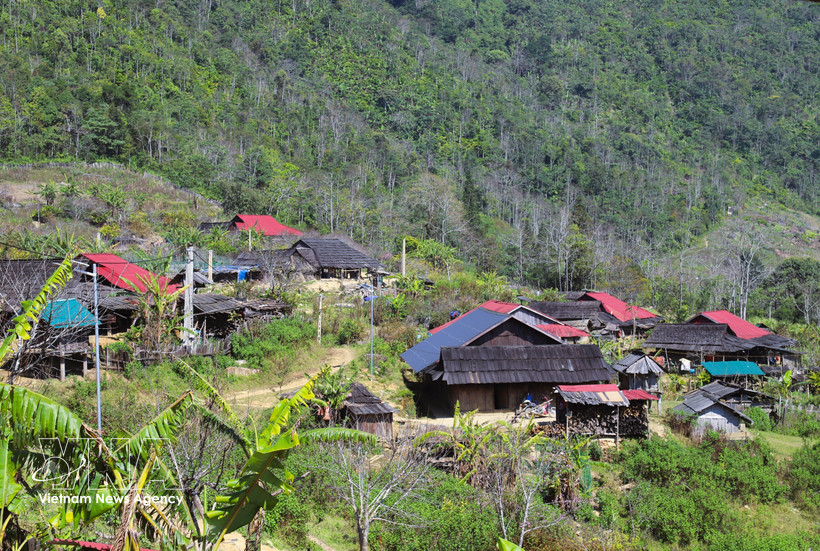
Nestled in the remote border area of Nghe An province, Huoi Man hamlet is often affectionately referred to by local residents and visitors as the “hamlet at the top of the sky.”
Perched at nearly 1,700 metres above sea level, it is one of 21 hamlets in Nhon Mai commune, home to 21 households with 128 residents of the Mong ethnic minority group that have preserved their way of life for nearly eight decades.
Huoi Man stands out not only for its dramatic mountain scenery but also as a “living museum” of indigenous culture. Traditional customs, daily practices, and a resilient work ethic remain deeply rooted in the community’s lifestyle.
The most distinctive feature of the hamlet is its unique “turtle-shell” architecture. Homes are built low and wide, with sturdy wooden walls and roofs crafted from samu (Cunninghamia lanceolata) and pomu (Fokienia hodginsii) timber. Carefully cut and hand-laid, the wooden planks form curved roofs resembling giant turtle shells. Over time, moss blends with the dark wood, giving the houses an ancient, tranquil character. From a distance, the hamlet appears as a cluster of dusky domes emerging from lush green mountains.
According to the head of the hamlet, Gia Ba Lay, the architectural style reflects both aesthetic value and human adaptation to harsh highland conditions. The wooden roofs help keep homes warm in winter and cool in summer, while resisting moisture, frost, and strong winds.
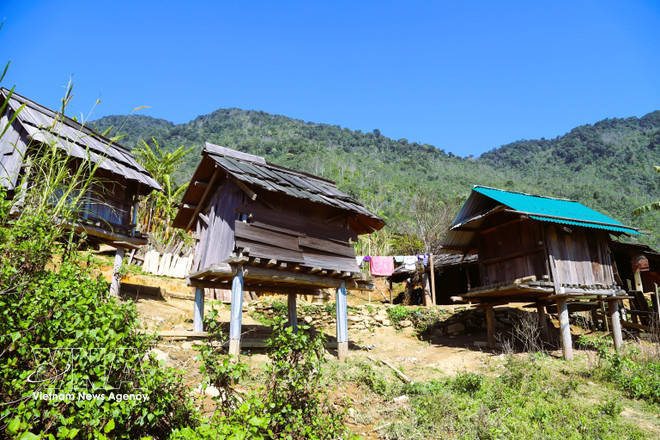
Beyond its architecture, Huoi Man preserves a rich repository of intangible cultural heritage. From intricately embroidered traditional costumes and the sound of the ‘khen’ (panpipe) in festivals, to blacksmithing, terrace farming, and food preservation practices, every aspect of life reflects ingenuity and cultural identity. Unique features such as elevated granaries and small hillside fish ponds further illustrate how the community harmonises with nature.
Despite gradual modernisation, including access to electricity and improved infrastructure, Huoi Man continues to safeguard its cultural essence. The hamlet offers a rare sense of tranquility, inviting visitors to experience the rhythm of mountain life and the enduring spirit of the Mong people in the border mountainous area./.