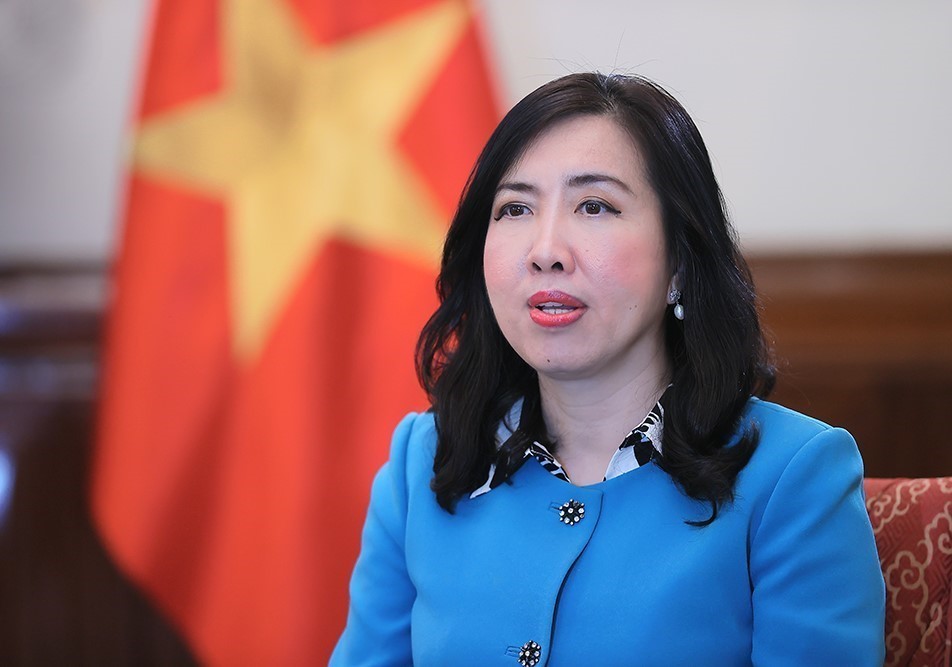
The Xuan Que Huong (Homeland Spring) 2026 programme is not only a traditional Lunar New Year gathering but also a major people-to-people diplomacy activity in overseas Vietnamese (OV) affairs, helping realise Party and State policies on national unity and mobilise resources of the expatriates for development, Deputy Minister of Foreign Affairs Le Thi Thu Hang has said.
Held under the theme “Vietnam’s Aspiration: Peace and Prosperity,” the event runs from February 6–9 in Hanoi capital and Ninh Bình province, featuring a range of activities rich in national cultural identity.
The programme enables OVs to meet Party and State leaders, update themselves on national development orientations and share ideas and proposals in science and technology, innovation, investment, education and promoting Vietnam’s image abroad. It also serves as a platform connecting the diaspora with ministries, sectors and localities to advance cooperation, knowledge transfer and international linkages, Hang told the Vietnam News Agency.
She voiced her hope the event will continue to nurture the spirit of remembering one’s roots, strengthen ties of nearly 6.5 million OVs with the homeland, and encourage contributions toward building a strong, prosperous and happy Vietnam in the new development era.
According to the deputy minister, the OV community remains an important national resource. More than 650,000 expatriate intellectuals, along with professional associations and innovation networks, including 10 overseas innovation networks with around 2,000 experts and over 30 professional organisations, have contributed ideas in strategic fields such as artificial intelligence, semiconductors, nuclear energy and quantum physics.
In line with the 14th National Party Congress, science, technology, innovation and digital transformation are key drivers of Vietnam’s breakthrough development. Hang said OVs are expected to continue contributing across multiple areas.
She noted expatriates play a crucial role in technology transfer, as many work at major technology corporations and leading research institutes worldwide and can help Vietnam narrow technological gaps and move toward mastering core technologies.
They can also act as policy advisers shaping legal frameworks, digital governance models and innovation strategies, while supporting the domestic startup ecosystem through venture capital, modern management practices and global market connections.
Overseas professors and scientists further serve as bridges in science diplomacy and high-quality human resource training through cooperation with universities and research institutes, while helping attract multinational corporations to establish R&D centres in Vietnam and position the country as a regional innovation hub.
With strategic orientations set by the 14th National Party Congress, OVs have opportunities not only to support but also directly participate in national development amid global transformation.
During the Lunar New Year season, when expatriates return home for the programme, Hang expressed appreciation for their deep affection and lasting attachment to the homeland.
As Vietnam enters a new development phase, she stressed, the diaspora’s role is vital not only through knowledge, finance and management experience but also in connecting Vietnam with the world and promoting the image of a dynamic, responsible and trustworthy nation.
She called on the OVs to continue fostering patriotism and solidarity, contribute ideas and technology, invest and engage in social activities, and accompany the country’s development, affirming that the Party, State and Government will continue creating favourable conditions for them to stay connected and contribute./.