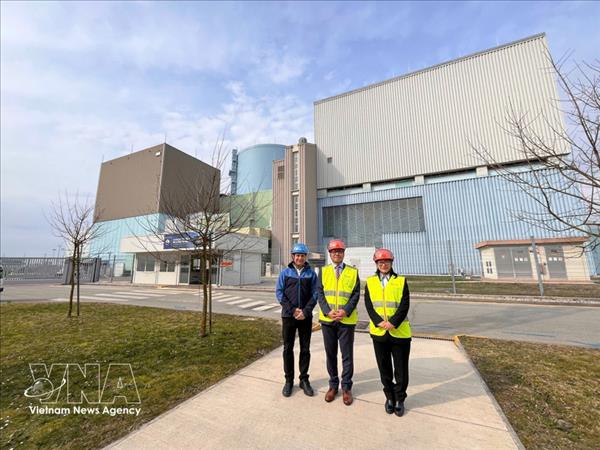


Training high-quality human resources should be regarded as the “starting point” for technological self-reliance, according to members of the executive board of the network of overseas Vietnamese nuclear energy experts (VietNuc).
Training must undergo a fundamental overhaul, with quality as the core focus. Curricula should be updated to international standards and developed in a comprehensive manner, they said.
Special priority should be given to key areas such as energy, nuclear power, artificial intelligence (AI), semiconductors, new materials and high technologies. Higher education should not only transmit knowledge but also become a creative space that generates new knowledge.
Alongside training, scientific research closely linked to real-world production should be strongly promoted through forming an innovation ecosystem in which universities, research institutes and businesses are closely connected. The State should play an “enabling” role by putting in place mechanisms that allow enterprises to become the core actors in applying and commercialising research outcomes.
Another key pillar is attracting and effectively leveraging the intellectual resources of overseas Vietnamese (OVs).
According to the VietNuc’s executive board, this goes beyond incentive policies, it is even more important to grant them roles in management, strategic planning, and the implementation of major science and technology programmes, with defined responsibilities and tangible outputs. In particular, OV experts should be recognised as an integral part of the national talent pool, rather than merely as an external support force.
In the context of deep international integration, technological mastery must be treated as a consistent benchmark and backed by concrete plans, they said, adding that integration should be deep but not dependent, with technology adoption going hand in hand with strengthening domestic capabilities and gradually building local technology value chains.
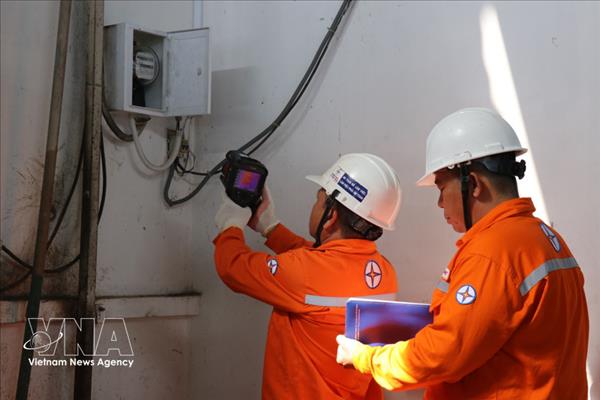
From the perspective of sustainable development and green transition, proactive climate action and carbon neutrality commitments are essential, with the restructuring of the national energy system toward diversity and low emissions forming a key pillar, they went on.
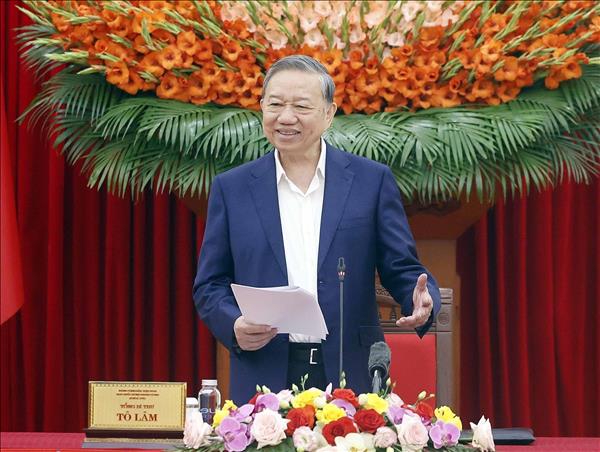
The 14th National Congress of the Communist Party of Vietnam (CPV) is expected to serve as a key milestone in setting the country’s major development directions for in the new era. Amid rapid regional and global shifts, the pursuit of sustainable development, stronger strategic autonomy, and enhanced science and technology capacity is posing fundamental and long-term challenges./.