
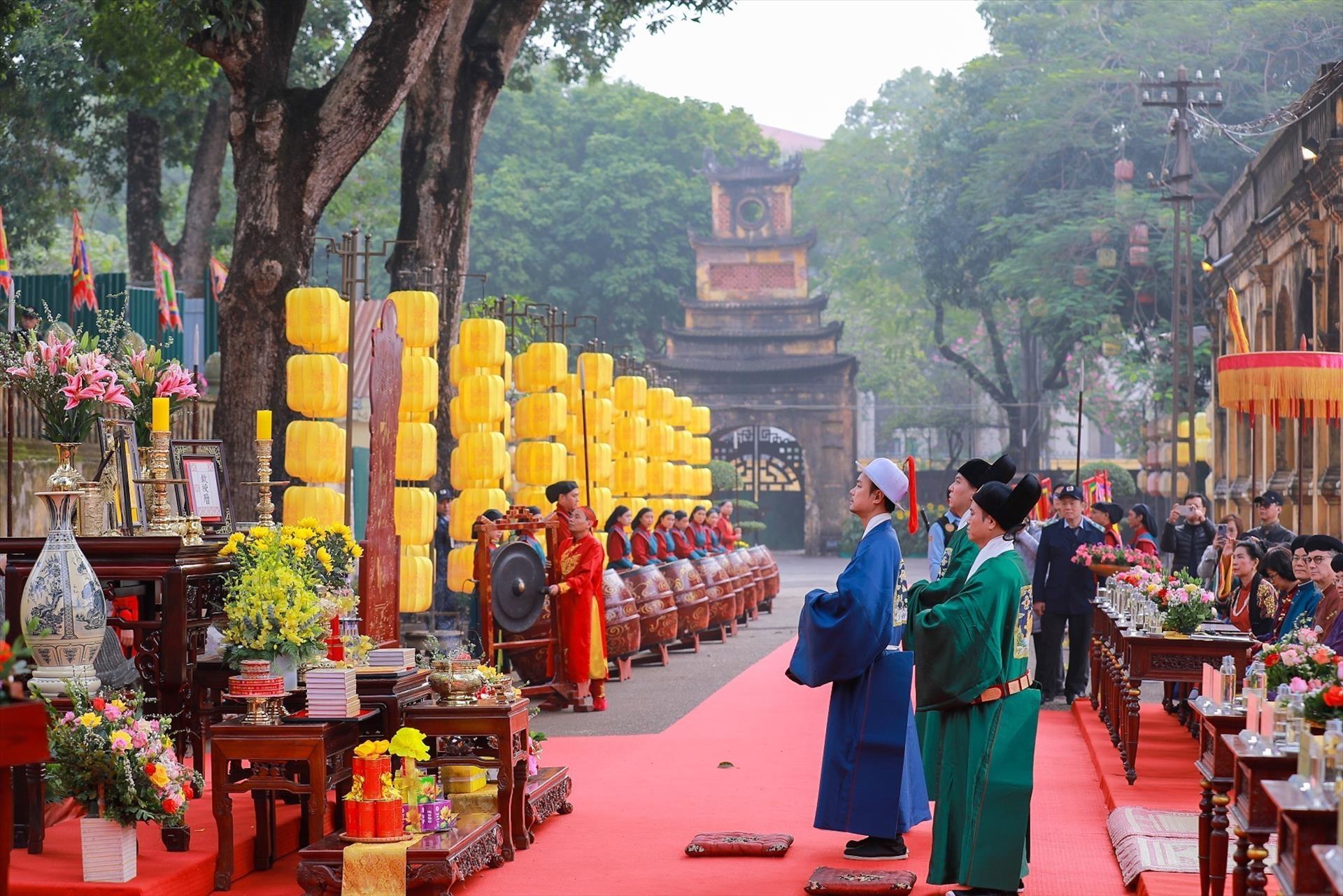
A programme discovering Vietnam, held on the morning of February 10 at the Thang Long Imperial Citadel in Hanoi, has offered visitors a chance to explore and experience a series of traditional royal court ceremonies under the theme “Tong cuu nghinh tan” (farewell to the old, welcome the new), highlighting the cultural depth of the country’s Lunar New Year (Tet).
Organised by the municipal People’s Committee in coordination with the Vietnam National Commission for UNESCO, the programme recreated a range of ceremonial practices once performed in the royal court. These included the Tien lich ritual, in which calendars were formally distributed to the court and the public; the Thuong tieu ceremony featuring the ceremonial New Year pole erected to ward off evil spirits and welcome spring; the ritual release of carp to send the Kitchen Gods to heaven; and the solemn changing-of-the-guard ceremony inside the imperial citadel. Together, the activities helped audiences better understand the cultural, spiritual and ceremonial order of Vietnam’s feudal past.
Speaking at the opening ceremony, Vice Chairwoman of the Hanoi People’s Committee Vu Thu Ha stressed that the citadel, a UNESCO World Cultural Heritage site, is not only a repository of the nation’s historical legacy but also the cultural soul of the capital.
Recreating traditional court rituals, she said, reflects the city’s strong commitment to preserving and promoting the country’s distinctive cultural values while showcasing its own identity as “Civilised – Cultured – Creative.”
Jonathan Wallace Baker, UNESCO Representative to Vietnam, noted that UNESCO highly values initiatives that preserve cultural heritage in ways that are vivid, accessible and closely connected to the community.
The combination of traditional rituals, heritage space and public participation in the programme demonstrates that intangible cultural heritage is not only safeguarded but continues to evolve and adapt within modern urban life, he said.
Tet is the most important and sacred celebration of the year in Vietnam, marking the transition between the old and new year. Beyond family reunions, it carries profound spiritual meaning, as people pay tribute to ancestors and deities while praying for peace, favourable weather and national prosperity. Traditionally, Tet begins on the 23rd day of the twelfth lunar month and lasts until the seventh day of the first lunar month, with numerous customs and ceremonies taking place both in communities and, historically, in the royal court./.