A green, experiential and culture-based tourism model drawing on riverine landscapes, historical heritage and sustainable agriculture in Da Phuc commune, Hanoi, is set to make its official debut in January, opening up new prospects for sustainable development following recent administrative restructuring.
At the heart of the programme is a riverside camping area along the Ca Lo River, combined with visits to key local attractions, immersive experiences of traditional rituals and folk games in a festive setting, as well as agricultural tourism and creative activities that promote environmental protection.
According to the Da Phuc Communal People’s Committee, the initiative aims to promote the locality’s image, link tourism stakeholders, raise public awareness and encourage community engagement in tourism development. Over the longer term, tourism is to become an important economic driver, contributing to a more sustainable rural economic structure. The commune also seeks to use experiential tourism as a means for residents and students to explore local culture, history, traditions and development orientations.
One of the programme’s standout features is its creative use of the Ca Lo River banks and natural alluvial flats for outdoor activities such as camping, water sports and community art events, all carrying strong messages on ecological protection.
On the first day (January 24), visitors will tour key heritage sites, including Ba Temple in Xuan Lai village, an architectural and artistic complex recognised as a city-level historical relic.
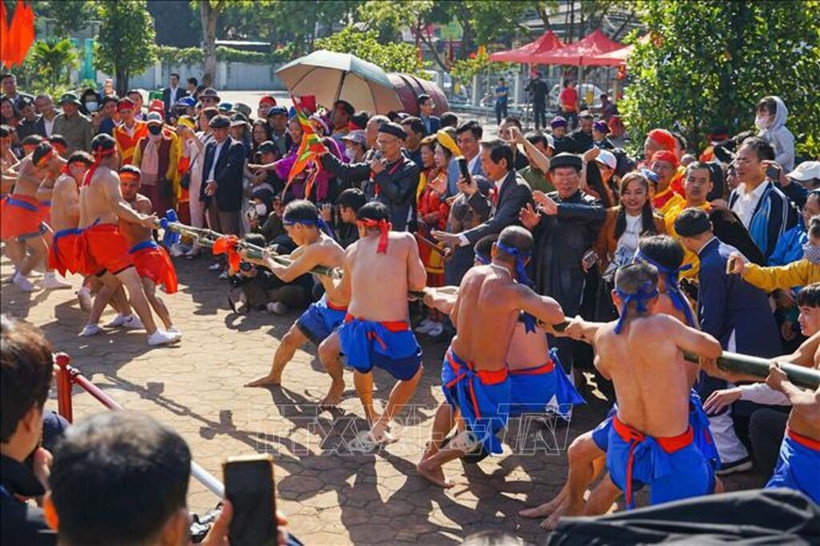
A cultural highlight is the chance to experience the traditional tug-of-war ritual and folk game held during the Ba Temple Festival, which was inscribed by UNESCO in 2015 as an Intangible Cultural Heritage of Humanity.
The itinerary also includes visits to the Nhu Nguyet River defensive line, where visitors can learn about the origins of the sacred poem “Nam Quoc Son Ha”, widely regarded as Vietnam’s first declaration of independence.
Alongside heritage exploration, the programme places strong emphasis on green and sustainable agricultural tourism, capitalising on the fertile lands along the Cau and Ca Lo rivers. Visitors will have the opportunity to experience Tien Tao Vegetable Village, one of Hanoi’s best-known vegetable-growing areas.
The official opening on the afternoon and evening of January 24 will feature a wide range of activities, including art performances, folk games, water sports, a seminar on cooperation in green tourism development, and visits to OCOP (One Commune One Product) booths. Highlights include an outdoor BBQ party, acoustic music by the Ca Lo River, a campfire and fireworks, offering visitors a fresh, nature-oriented tourism experience.
On the second day (January 25), visitors will greet the sunrise by the river, take part in sports and exchange activities, and explore check-in spaces featuring hot air balloons and a giant bamboo pinwheel field, expected to become new visual symbols of Da Phuc tourism.
Da Phuc commune was formed through the merger of seven communes, covering more than 55 square kilometres and home to over 83,600 people. The launch of the “Green tourism – Da Phuc River Camping” product is seen as the first step in a long-term, systematic tourism strategy that combines heritage preservation, green agricultural development and local brand building./.