Alongside efforts to restructure production and improve product quality, economic diplomacy has played an important role in expanding markets, removing barriers and helping Vietnamese agricultural products integrate more deeply into global supply chains.
Deputy Minister of Foreign Affairs Le Thi Thu Hang said economic diplomacy has been identified as a top priority pillar. On that basis, the Ministry of Foreign Affairs has worked closely with the Ministry of Agriculture and Environment, local authorities and the business community to promote deeper integration of Vietnamese agriculture into global value chains and to expand and diversify export markets.
A notable highlight in recent years has been the implementation of the scheme to enhance cooperation in building and developing the Halal industry through 2030. In 2025, the programme recorded encouraging results as new markets, particularly in the Middle East and Africa, were opened, creating room for sustainable growth in the time ahead.
Beyond trade, coordination between the two ministries has also been evident in the implementation of international commitments on climate change, the environment and biodiversity. According to Hang, fulfilling these commitments not only reinforces Vietnam’s responsibility and credibility, but also opens up opportunities to access new technologies and mobilise international resources in support of green and sustainable farming development.
2025 figures show positive outcomes from these orientations. Of the total export turnover of agro-forestry-fishery products, estimated at about 70.09 billion USD, several product groups recorded strong growth, with fruit and vegetables reaching 8.6 billion USD, up nearly 20% year on year.
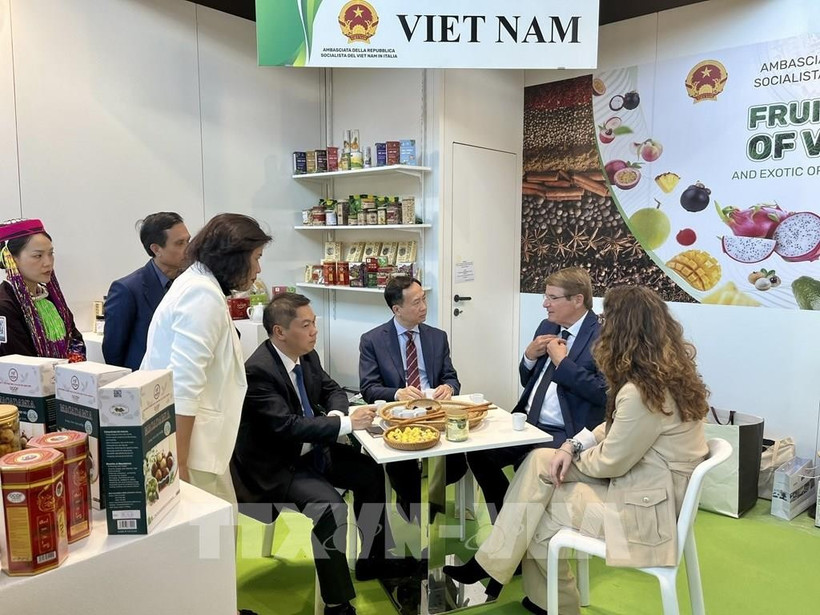
From an industry perspective, Nguyen Thanh Binh, Chairman of the Vietnam Fruit and Vegetable Association, said trade promotion activities, including participation in international fairs and exhibitions, have been implemented effectively, helping businesses expand markets and reach new customers. The association believes fruit and vegetable exports could reach 10 billion USD in 2026 if quality continues to improve, traceability systems are completed and product promotion is strengthened.
Tran Cong Thang, Director of the Institute of Strategy and Policy on Agriculture and Environment, noted that although the US applied certain reciprocal tariff measures to Vietnamese goods last year, including agro-forestry-fishery products, exports to the market still maintained growth. This reflects Vietnamese enterprises’ proactive adaptation through product restructuring, market strategy adjustments and better use of trade preferences, he said.
Alongside major markets such as the US, China and the EU, Vietnamese agricultural products are now exported to nearly 200 countries and territories, including high-standard markets such as Japan, the Republic of Korea (RoK), Australia, New Zealand, Singapore and the Middle East. However, reliance on a limited number of key markets for some products underlines the need for continued diversification of markets and supply chains to reduce risks and enhance flexibility.
Sharing management orientations, Minister of Agriculture and Environment Tran Duc Thang said the ministry is focusing on removing market and technical barriers, strengthening traceability requirements, expanding export markets, diversifying partners and reducing dependence on traditional markets.
Exports must grow not only in volume but also in quality, branding and value, Thang stressed.
Working trips by the minister and deputy ministers to Japan, the RoK, France, China, Europe, Africa and other key partners are aimed not only at diplomacy, but at achieving concrete outcomes in cooperation, attracting resources, technology and advanced management experience, with each visit required to translate into practical programmes and projects.
Notably, in 2025, Vietnam signed five protocols with China allowing the export of chili, passion fruit, rice bran, raw bird’s nests and fresh jackfruit. According to the minister, these protocols not only expand the list of agricultural products eligible for official export, but also enhance stability and transparency, reinforcing confidence among farmers and businesses to produce to standards and participate in value chains.
The draft documents for the 14th National Party Congress identify foreign affairs as a key and regular task, with diplomacy in agriculture and the environment recognised as a core component of economic, environmental and development diplomacy directly linked to national strategic priorities./.