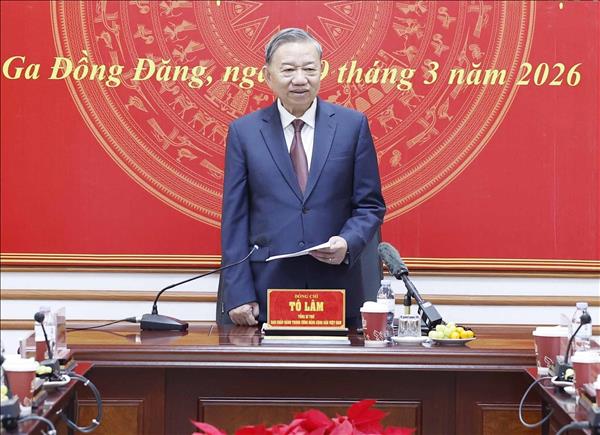

The event will be held at the construction site of Ha Long Xanh Station in Tuan Chau and Viet Hung wards, Quang Ninh province. The project is regarded as a key inter-regional transport infrastructure initiative with strategic importance for local socio-economic development.
The provincial People's Committee has requested that the ceremony be organised in a solemn, safe, efficient and cost-effective manner, making the best use of available resources and ensuring close coordination between the project investor - the Vinspeed High-Speed Railway Investment and Development JSC and relevant departments, agencies and localities.
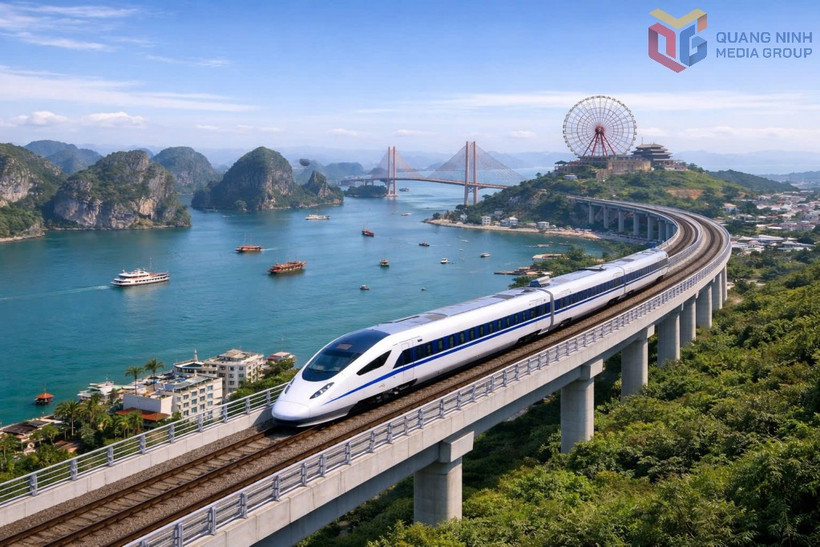
The railway will be a double-track, 1,435mm standard-gauge, electrified line with a total length of about 120km and a maximum design speed of 350kph. It will run through four cities and provinces,namely Hanoi, Bac Ninh, Hai Phong and Quang Ninh, starting at Co Loa Station in Hanoi and ending near the Tuan Chau public park area in Quang Ninh.
Five stations are planned along the route – Co Loa, Gia Binh, Ninh Xa, Yen Tu and Ha Long Xanh – together with a depot at Ha Long Xanh for technical services, maintenance and train storage. The section passing through Quang Ninh will be about 39.3km long, extending from the boundary with Hai Phong to the Ha Long Xanh station and depot area.
The project will be implemented under a public–private partnership (PPP) model with an estimated total investment of about 147.37 trillion VND (5.8 billion USD), excluding roughly 10.27 trillion VND for land clearance funded by the State budget. The project is expected to be completed and put into operation in 2028.
Beyond its transport function, the project helps translate the province's 2026 development theme of promoting regional connectivity, advancing sustainable growth and building a modern, synchronised transport infrastructure system. It also underscores the strong commitment of the Party and the State to creating new momentum for the next phase of development, attracting investment, and deepening international integration../.