
Amid Middle East tensions, rising logistics costs and increasingly stringent standards in major markets, Vietnam’s key export sectors, including seafood, fruit and vegetables, and textiles, are actively pivoting strategies to maintain growth and competitiveness.
From restructuring product portfolios and reorganising supply chains to strengthening sustainability standards, exporters are accelerating adaptation efforts to safeguard their positions in global markets.
Le Hang, Deputy Secretary-General of the Vietnam Association of Seafood Exporters and Producers (VASEP), noted that geopolitical risks and surging freight costs have significantly affected the seafood trade, a sector heavily dependent on maritime transport and cold storage logistics.
Despite challenges, global demand for seafood remains strong. Enterprises are shifting toward reasonably priced, easy-to-consume products such as tra fish, tilapia, canned items and surimi, instead of focusing mainly on high-end products like large-sized shrimp, which are facing weaker demand in some markets.
The fruit and vegetable sector is adopting a similar approach. While the Middle East remains a promising long-term market, businesses are prioritising cash-flow safety. Dang Phuc Nguyen, General Secretary of the Vietnam Fruit and Vegetable Association, said exporters are increasing shipments of processed products with longer shelf lives, as shipping times may extend to 45–60 days.
Companies are also advised to split shipments into smaller batches and utilise flexible shipping schedules. Larger firms are considering leasing cold storage facilities or establishing transhipment hubs in lower-risk countries to ensure supply chain stability.
From the European market, Tran Ngoc Quan, Vietnam’s Trade Counsellor in Belgium and the EU, highlighted opportunities created by the EU–Vietnam Free Trade Agreement (EVFTA), now in its sixth year, with many tariffs reduced to zero. However, he warned that new sustainability-related regulations, including the Carbon Border Adjustment Mechanism (CBAM), the EU Deforestation Regulation (EUDR), and upcoming circular economy and eco-design rules, are increasing pressure on Vietnamese exporters to accelerate green transformation.
In the US, another key export destination, Trade Counsellor Do Ngoc Hung noted that consumers increasingly demand sustainability, traceability and transparent supply chains, while stricter trade defence investigations are raising compliance requirements for exporters.
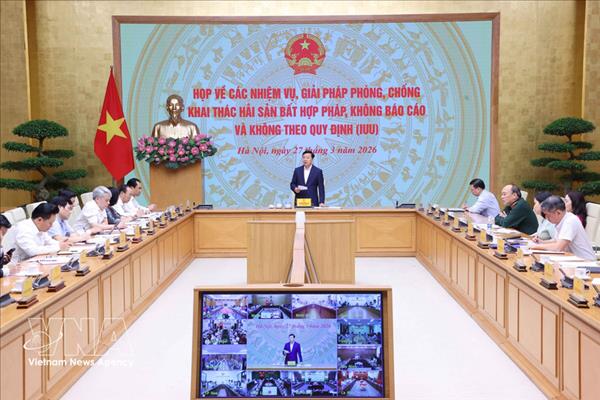
To support export growth, the Prime Minister issued Official Dispatch No. 23/CD-TTg, directing ministries to remove bottlenecks, secure energy supplies and accelerate negotiations on new free trade agreements with Latin America and the Middle East to diversify markets.
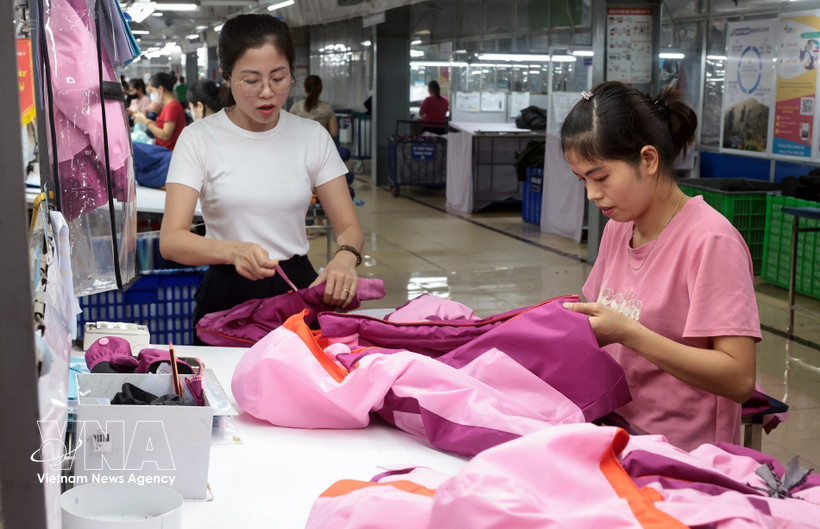
Truong Van Cam, Vice Chairman of the Vietnam Textile and Apparel Association, stressed the need to reduce dependence on imported raw materials, particularly fabrics, which leaves enterprises vulnerable to logistics disruptions. He called for stronger investment in domestic textile production and specialised industrial zones to boost localisation and competitiveness.
From a macroeconomic perspective, Nguyen Quoc Viet of the University of Economics and Business under Vietnam National University, Hanoi, said export growth must shift from quantity to quality, requiring stronger domestic enterprises capable of technological innovation and deeper participation in global value chains./.