
Bac Ninh is stepping up efforts to enlarge its crop-growing zones, prioritising key fruit and vegetable varieties produced to safe, high-quality standards for both local markets and export, according to Duong Thanh Tung, Director of the provincial Department of Agriculture and Environment.
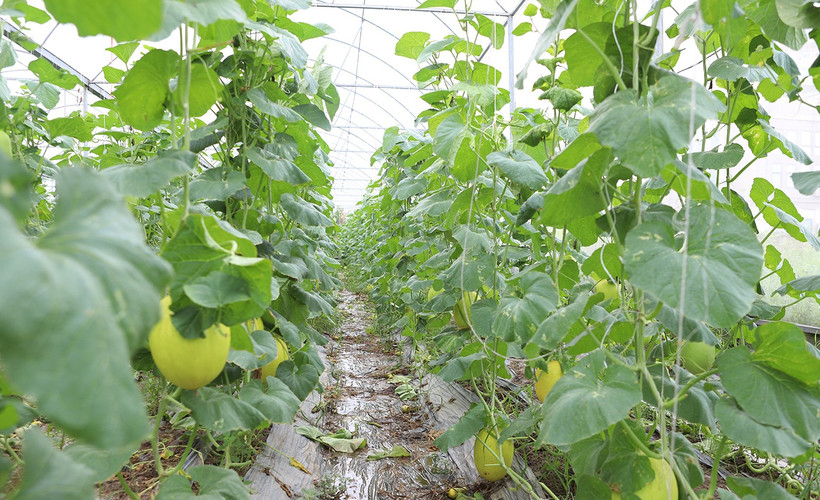
Accordingly, the province is enlarging production areas for major fruit crops such as lychee, longan, orange, pomelo, apple and custard apple, cultivated under safe standards including VietGAP, GlobalGAP and organic certification. These efforts aim to form value chains linked to product traceability and ensure production conditions that meet the requirements of domestic and overseas markets.
Bac Ninh is also promoting high-value fruit varieties such as black-skinned grapes and peony grapes, while accelerating the application of digital technologies in production, traceability, plantation-code management, packing facilities, pest and disease forecasting, weather prediction, natural disaster alerts and market demand analysis.
In 2026, the province targets expanding its lychee-growing area to 29,800 ha with an expected output of 160,000 tonnes. Of this, 17,500 ha will be produced under VietGAP standards with an estimated yield of 125,000 tonnes; GlobalGAP-certified lychee areas will be maintained at 235 ha; and organic lychee areas at 10 ha.
The province has instructed concentrated lychee-growing zones to comply strictly with safe production standards (VietGAP, GlobalGAP, organic), providing guidance on cultivation, pest management and residue control to ensure the highest productivity and quality.
Additionally, Bac Ninh continues to strengthen the management of existing lychee plantation codes (240 registered codes, with new ones issued in 2025, covering a total of 17,421 ha for export). According to Pham Van Thinh, Vice Chairman of the provincial People’s Committee, Bac Ninh will continue to strengthen production organisation and the development of agricultural products that meet export requirements. The provincial Department of Science and Technology is researching improvements to the traceability system and database to ensure compatibility with the national traceability platform, enabling farmers, cooperatives and traders to easily access information.
The department is also studying and advising the provincial authorities on the establishment of an irradiation centre, targeted for completion in 2026, to enhance irradiation capacity to international standards, shorten transport times and improve the handling of agricultural exports for enterprises in Bac Ninh and the wider northern region.
The Department of Agriculture and Environment will coordinate with the Plant Protection and Crop Production Department to organise training on cultivation practices, the application of scientific and technological advances and the expansion of safe-cultivation areas. It will also assist enterprises in registering products under required standards to facilitate smooth export procedures.
Meanwhile, the Department of Industry and Trade will work with the Department of Science and Technology to review production and consumption of key agricultural products, and advise the province on developing industrial clusters for agro-forestry processing.
Bac Ninh currently has about 53,900 ha of fruit crops, with 33,400 ha in concentrated production zones accounting for 62% of the total. The province has granted 400 plantation codes and 43 packing facility codes for export, with the total value of fruit crops exceeding 7.4 trillion VND (280.5 million USD).
The department has directed specialised agencies to establish inspection teams to oversee plantation codes and packing facilities serving export. From March to July 2025, the department conducted inspections and recommended that the Plant Protection and Crop Production Department negotiate approvals with importing countries for two new packing facility codes for longan exports to China and Australia, ensuring timely processing for the 2025 longan season./.