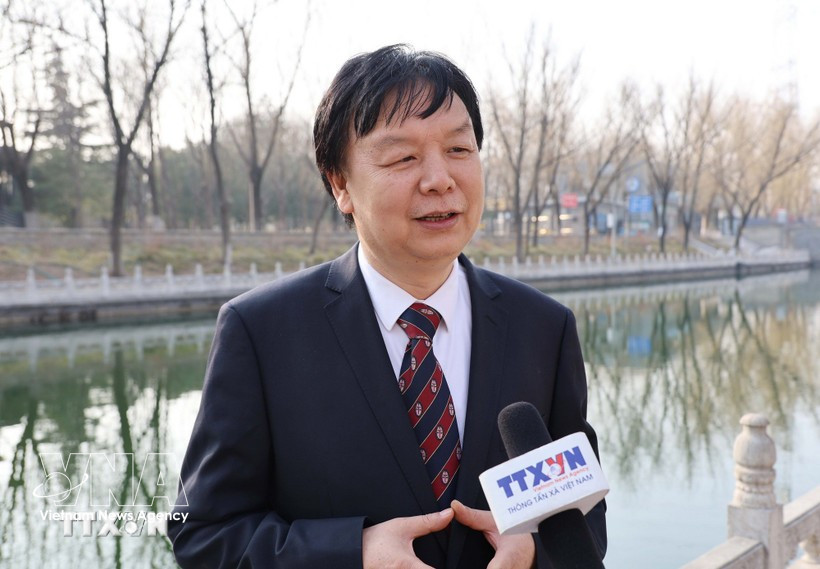
The 14th National Congress of the Communist Party of Vietnam (CPV) opened a new stage in Vietnam’s renewal and development process, according to Professor Mi Liang, Director of the Centre for Southeast Asian Studies at Beijing Foreign Studies University of China.
Speaking to the Vietnam News Agency's correspondent in Beijing, Prof. Mi hailed the role and contributions of Party General Secretary To Lam, noting that his re-election as the Party chief reflected broad consensus and strong unity within the CPV.
According to the scholar, the 14th National Party Congress reviewed both theoretical and practical issues after 40 years of the Doi Moi (Renewal) process, launched at the CPV's 6th National Congress in 1986.
Amid profound global changes, Vietnam has remained steadfast in its reform path, gradually improving its political and economic systems and achieving notable development gains, Prof. Mi stated.
The professor noted that summarising four decades of experience with Doi Moi is essential for further refining Vietnam’s development model in the coming period. He also suggested that Vietnam should continue strengthening anti-corruption efforts and preventing negative practices and moral degradation among officials to ensure the sustainability of the reform process.
Regarding the two-tier local administration model and the policy of streamlining the administrative apparatus, the Chinese scholar described them as significant reforms aimed at improving state governance, reducing administrative procedures and reinforcing the political foundation for Vietnam’s long-term development./.