Uoc Le Pork Sausage
Nestled along the Nhue River, Uoc Le Village in Dan Hoa Commune, Hanoi, has long been known for its tradition of making gio cha (Vietnamese pork sausage). Spanning nearly 500 years, it is not only a livelihood for locals but also reflects Vietnam’s culinary heritage, which embodies both cultural value and the dedication of its makers.
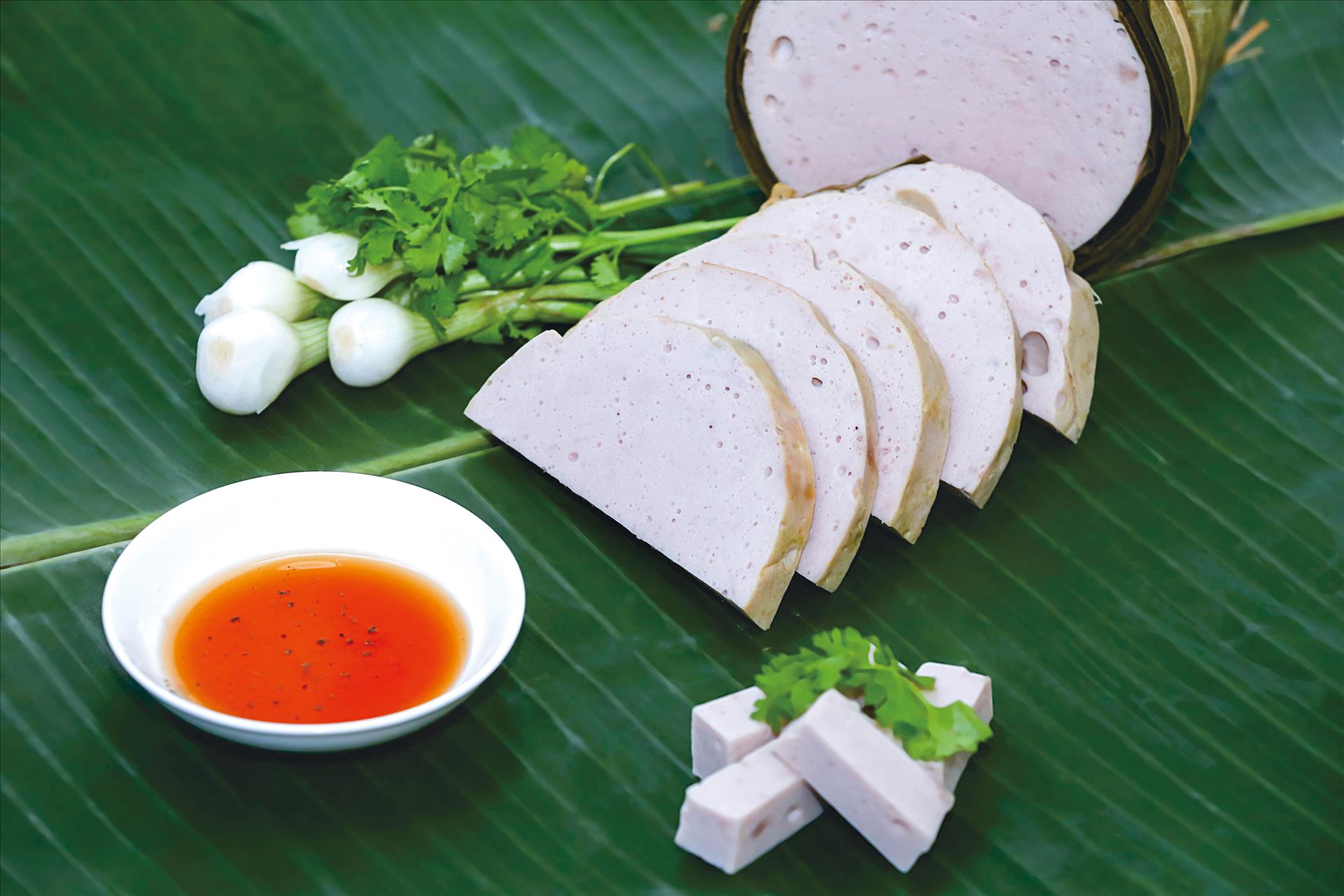
According to Nguyen Duc Binh, who has spent more than 40 years bringing Uoc Le gio cha to domestic and international markets, the defining feature lies in its rigorous selection of ingredients. Only freshly slaughtered “warm” pork is used to preserve natural binding, resulting in gio lua (pork sausage) with a pale pink hue, a smooth surface, and fine air pockets.
Uoc Le gio lua offers a delicate sweetness infused with the subtle aroma of banana leaves, while cha que (cinnamon pork sausage) stands out with its golden-brown crust, fragrant spices, and tender, savory interior. This balance of flavors has established a distinctive benchmark deeply rooted in Vietnamese cuisine.
Beyond the village, Uoc Le villagers have introduced their specialty food throughout the country and overseas. Wherever Vietnamese communities take root, Uoc Le gio cha serves as a way to preserve and spread the taste of home.
Today, in modern life, the village remains steadfast in its commitment to quality and reputation. Each roll of gio lua is more than a culinary product - it is a story of history and cooking, and a distinctly Vietnamese flavor preserved through time.
Story: Thanh Giang Photos: Khanh Long/VNP