Nghia Do’s Rise Driven by Party Resolutions
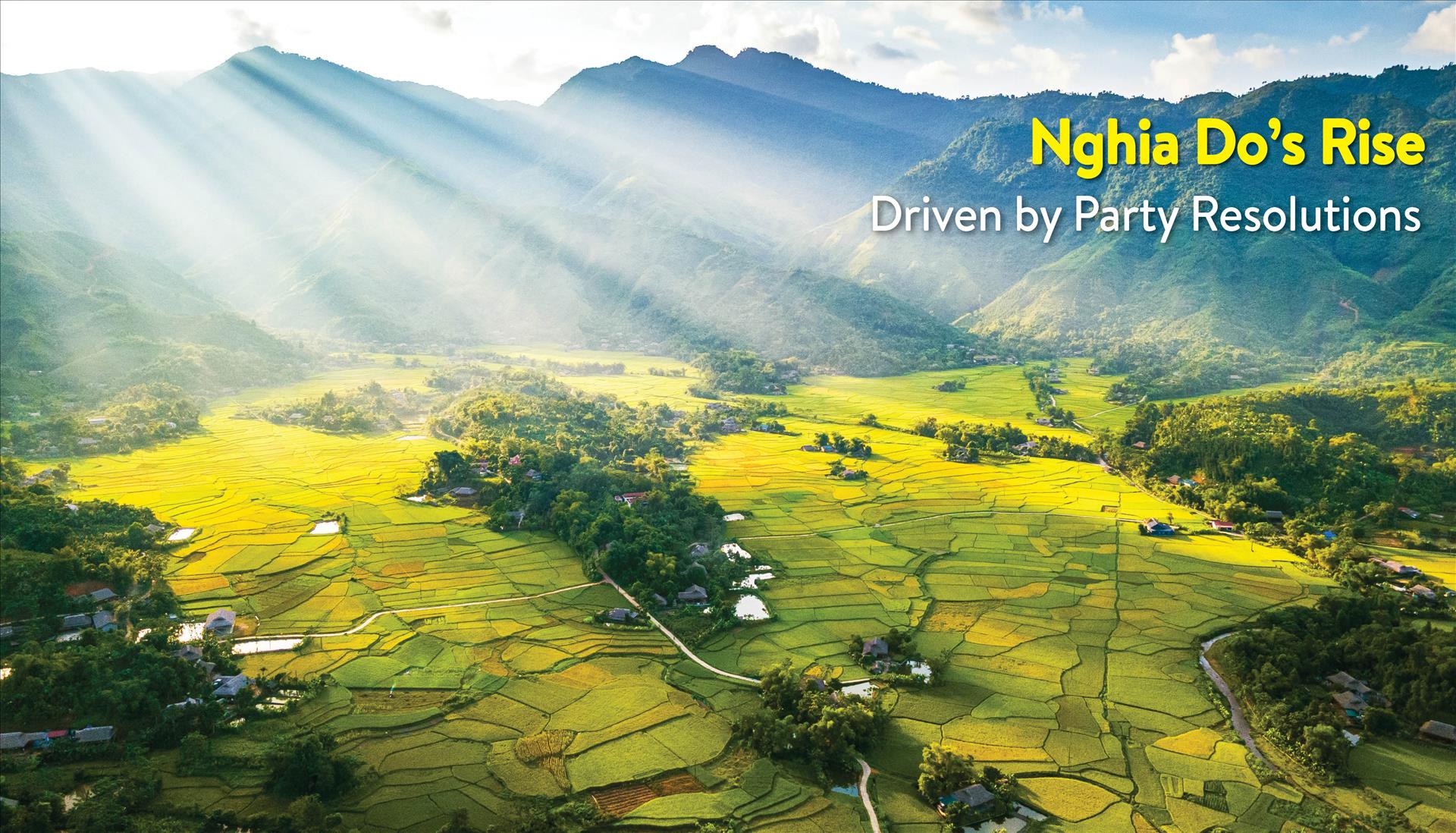

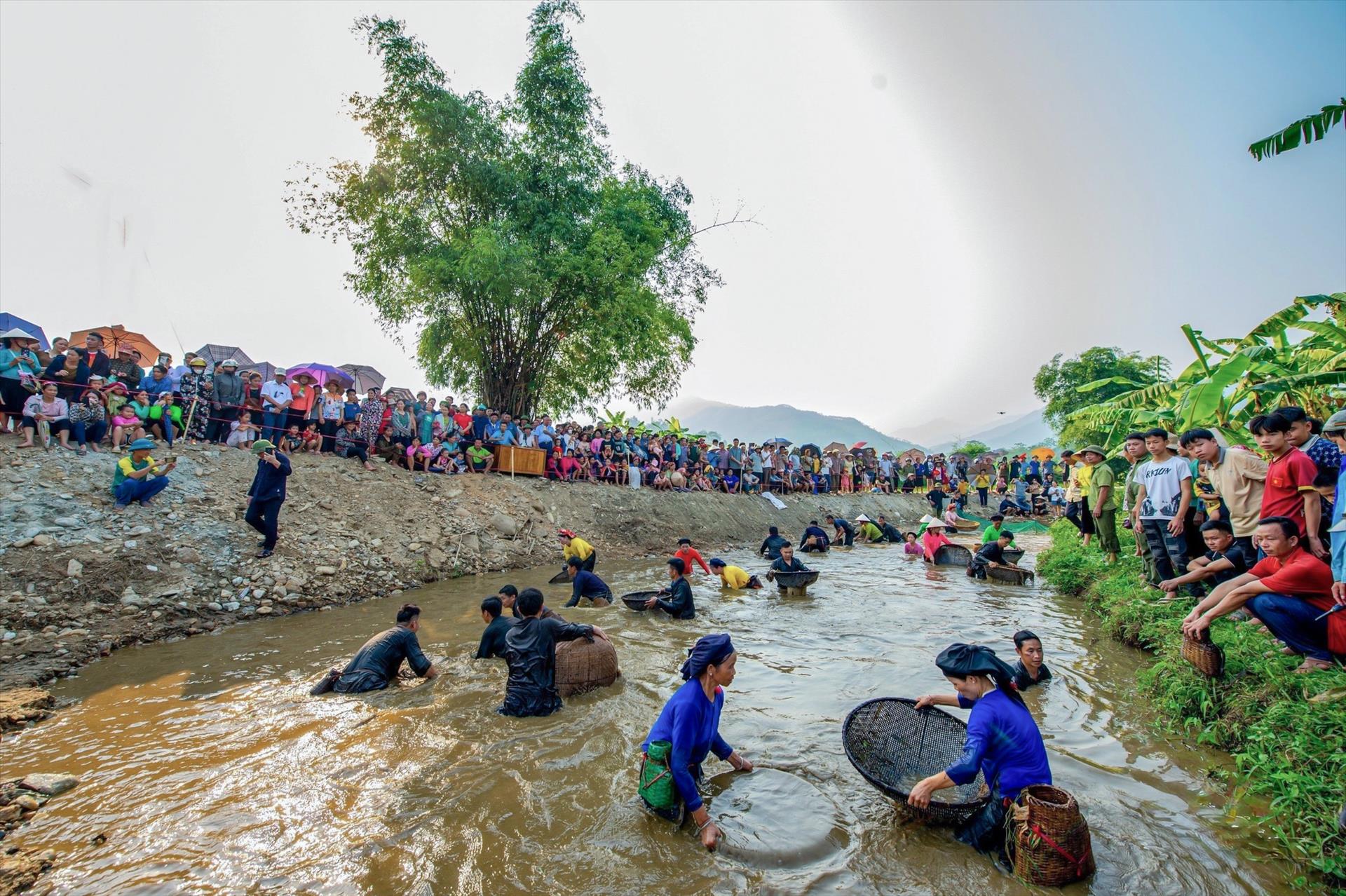
In late 2025, as the country looked ahead to the 14th National Party Congress, we traveled from Hanoi along the Hanoi - Lao Cai Expressway to Nghia Do. Our destination was a homestay in Lien Hamlet, run by Hoang Van Vuong, a member of the Tay ethnic people. He welcomed us warmly and asked his wife to prepare traditional dishes, including forest-picked bo pip flowers and pa khing fish caught in the Nam Luong Stream. That evening, in the cool mountain air, we experienced the warmth of Tay hospitality and cuisine, recognized in October 2025 as a national intangible cultural heritage.
At dawn, Lien Hamlet lay beneath a veil of mist drifting down from the slopes of Khau Ria Mountain. Through the fog, the Tay’s sturdy two-story wooden stilt houses emerged like a landscape painting. Despite the lingering chill in the fields, Do Van Luu, Deputy Secretary of the Party Committee and Chairman of the Nghia Do People’s Committee, was already on site, inspecting the progress of the winter melon crop, an economic model that is creating a new livelihood for local residents.

Amid the lively chatter in the fields, Ma Van Hoang, Secretary of the Lien Hamlet Party Cell, said the commune’s current 30ha of melon cultivation are the result of the determination and sense of responsibility shown by Party members, particularly the pioneering role of Do Van Luu. Five years earlier, while serving as Secretary of the former Nghia Do Commune, Luu introduced the melon cultivation model from Tuyen Quang on a pilot basis.


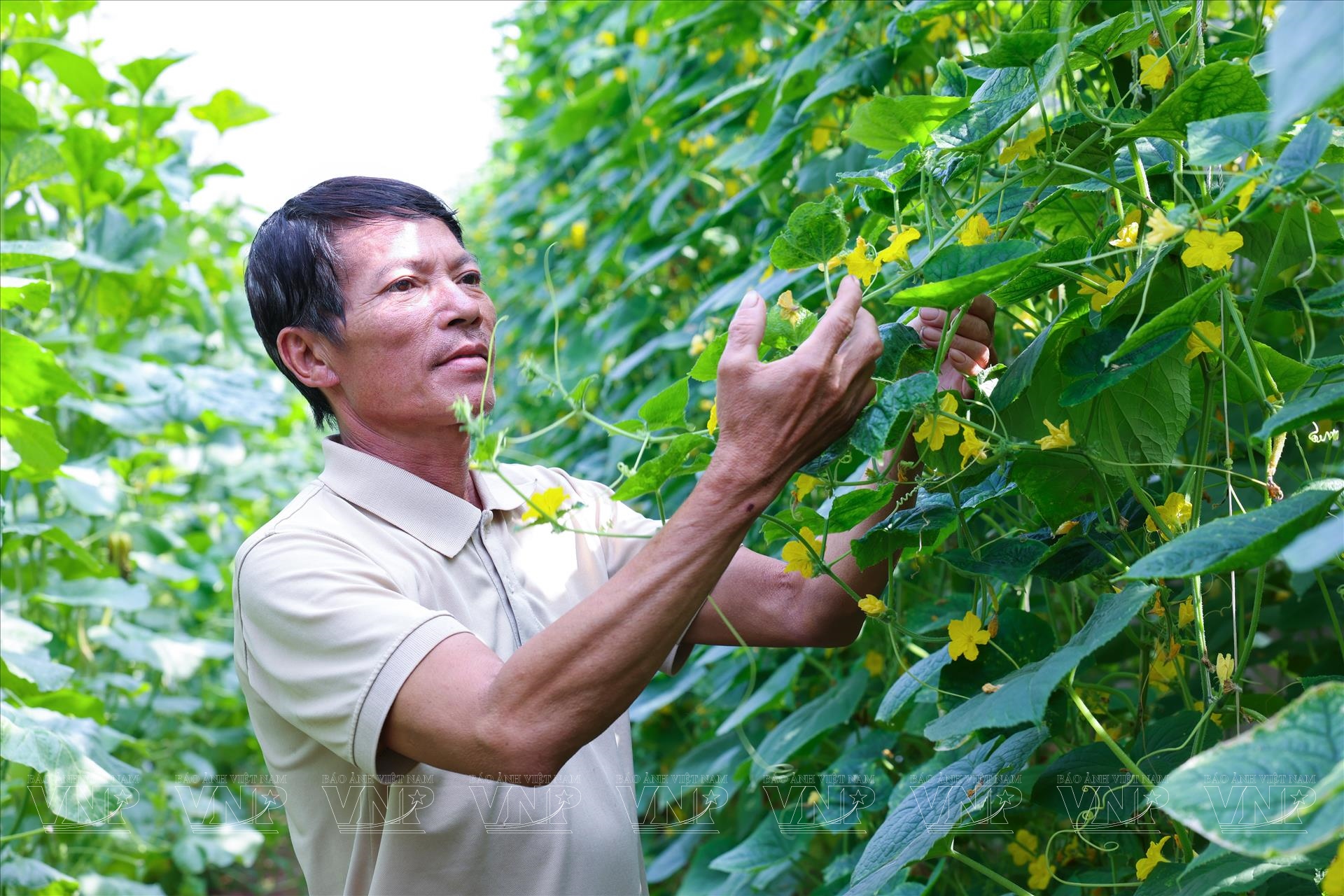
“When I took office in 2020, the Party Committee clearly defined a development path in line with the Resolution of the 13th National Party Congress, green, modern, and sustainable agriculture linked with new rural development. Rice monoculture was no longer suitable, so we had to find a new direction. After visits and support from experts, melon cultivation was carefully selected, beginning with a thorough assessment of soil conditions,” Luu said.
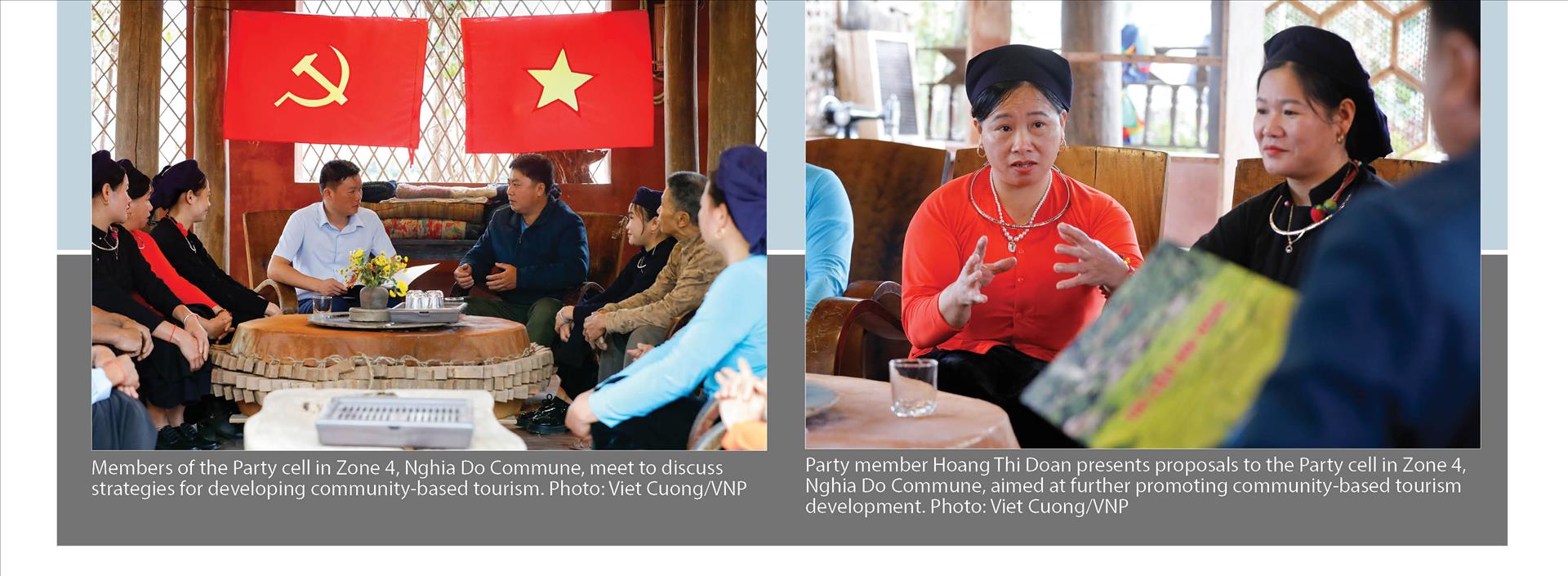
After early results proved promising, the commune’s Party Committee issued a resolution and implemented it in village Party cells. Initial hesitation was inevitable, as residents and even Party members were unfamiliar with netted melon cultivation. Hoang Thi Doan, a Party member in Na Dinh Hamlet, said the approach was clear, with Party members leading the way and villagers following. Beginning with pilot plots run by Party members, the model soon proved effective. Today, most households in Nghia Do grow melons, earning average annual incomes of about 200 million dong (roughly 7,700 US dollars).
The principle of Party members leading the way and villagers following is also reflected in Party cell activities. We attended a meeting of the Lien Hamlet Party Cell at the Tay Ethnic Cultural Preservation and Exchange Center in Nghia Do, a cultural institution established under the implementation of Resolution No. 33-NQ/TW of the 11th Central Committee on building and developing Vietnamese culture to meet the requirements of sustainable national development.

The center functions as a small museum, preserving traditional costumes, handicrafts, and artifacts associated with the Tay people more than 1,500-year journey to settle and establish communities in Nghia Do. It also serves as a space for passing down folk knowledge related to weaving, bamboo and rattan crafts, and cuisine. Notably, the folk knowledge of preparing grilled fish, vit bau lam (duck cooked in bamboo tubes), and herbal yeast wine of the Tay people in Nghia Do Commune has recently been recognized as a national intangible cultural heritage, marking an important milestone for Lao Cai’s cultural preservation efforts.

Under Resolution No. 18-NQ/TW on streamlining the political system, Nghia Do Commune was formed through the merger of Nghia Do, Tan Tien, and Vinh Yen communes. The first Party Congress of the new commune for the 2025 – 2030 term focused on consolidating the administrative apparatus to ensure smooth operations from July 1, 2025, guided by the principle of adapting while implementing.
“Another key task is implementing Resolution No. 68-NQ/TW on private economic development. With melons and cinnamon established as key crops, Nghia Do is now moving toward appropriate planning and mechanisms to support sustainable private-sector growth,” said Do Van Luu, Chairman of the Nghia Do People’s Committee.

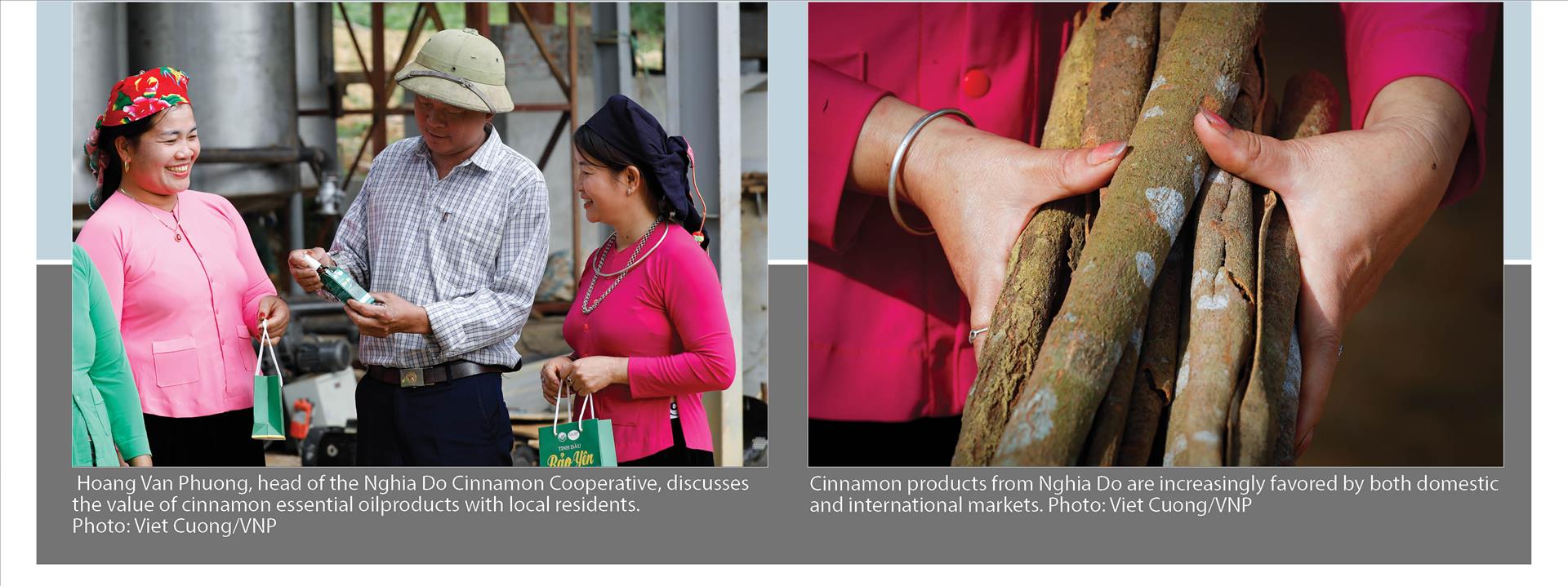
At the Nghia Do Cinnamon Cooperative, perched on a hilltop, cooperative head Hoang Van Phuong was overseeing construction of a 15-billion-dong cinnamon essential oil processing plant, equivalent to about 575,000 US dollars. “Cinnamon has been grown here for generations, but it only delivers high value when production and processing are properly organized,” Phuong said. “The factory will help farmers better control processing and reduce their dependence on traders”.

With cinnamon and netted melon cultivation now firmly established and improving local livelihoods, Nghia Do’s next priority is tourism development. Guided by the approach of turning culture and tourism into assets, the commune has in recent years developed community-based tourism villages, with more than 30 homestays restored from traditional Tay stilt houses in keeping with original architectural styles.
“With strong cultural identity and a location close to major tourist centers such as Sa Pa and Bac Ha, Nghia Do aims to become a focal point in northern Lao Cai’s tourism triangle,” said Do Van Luu, Deputy Secretary of the Party Committee and Chairman of the Nghia Do People’s Committee.



Before leaving, we visited artisan Ma Thanh Soi (born in 1944), the commune’s oldest Party member and a lifelong preserver of Tay Then, Sli, and Luon singing. A former commune chairman, he is widely regarded as a cultural torch bearer. Watching the Nam Luong River flow past the village, he said: “Since following the Party, the lives of the Tay people have changed completely. Never has Nghia Do enjoyed such strong momentum and foundations for comprehensive development”.
That brief remark brought the journey to a close while offering a vivid picture of the steady path of a mountainous rural area, where Party resolutions are not confined to paper but serve as practical drivers of change, deeply embedded in daily life, the fields, and the cultural fabric of Nghia Do today.
Story: Thong Thien Photos: Viet Cuong/VNP, Manh Cuong & Files Translated by Nguyen Tuoi