Vinh Hiep Gia Lai Remains Viet Nam’s Top Green Coffee Bean Exporter
Vinh Hiep Co., Ltd. retained its position as Viet Nam’s largest green coffee bean exporter in the 2025–2026 crop year, shipping 179,925 tonnes worth more than 836 million US dollars, as the country’s coffee industry faced growing pressure to generate more value from each tonne exported.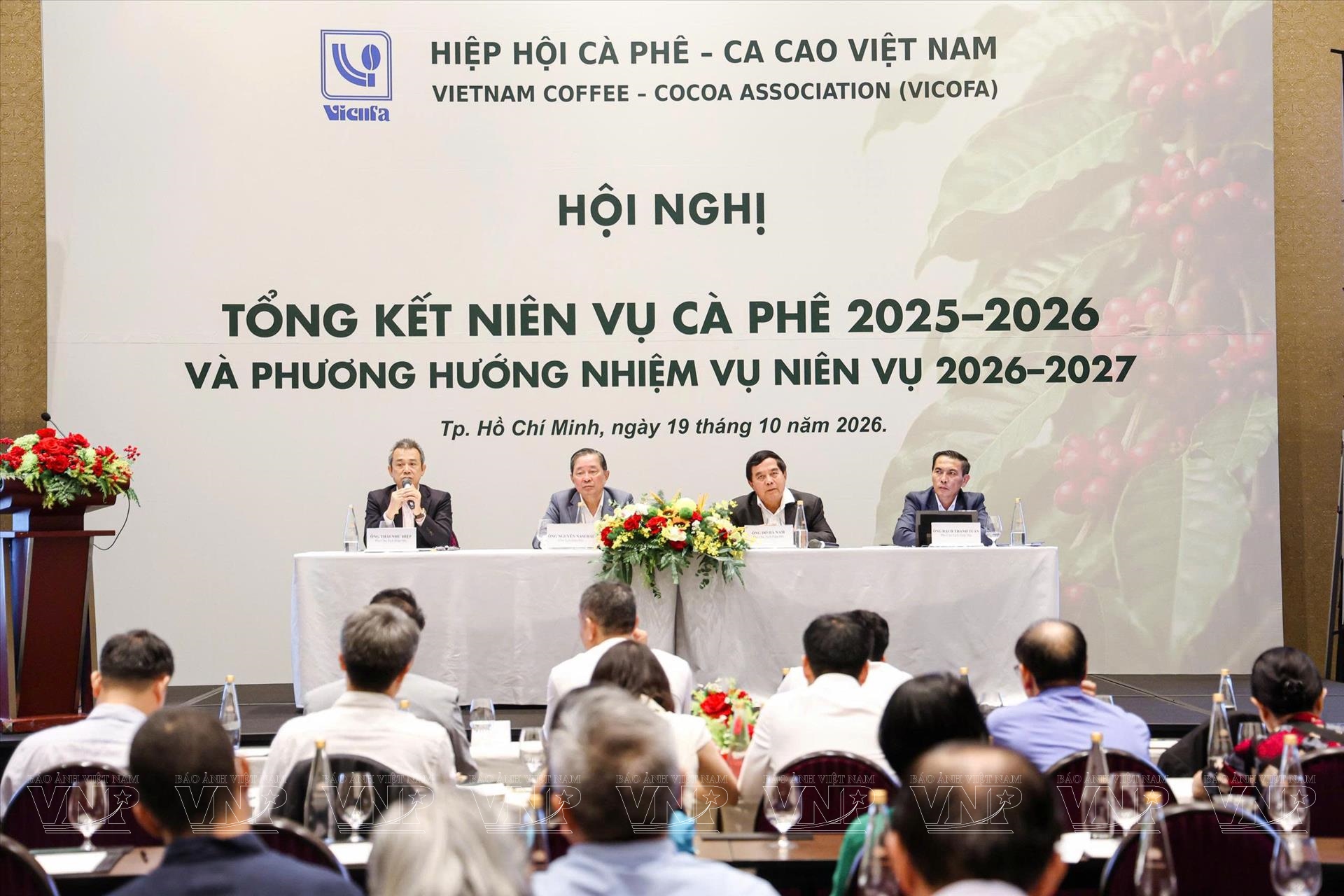
Gia Lai-based Vinh Hiep ranked first among Viet Nam’s green coffee bean exporters in the 2025–2026 crop year, according to data released by the Viet Nam Coffee and Cocoa Association (VICOFA) at its annual conference in Ho Chi Minh City on October 19.
The company exported 179,925 tonnes of green coffee beans, nearly 30,000 tonnes more than the second-ranked exporter.
Intimex Group ranked second with 149,951 tonnes, followed by the September 2 Import-Export Company Limited, commonly known as Simexco Dak Lak, with 136,339 tonnes.
Only four Vietnamese coffee exporters recorded shipments exceeding 100,000 tonnes during the crop year.
Vinh Hiep’s shipments accounted for approximately 10% of Vietnam’s total coffee export volume. Its export earnings of more than 836.3 million US dollars were also equivalent to nearly 10% of the industry’s total revenue for the season.
The result marked the second consecutive crop year in which the Vietnamese company held the leading position in green coffee bean exports.
Record revenue masks widening volume-value gap
Vinh Hiep’s leading position came as Viet Nam’s coffee industry recorded its highest-ever export revenue.
The country exported around 1.8 million tonnes of coffee worth approximately 8.5 billion US dollars during the 2025–2026 crop year, VICOFA said.
Export volume increased by 21% from the previous season, but revenue rose by only 1%, reflecting a sharp decline in the value generated from each tonne shipped overseas.
Green coffee beans accounted for approximately 1.65 million tonnes and nearly 7 billion US dollars of the total. Green bean export volume rose by 21.4%, while revenue declined by 1.5%.
Export prices for robusta, Viet Nam’s principal coffee variety, generally ranged from 3,500 to 4,000 US dollars per tonne during the season.
The figures marked a significant change from the 2024–2025 crop year, when Viet Nam’s average coffee export price reached a record 5,610 US dollars per tonne.
According to VICOFA, the price correction was driven partly by recovering supplies in major producing countries after several years of high prices encouraged greater investment and output.
Global coffee prices were also affected by production costs, logistics expenses, exchange-rate movements and geopolitical uncertainty.
Production recovers, but farmers face higher costs
Viet Nam currently has more than 722,000 hectares of coffee plantations under harvest.
National coffee output reached an estimated 31.7 million bags, equivalent to nearly 1.9 million tonnes, in the 2025–2026 crop year. This represented an increase of about 10.5% from the previous season.
Higher coffee prices in recent years encouraged farmers to invest more in their plantations, while replanted and newly cultivated areas began entering their productive stage.
However, farmers continued to face rising fertiliser and labour costs, which reduced their effective profit margins.
Unpredictable rainfall and other extreme weather linked to climate change also affected coffee-growing areas in the Central Highlands. In some locations, adverse conditions during fruit development resulted in a higher proportion of small beans.
VICOFA said the 2026–2027 crop year would bring both challenges and opportunities as the industry sought to restructure production, strengthen branding and improve export value.
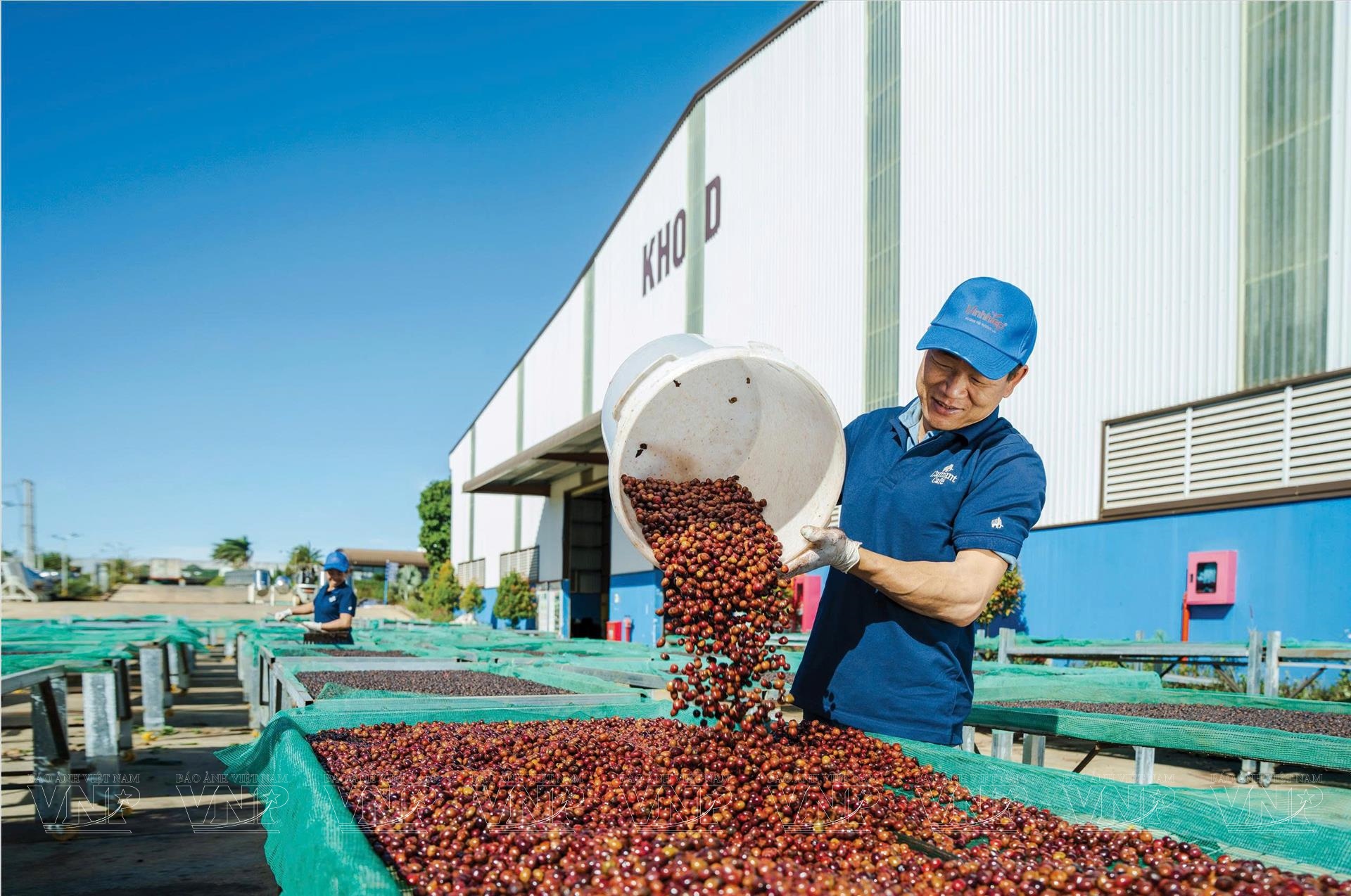 Freshly harvested coffee cherries are washed with clean water before being dried.
Processed coffee delivers more value
The limited increase in export earnings, despite a 21% rise in volume, has reinforced calls for Viet Nam to reduce its reliance on raw green bean exports.
Data presented at the conference showed that deeply processed coffee represented only about 8% of export volume in the first half of 2026 but contributed approximately 17.5% of total coffee export revenue.
The comparison indicates that Viet Nam’s largest growth opportunity lies not simply in selling more coffee, but in raising the value generated from each tonne through processing, quality standards and branding.
During the full 2025–2026 crop year, Viet Nam exported approximately 142,600 tonnes of instant, refined and blended coffee before conversion into green-bean equivalent.
The segment generated around 1.5 billion US dollars in export revenue, up about 15% in volume and 14% in value from the previous season.
A number of high-technology processing plants have been developed in the Central Highlands and southern industrial centres, reflecting stronger investment by Vietnamese companies in a segment previously dominated by foreign-invested manufacturers.
Vinh Hiep has also expanded beyond green coffee bean exports into roasted and soluble coffee through its L’amant Café brand. According to company information, it has an annual capacity of 4,000 tonnes of roasted coffee and 2,400 tonnes of soluble coffee.
The expansion illustrates how leading green bean exporters can use their access to raw materials, international customers and supply chain experience to move into higher-value segments.
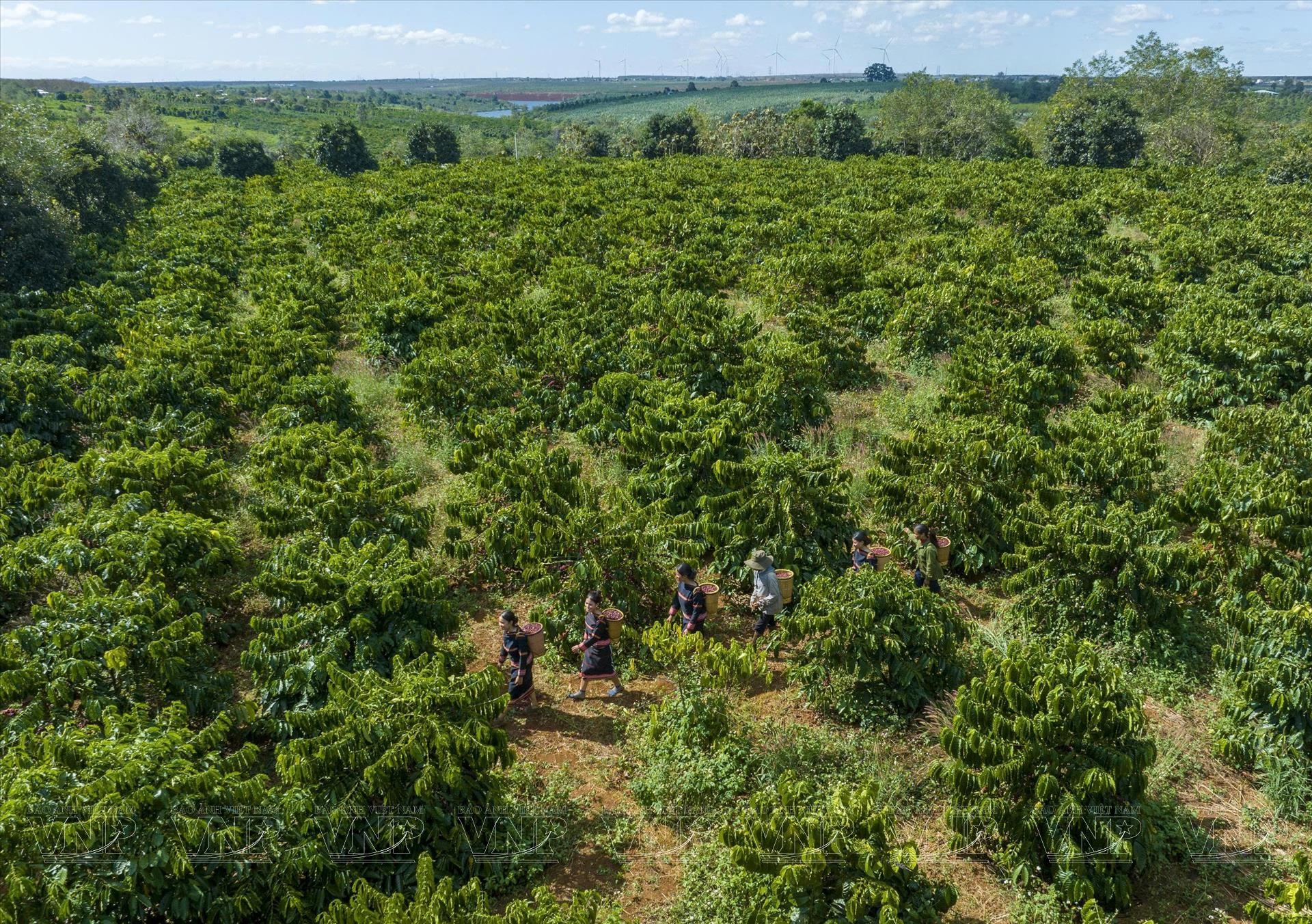 The organic coffee farm of Vinh Hiep Co., Ltd. in Gia Lai.
EUDR deadline raises urgency
The shift towards traceability and value-added production has become more urgent as Viet Nam’s main export markets introduce stricter sustainability requirements.
The European Union remains Viet Nam’s largest regional coffee market, accounting for more than 38% of the country’s exports. It is followed by the United States, Japan and China.
The EU Deforestation Regulation, known as the EUDR, will apply from December 30, 2026, to large and medium-sized operators. Most micro and small operators will be subject to the regulation from June 30, 2027.
The regulation requires covered products placed on the EU market to be traceable to their production plots and shown not to have originated from recently deforested land.
Thai Nhu Hiep, Chairman and General Director of Vinh Hiep and Vice Chairman of VICOFA, said the sustainable growth of Viet Nam’s coffee industry would increasingly depend on deep-processing capacity and the ability to comply with international market standards.
Requirements relating to traceability, data transparency, environmental responsibility and corporate practices were becoming increasingly stringent, he noted.
EUDR would not be the final new requirement confronting exporters, making early preparation essential for businesses seeking to remain in international supply chains.
Hiep said enterprises should improve the quality and transparency of their supply chain data while investing in digitalisation, green transformation and new technologies, including artificial intelligence.
Companies that fail to meet emerging international requirements risk being excluded from the market, he warned.
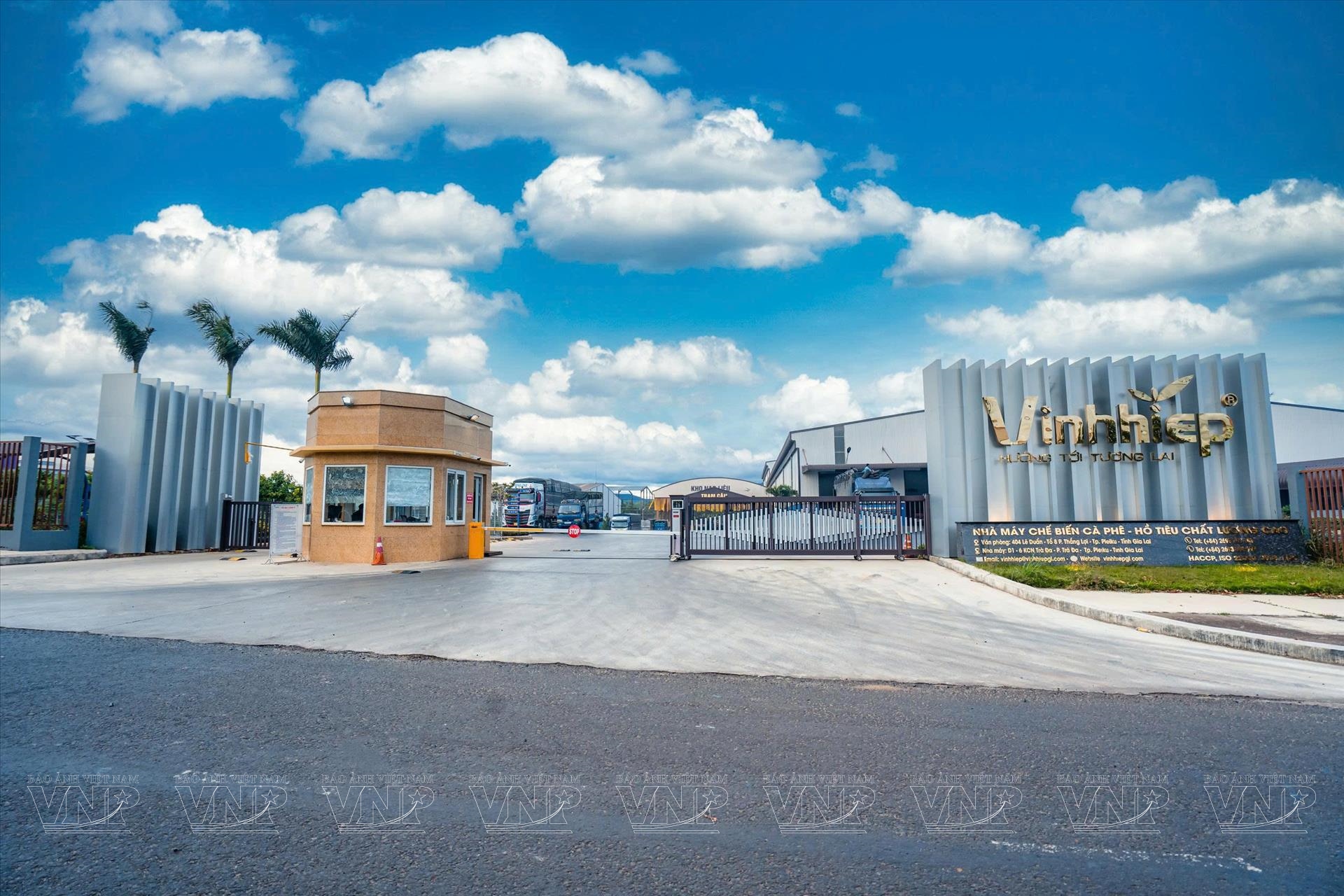 The high-quality coffee and pepper processing plant of Vinh Hiep Co., Ltd.
Global surplus may add price pressure
The need to raise export value is expected to become more pressing in the 2026–2027 crop year.
Global coffee supply is forecast to move into surplus, potentially putting further pressure on international prices. Vietnamese exporters will also have to contend with financing costs, logistics risks, exchange-rate movements and increasingly complex market requirements.
Against this background, the sector is seeking to shift from volume-based expansion to growth driven by quality, processing, traceability and branding.
Trade promotion efforts are also expected to move beyond individual activities towards a more coordinated approach involving government agencies, VICOFA, coffee-growing localities and Viet Nam’s overseas trade offices.
Vinh Hiep’s top ranking demonstrates the scale and operational capacity that a Vietnamese enterprise has developed in the international green coffee trade.
The wider challenge, however, is to convert that scale into higher value as raw bean prices weaken and global buyers place greater emphasis on sustainability and traceable sourcing.
Viet Nam’s record 8.5-billion-US dollar export result provides a strong foundation. Yet the industry’s ability to sustain that performance will increasingly depend on how much value it can create beyond the green coffee bean./.
By VNP