The “Mock King” Procession at the Sai Temple Festival
In the festive atmosphere of a traditional spring celebration in Thu Lam Commune on the outskirts of Hanoi, the “Mock King” procession at Sai Temple offers a striking cultural spectacle.
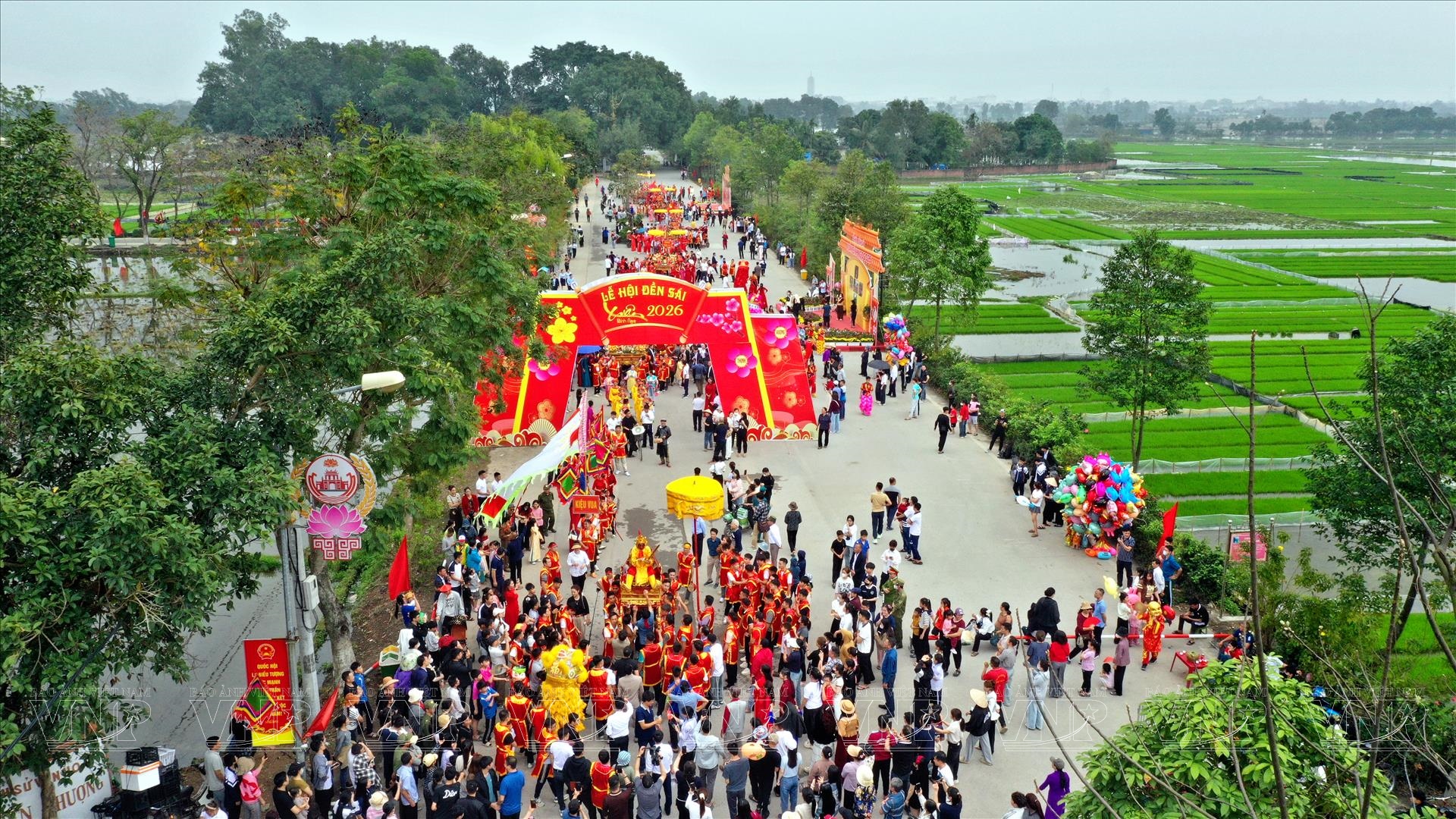
The Sai Temple Festival, known for its distinctive “Mock King” procession, was recently recognized by the Vietnamese State as a national intangible cultural heritage. The designation highlights the festival’s cultural significance and its role in preserving and promoting traditional values in modern society.
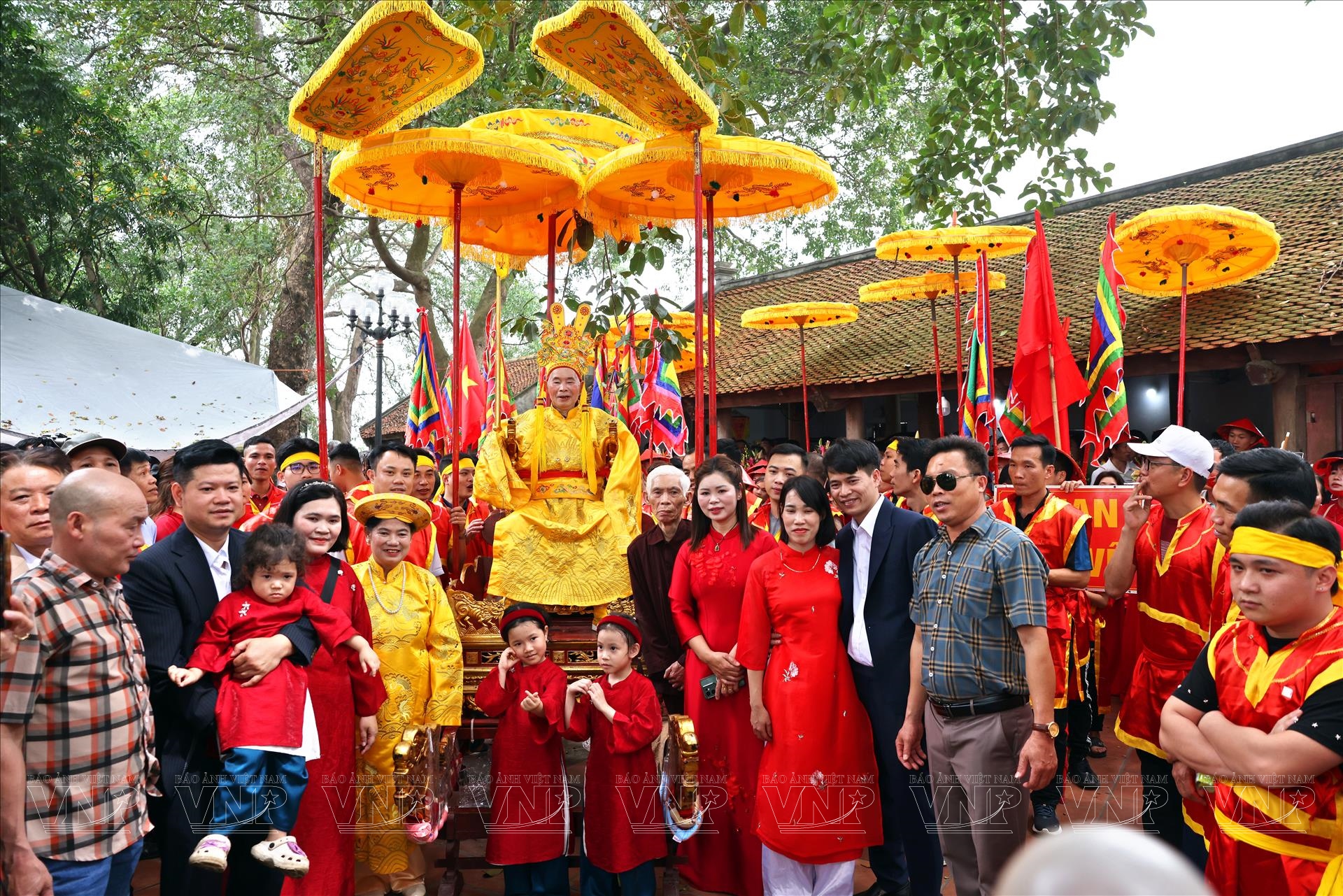
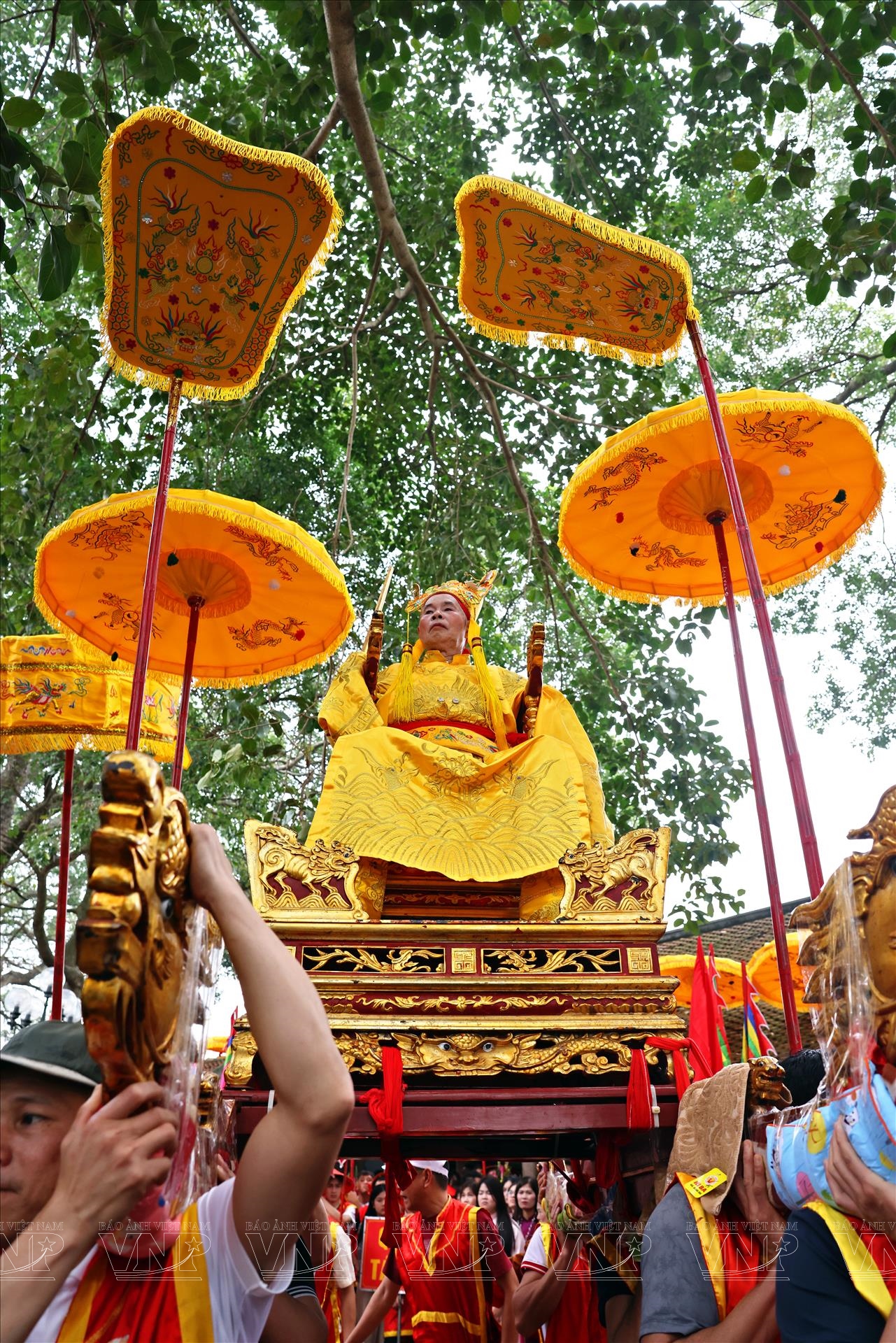
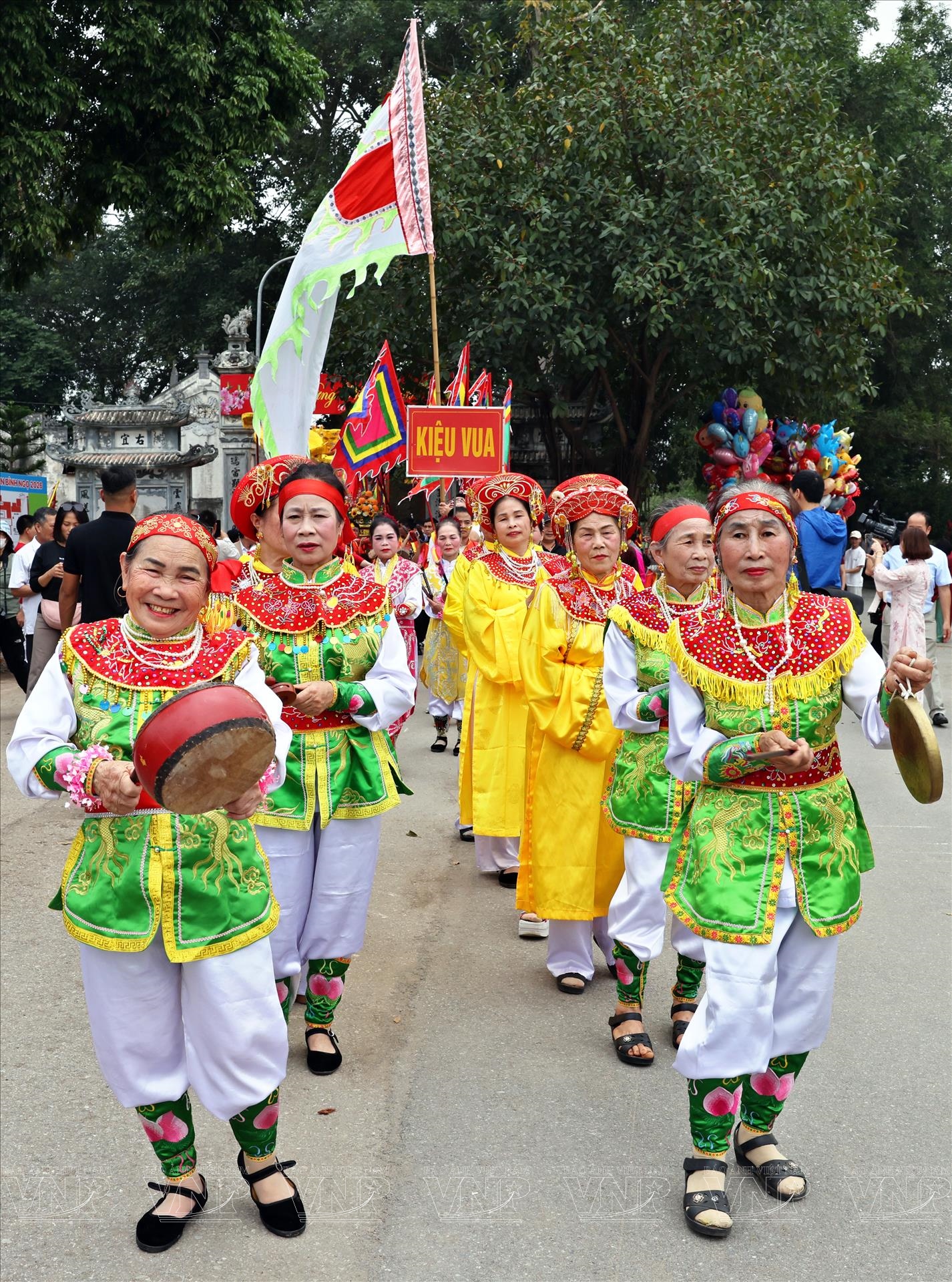
Featuring solemn processions, beautiful ceremonial costumes and symbolic rites, the festival not only revives historical memories associated with the legend of the Co Loa Citadel but also reflects the enduring vitality of Vietnam’s traditional village culture in contemporary life.
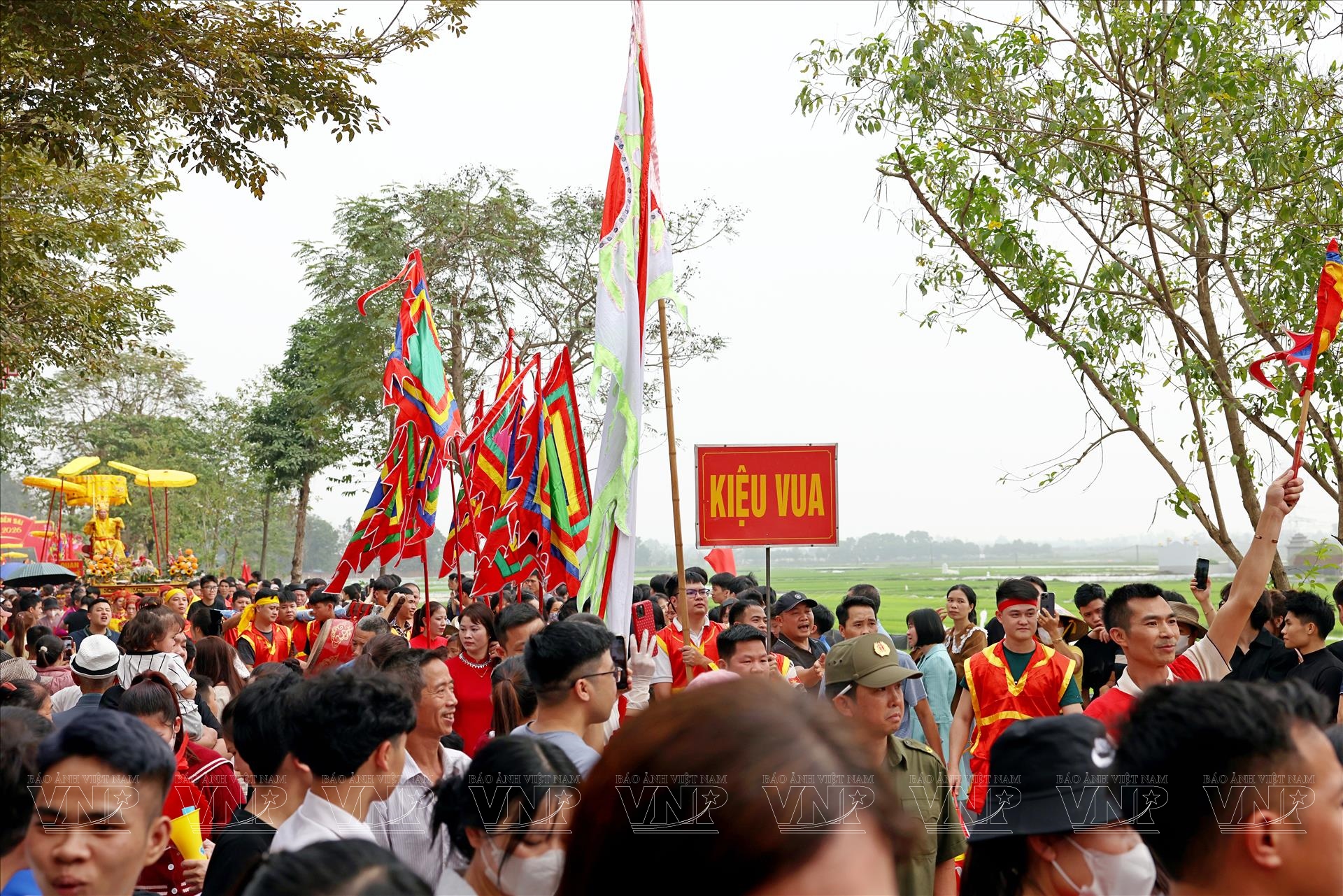
From early morning, village roads in Thu Lam Commune come alive with the sounds of drums and gongs as festival flags flutter in the breeze. Residents and procession groups gather at the communal house and Sai Temple to prepare for the main rituals.
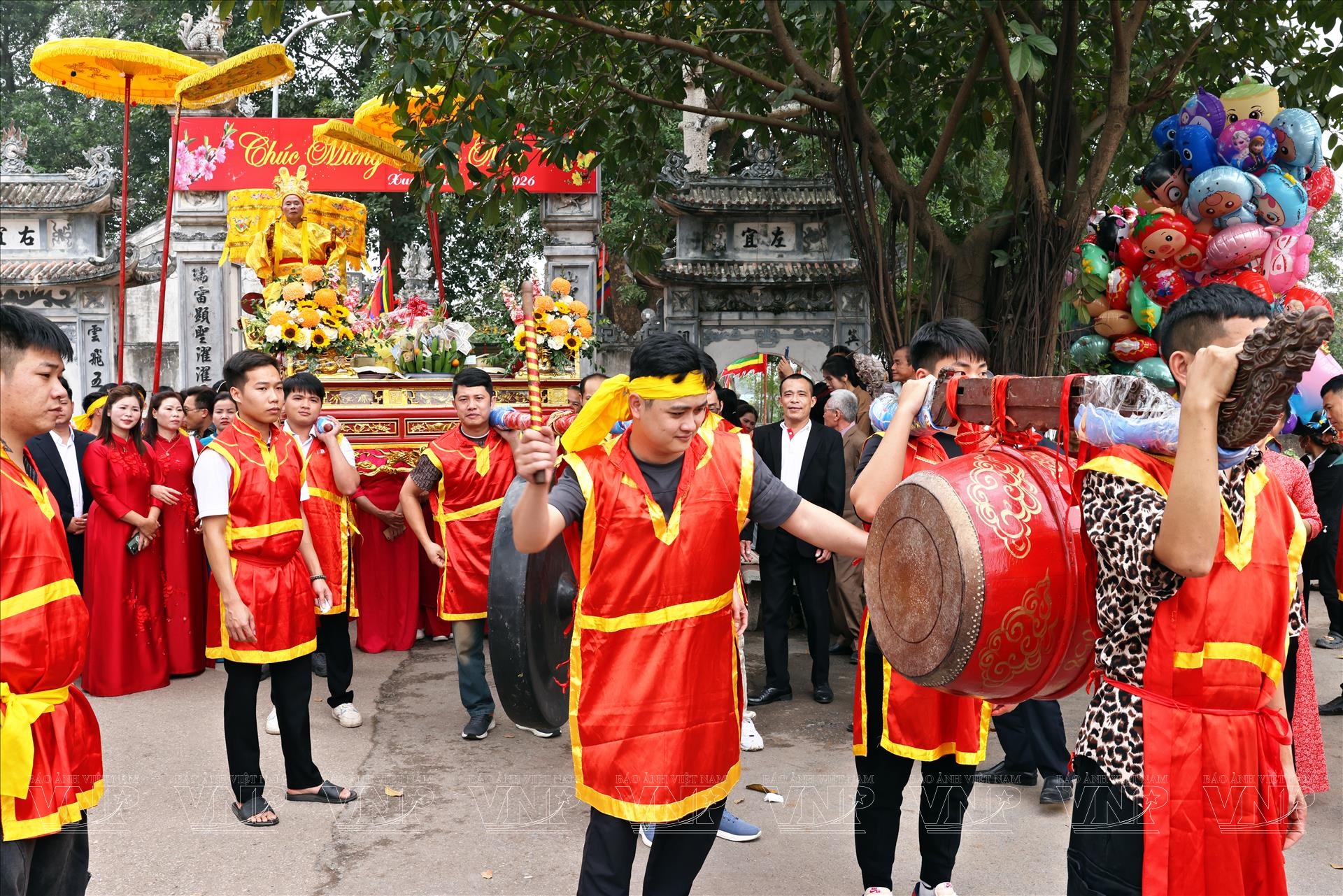
The festival is closely associated with the worship of Huyen Thien Tran Vu, a revered deity believed to have assisted An Duong Vuong (257 -208 BCE) in the legendary construction of the Co Loa Citadel.
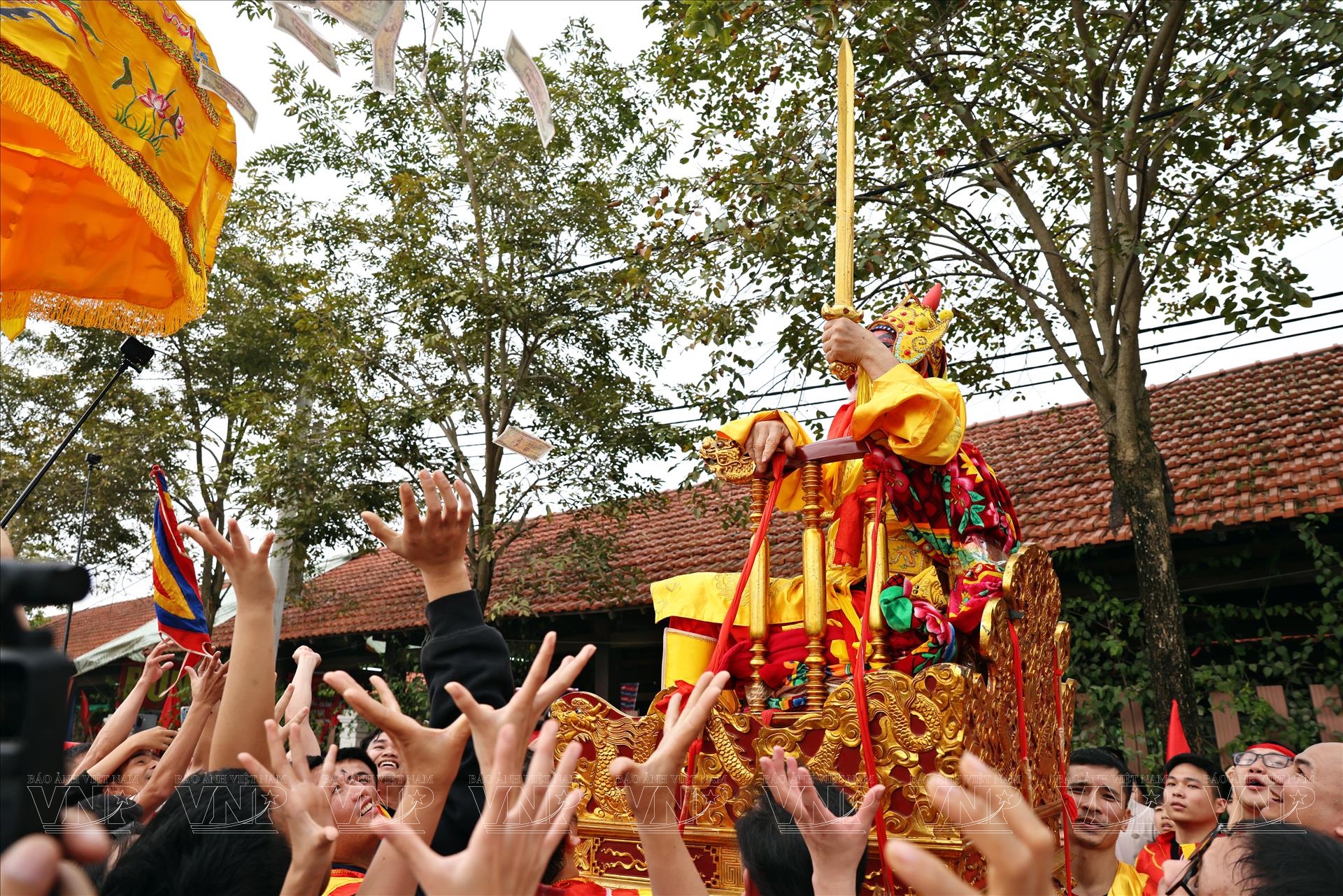
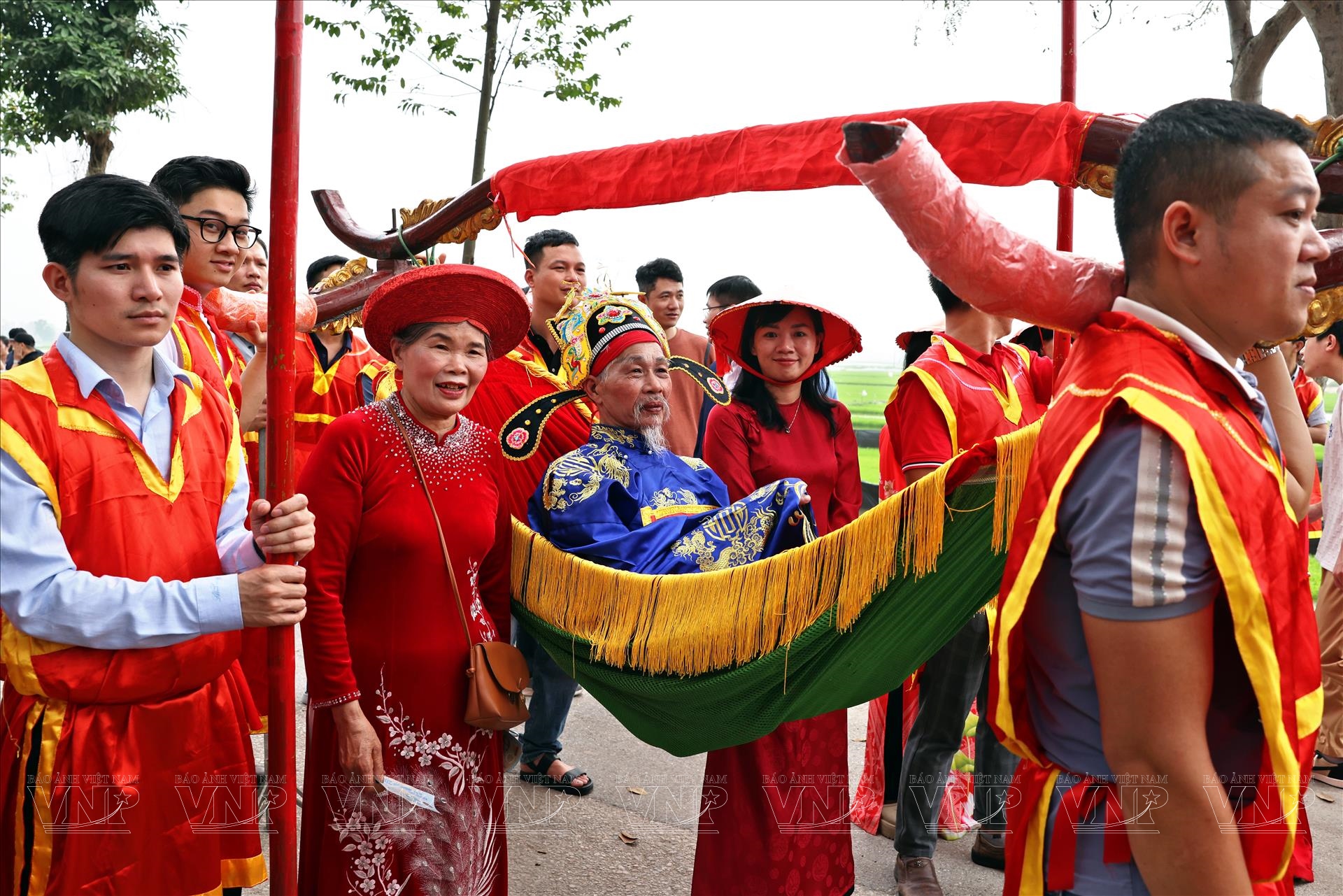
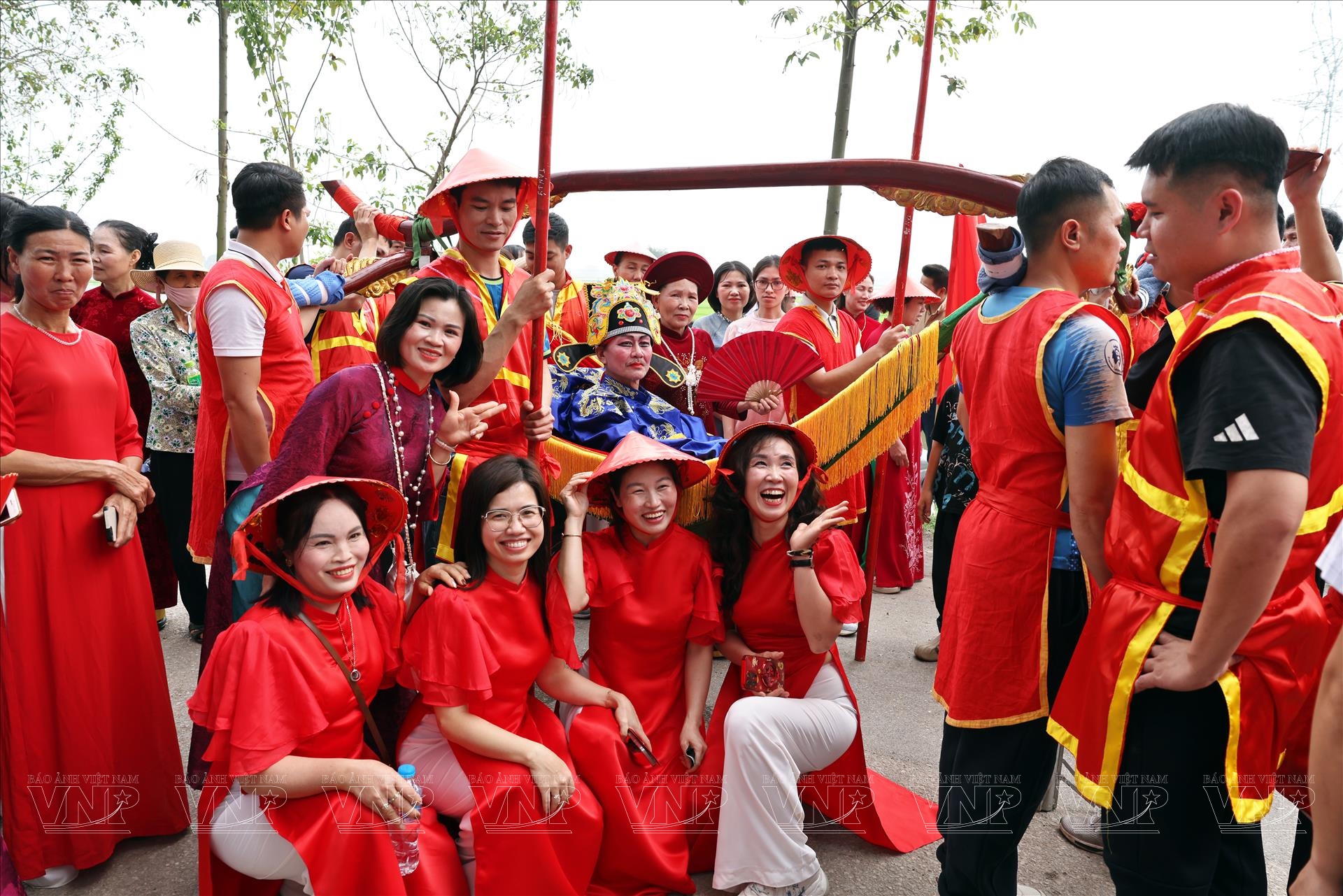
The highlight of the celebration is the “Mock King” procession. Respected village elders are selected to assume the roles of king, lord and royal officials, dressed in traditional attire. According to the customs, the procession features palanquins for both the king and the lord, accompanied by attendants bearing titles such as Quan Thu Ve, Quan Tan Ly, Quan De Linh and Quan Tran Thu.
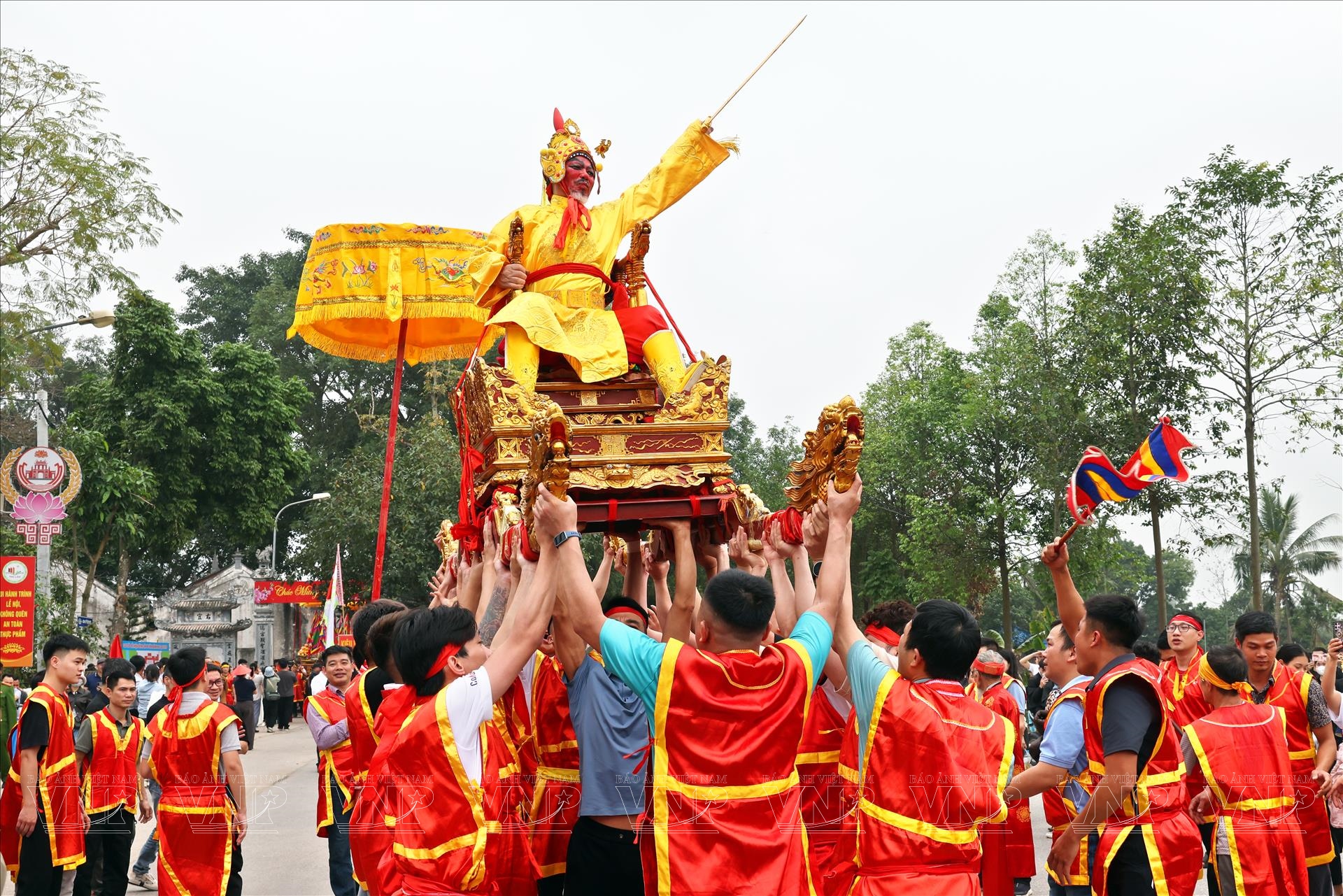
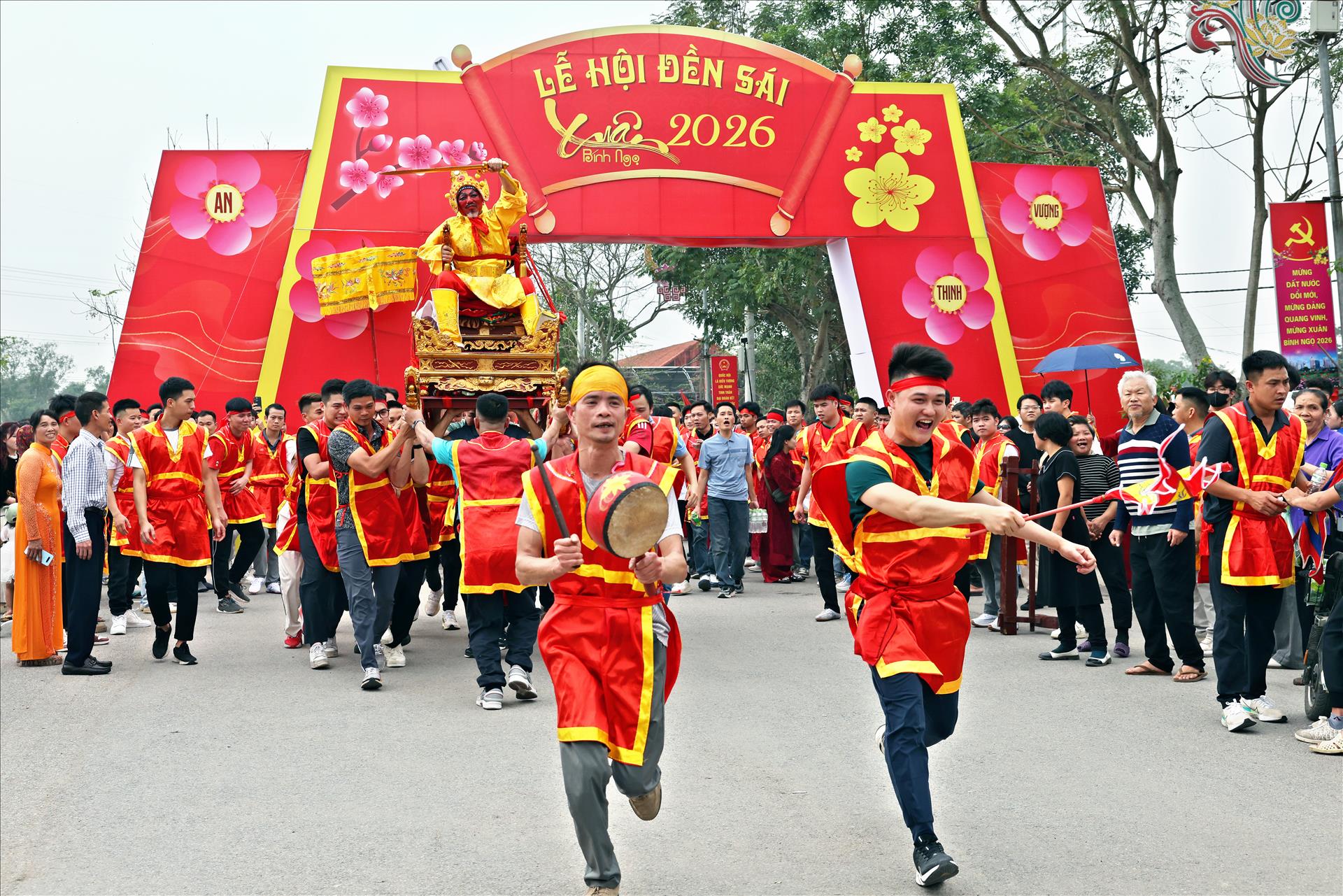
At the heart of the procession is the “Mock King,” chosen by villagers and seated on a palanquin beneath a ceremonial parasol. He is escorted by a traditional music troupe, dancers and attendants portraying court officials. The colorful procession winds through village roads to the lively sounds of ceremonial music, drawing large crowds. It pauses Dong Chau field, where the “King” descends and ascends Vong Hill to perform a reverential ceremony dedicated to Saint Huyen Thien at Sai Temple.
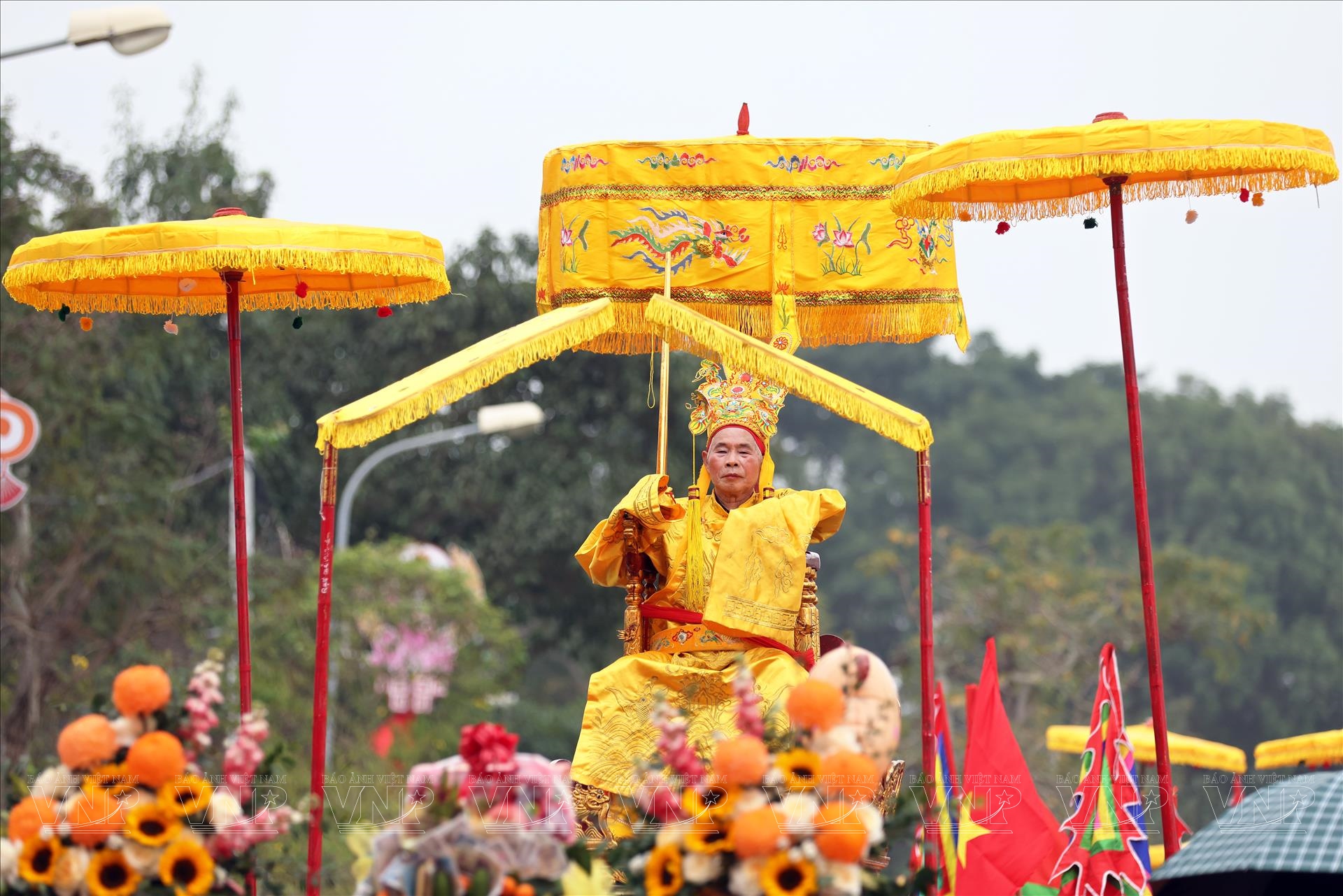
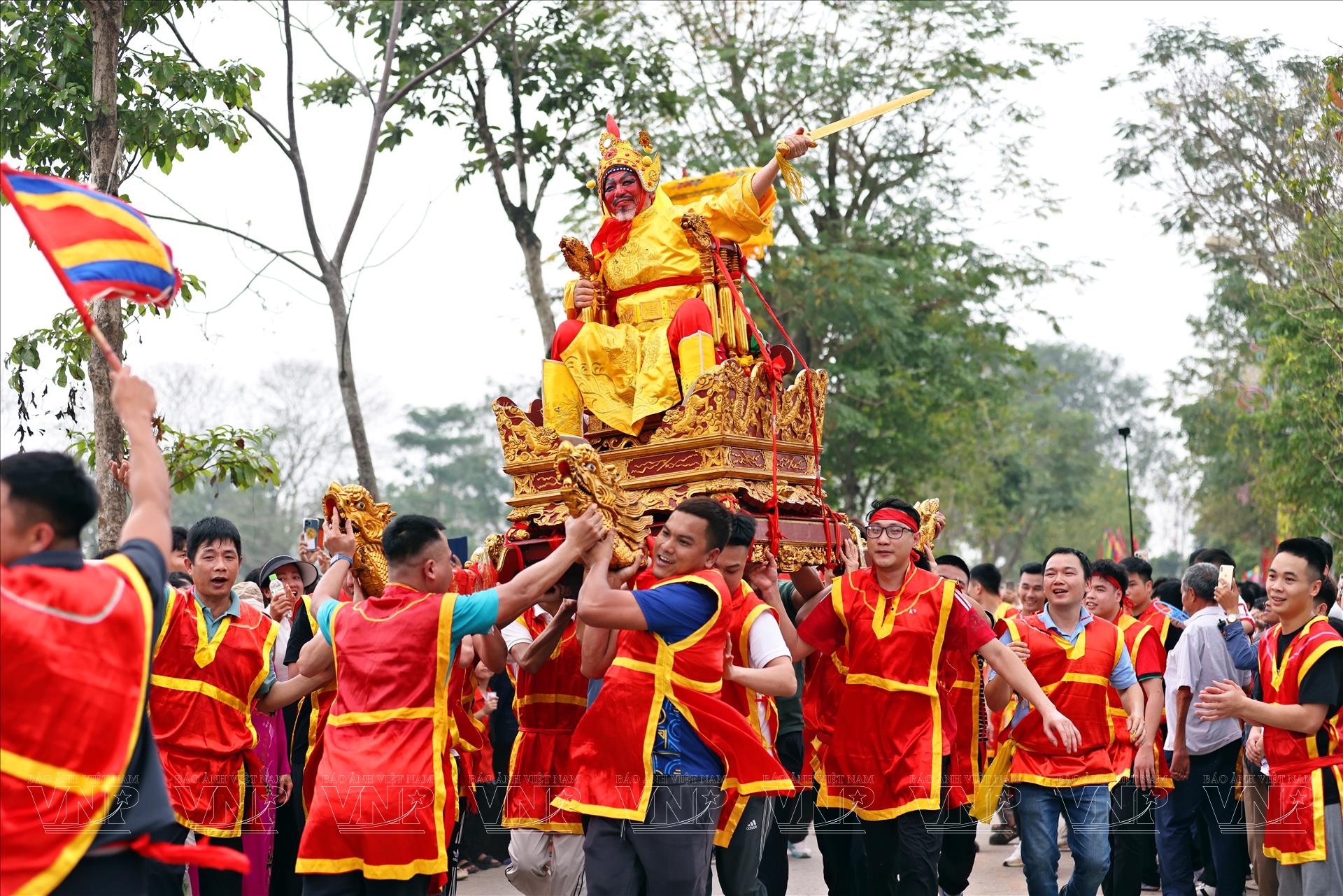
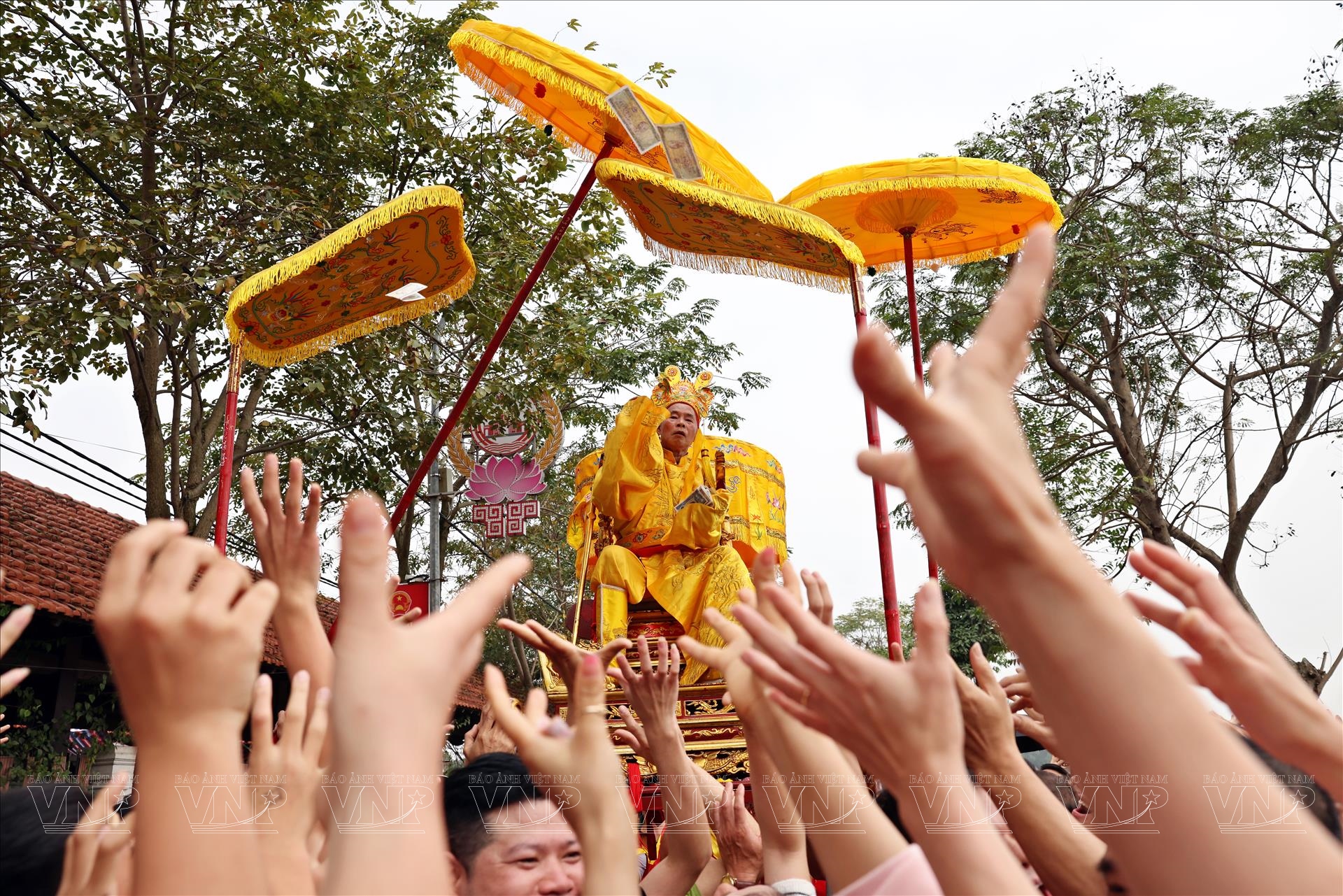
Meanwhile, the lord’s palanquin proceeds to Thuong Temple to carry out traditional rites, including the symbolic testing of a sword and striking a stone three times, an act imbued with layers of spiritual meaning in folk history, before entering the temple to pay homage to the spirit tablet of Cao Son Dai Vuong. After the ceremonies, the “King” returns to the communal house and takes his seat on a ceremonial throne amid the cheers of villagers.
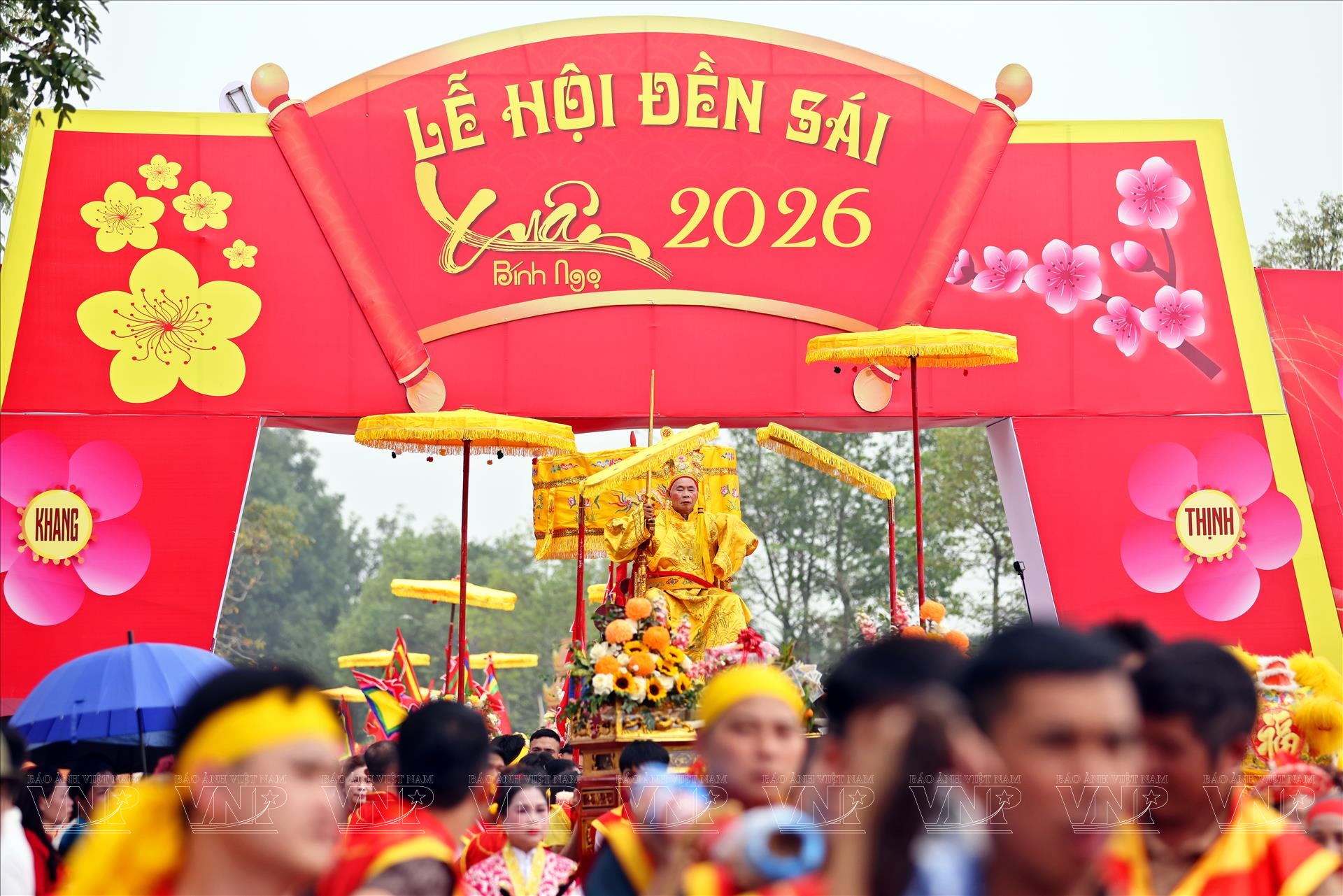
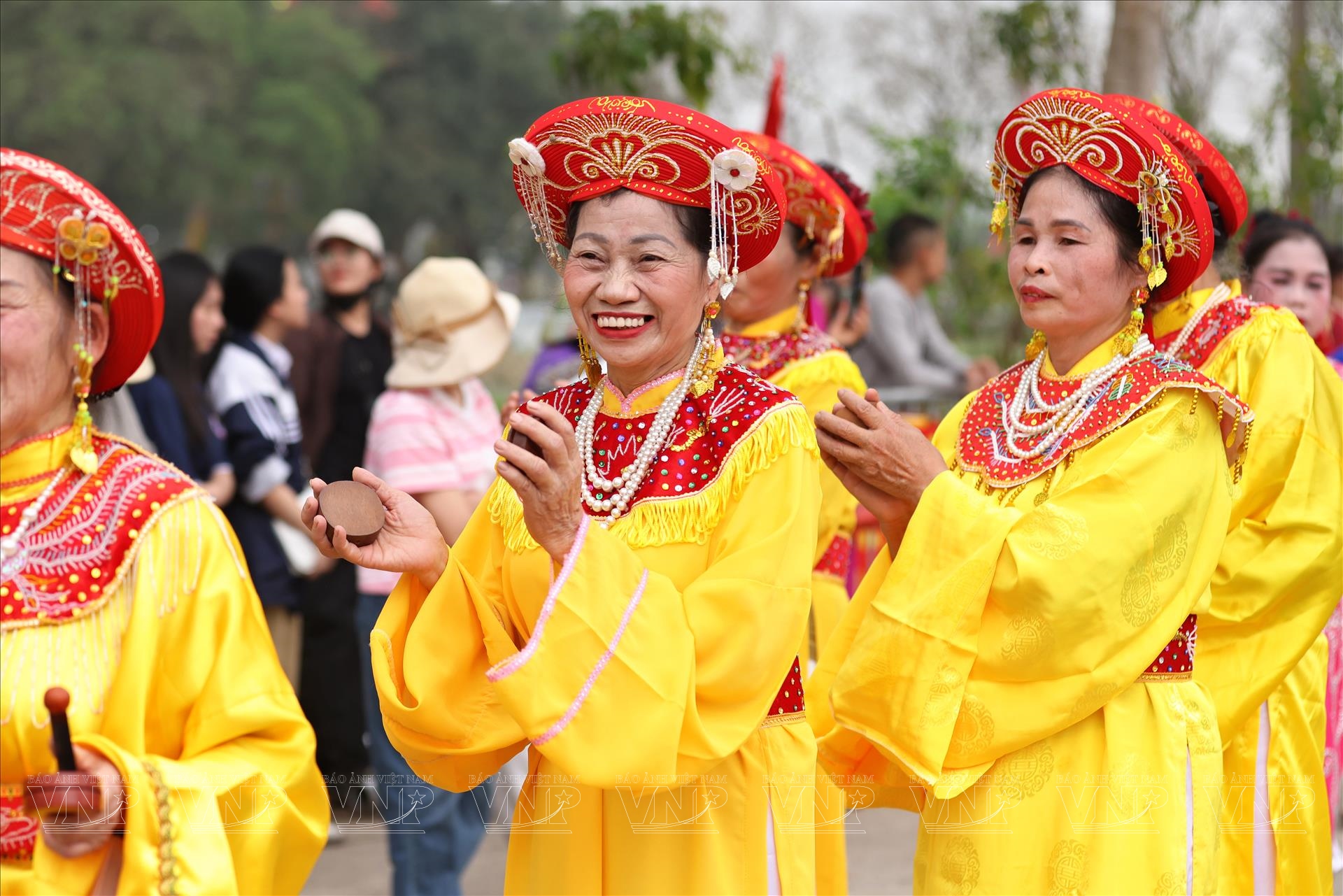
More than a ritual procession, the festival is a collective cultural undertaking, with residents participating in every stage, from preparations to performance, helping preserve the tradition through generations and sustain the vitality of Vietnam’s cultural heritage today.
By Cong Dat/VNP Translated by Nguyen Tuoi