Preserving the Spirit of Tet in Quang Phu Cau
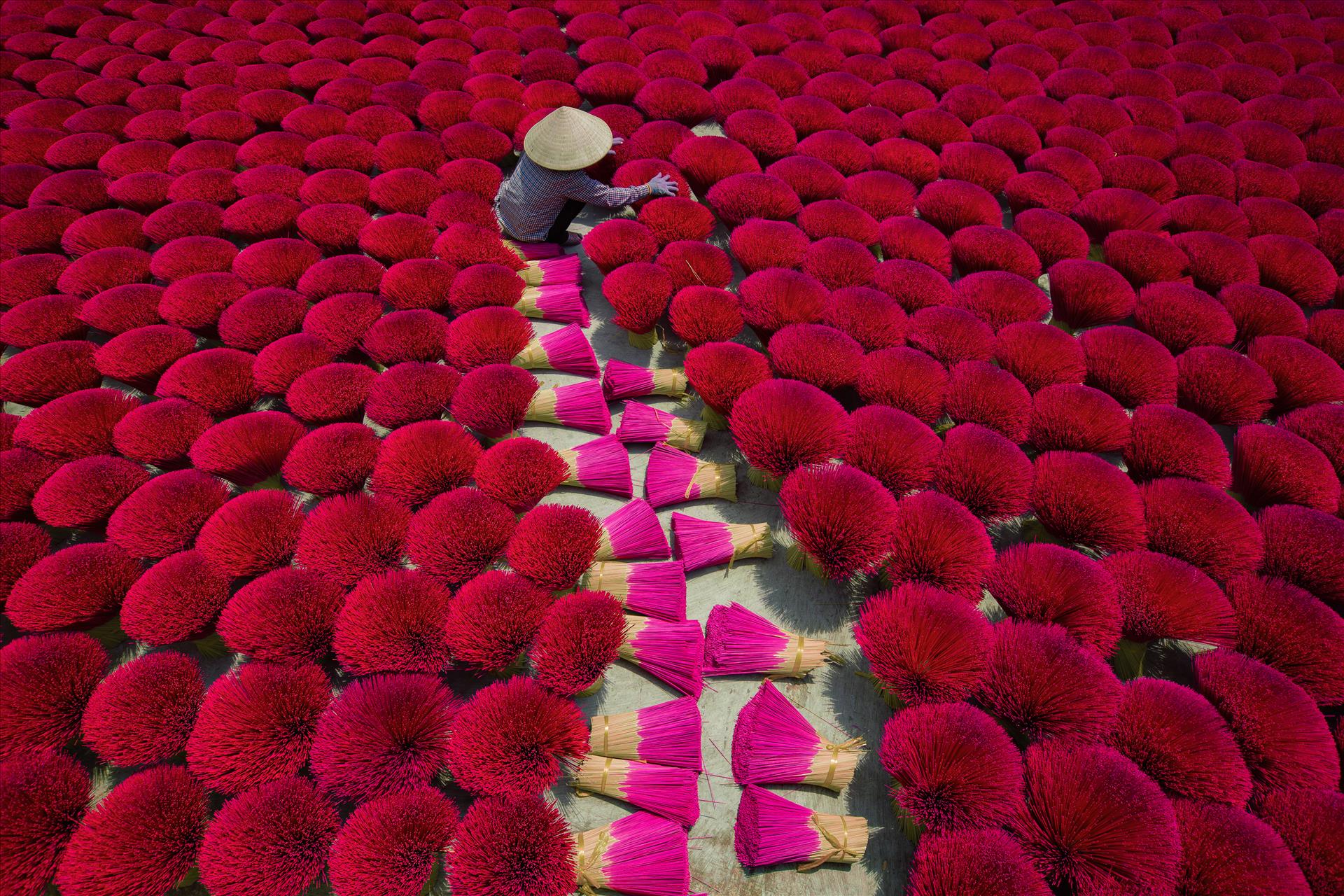
In the days leading up to the Year of the Horse, as spring quietly approaches villages across northern Vietnam, Quang Phu Cau – a centuries-old incense-making craft village in Ung Thien Commune, Hanoi enters its busiest season of the year.
The village is not only a place where ritual products are made - fragrant incense sticks, but also a living cultural space in which memory, belief, and the rhythms of Vietnamese life are preserved and passed down through generations.
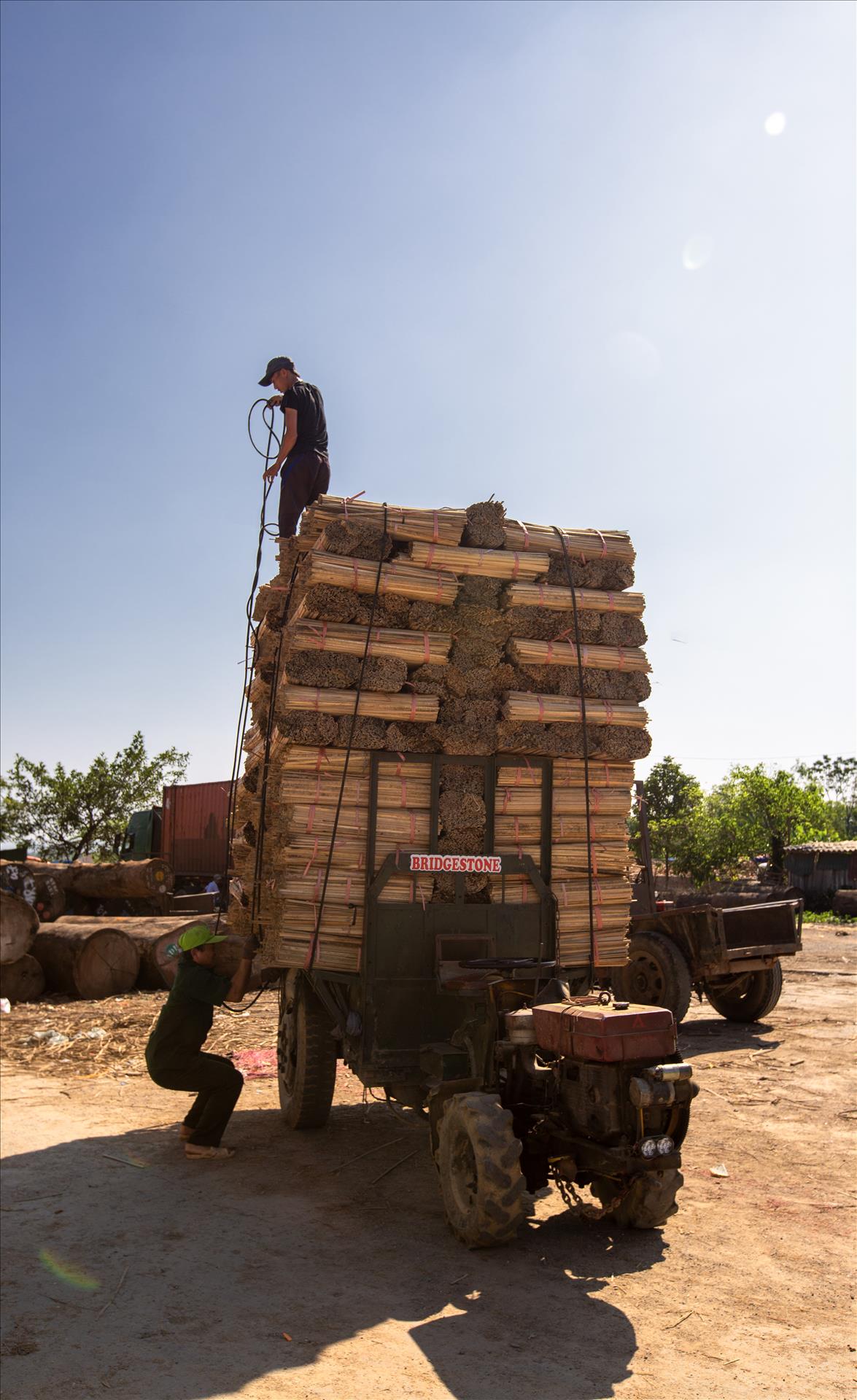
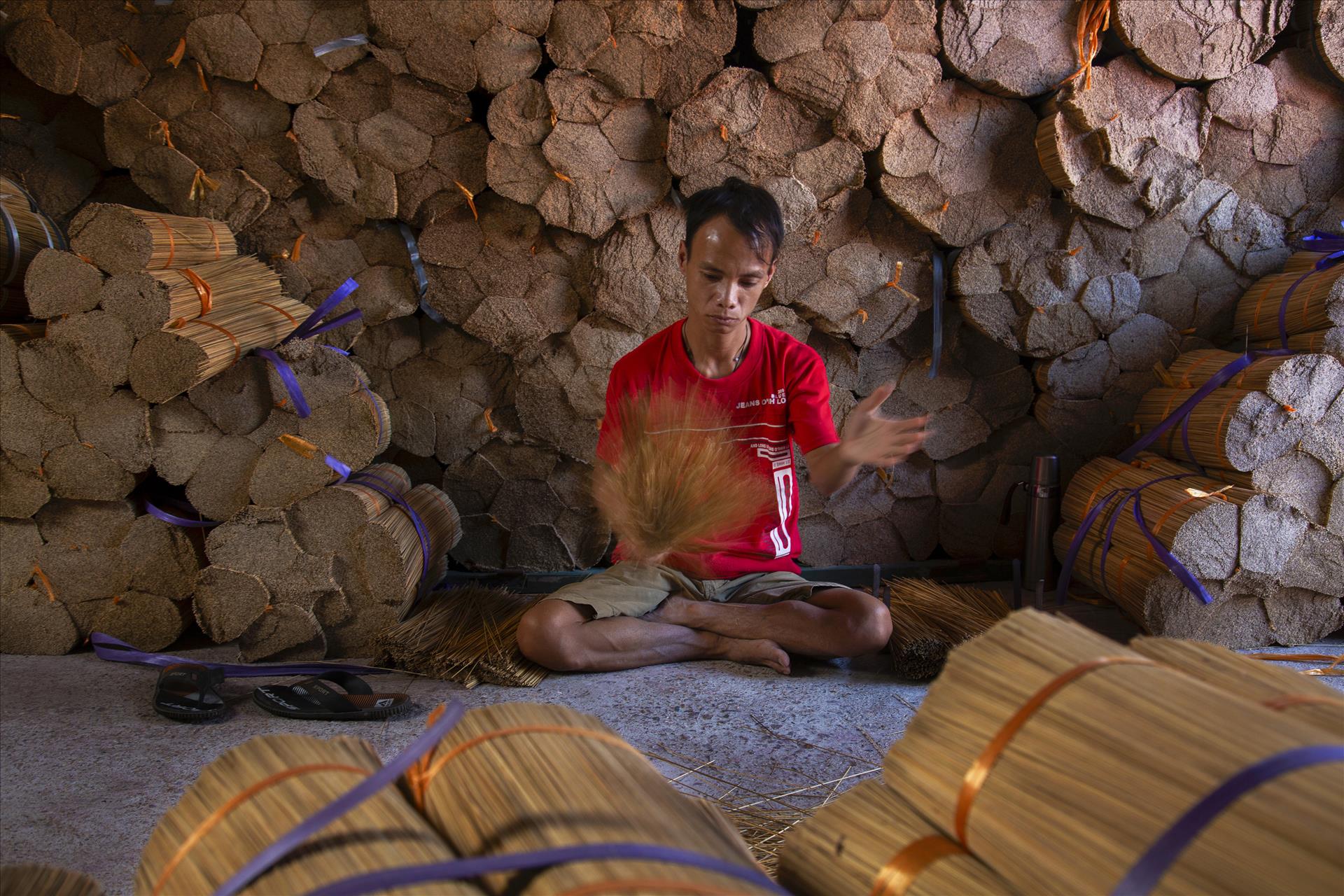
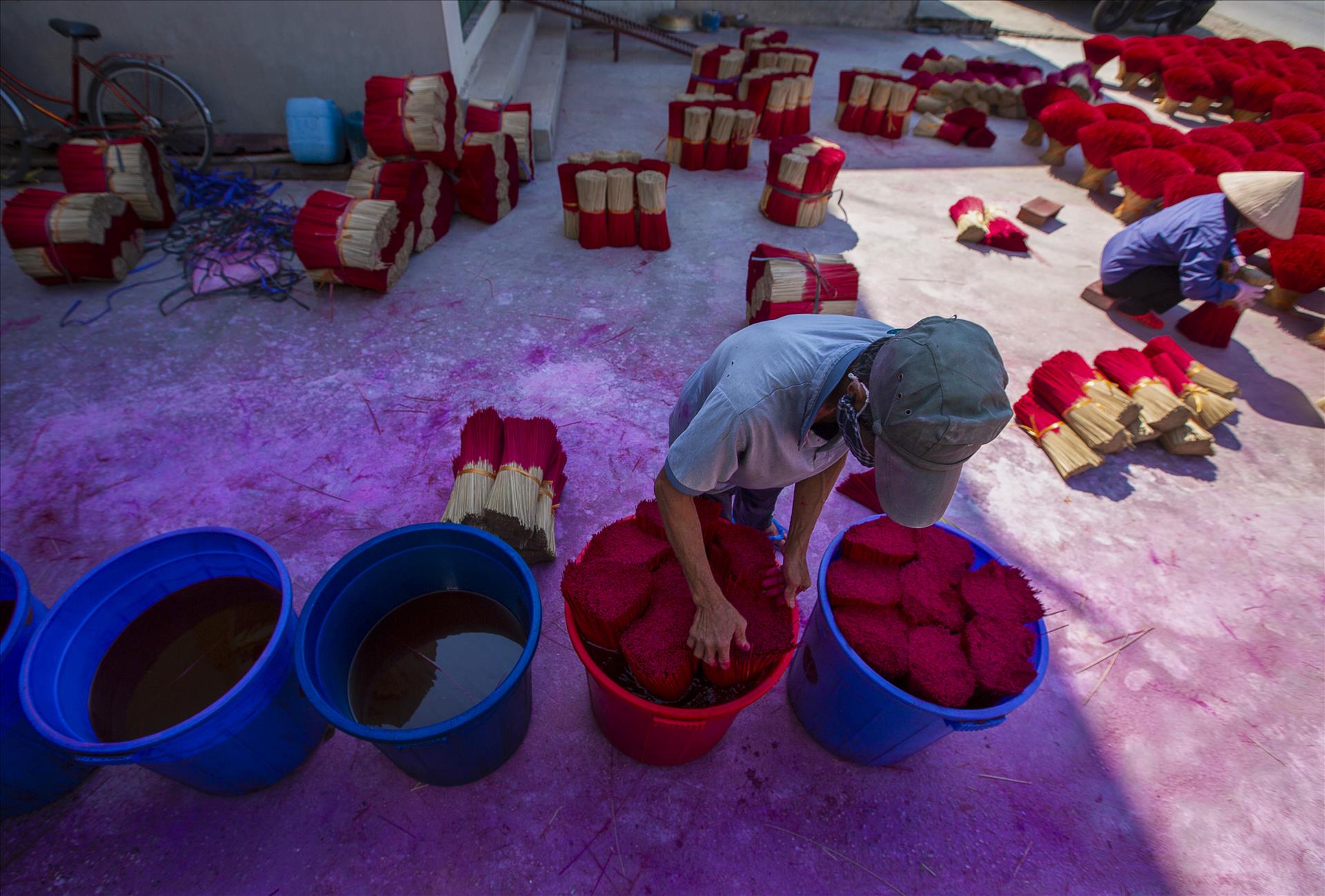
Visitors arriving in the village are immediately greeted by the gentle fragrance of agarwood, cinnamon, and star anise, scents deeply associated with Vietnamese spiritual life as Tet arrives and spring returns. Behind this familiar aroma lies the vibrant pulse of an incense-making village more than a century old, steadfastly safeguarding tradition while adapting to the growth of Hanoi’s cultural industries.
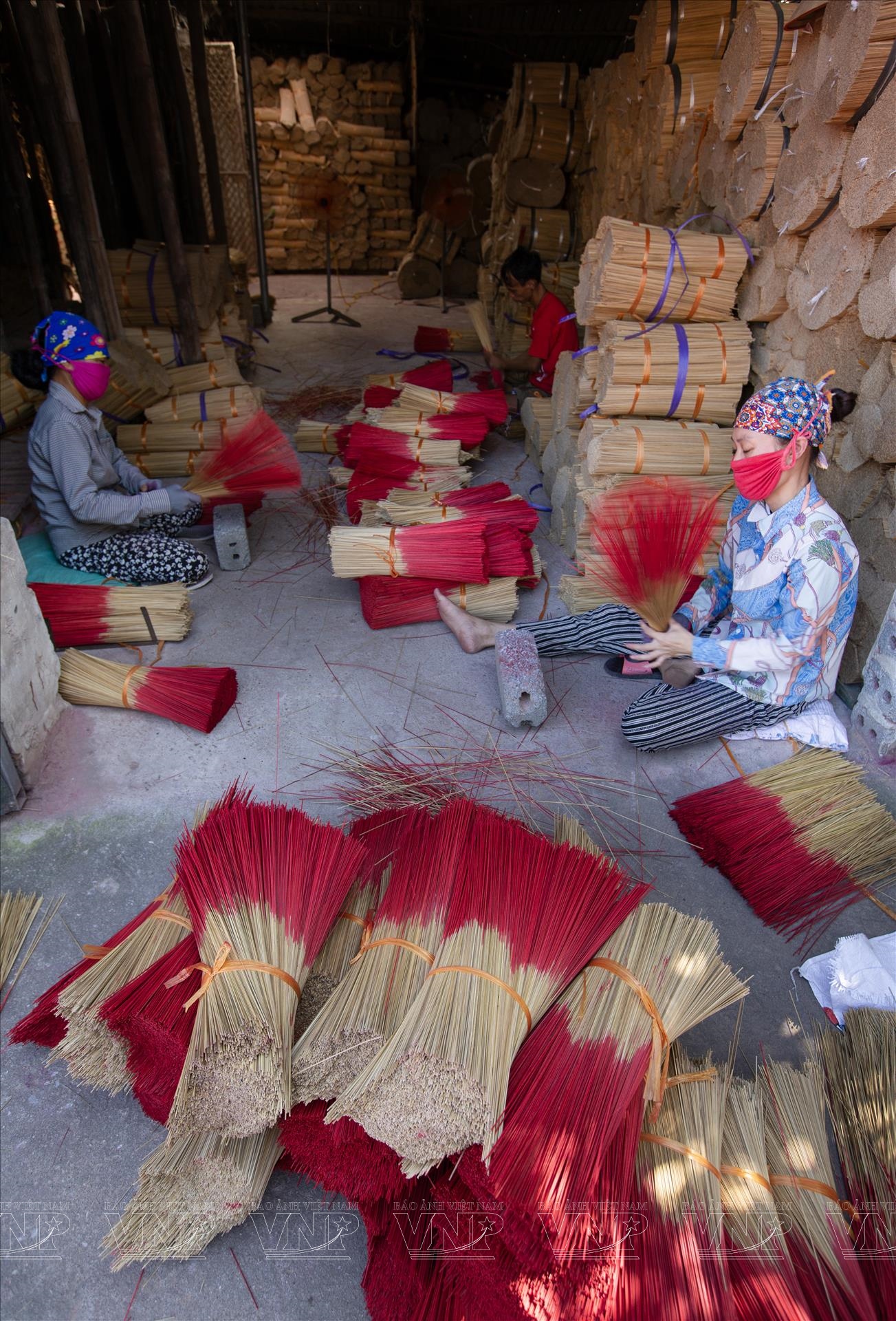
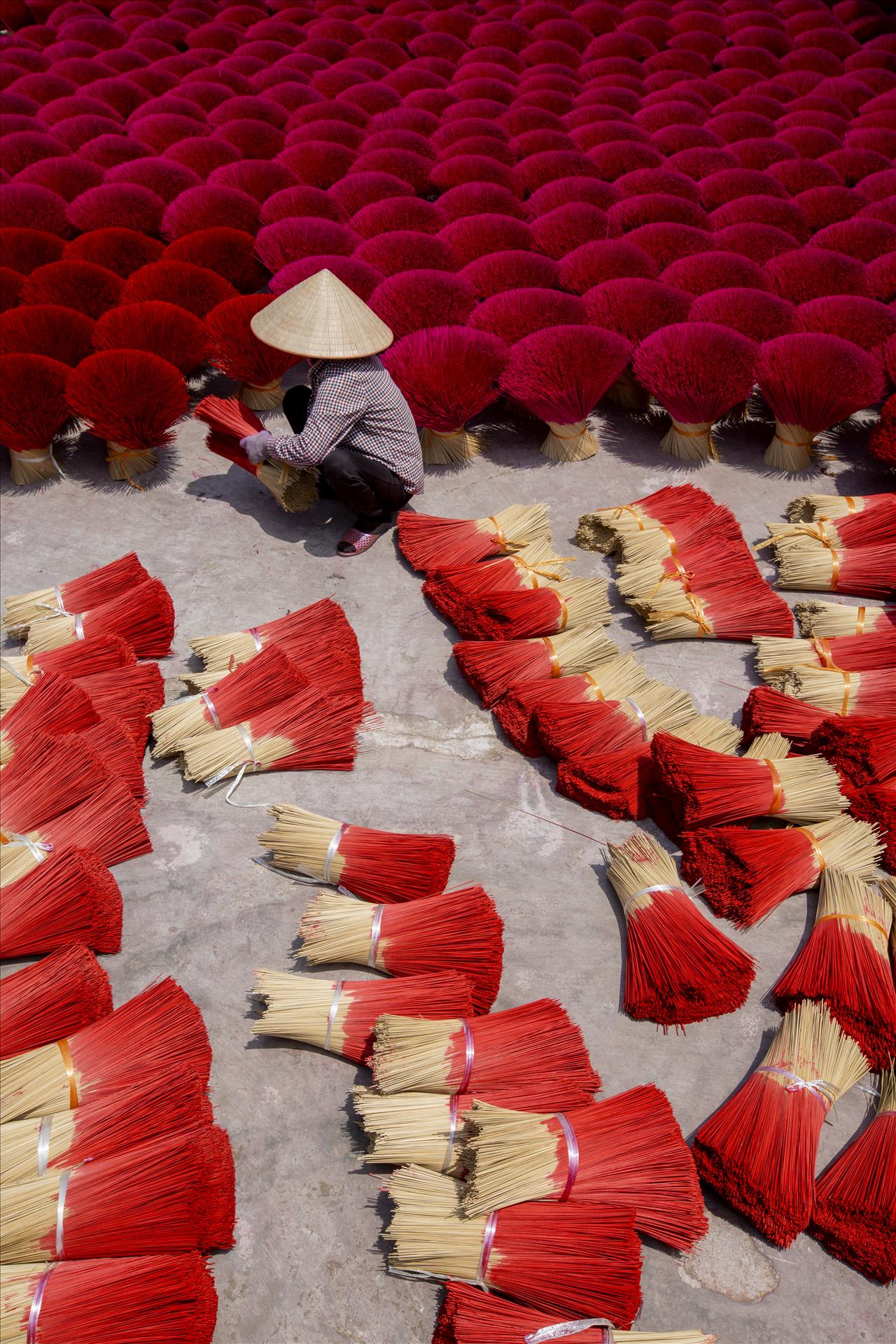
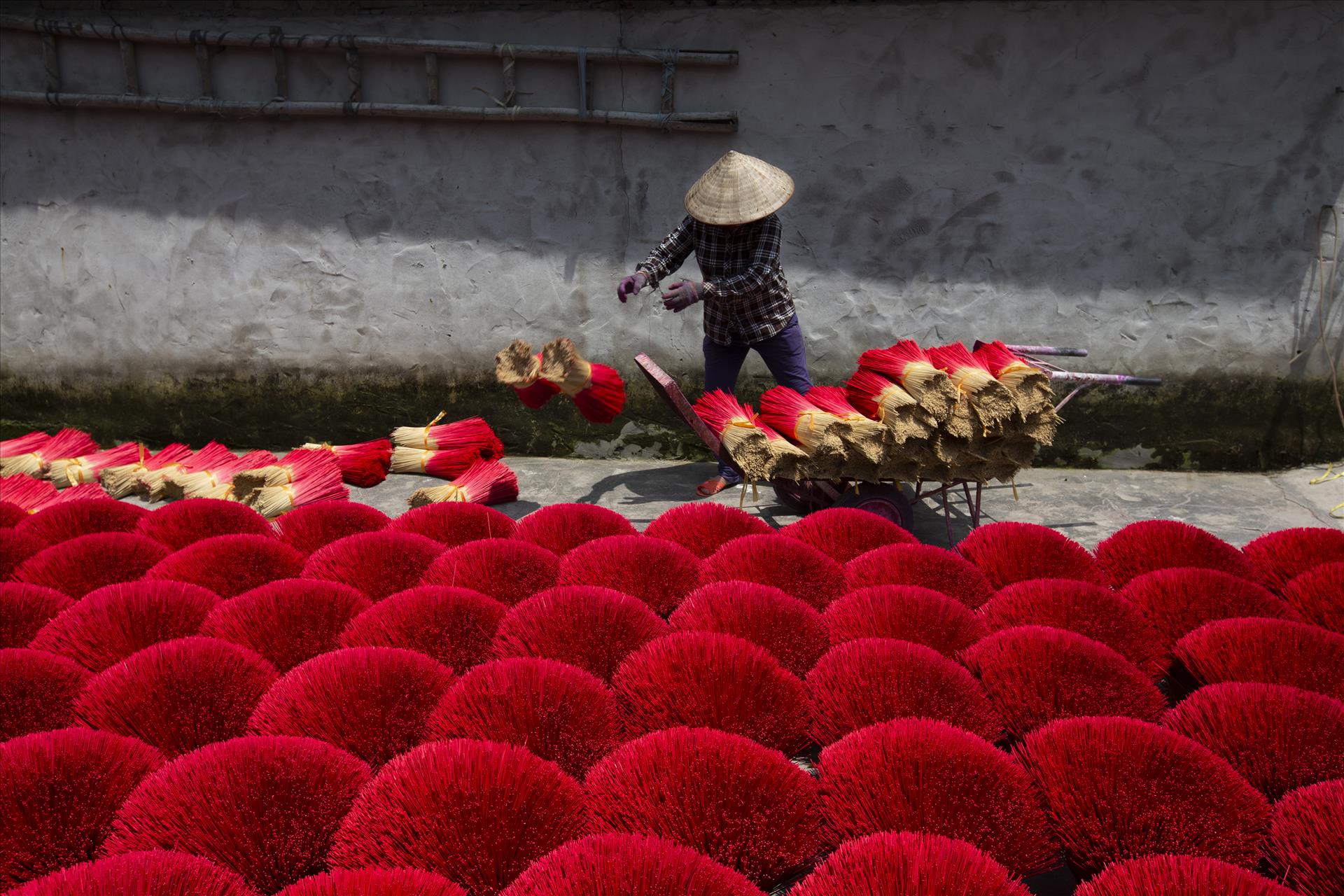
Incense making has long been the fabric of local life. In the past, every stage of production was carried out by hand, from shaping bamboo sticks and dyeing their bases to rolling the incense and laying it out to dry, an exacting process that demanded both time and skill. Despite sweeping social and economic changes, the craft has remained a vital livelihood. According to local authorities, about 70% of households in Quang Phu Cau are now involved in incense production, providing stable employment and income for thousands of workers.
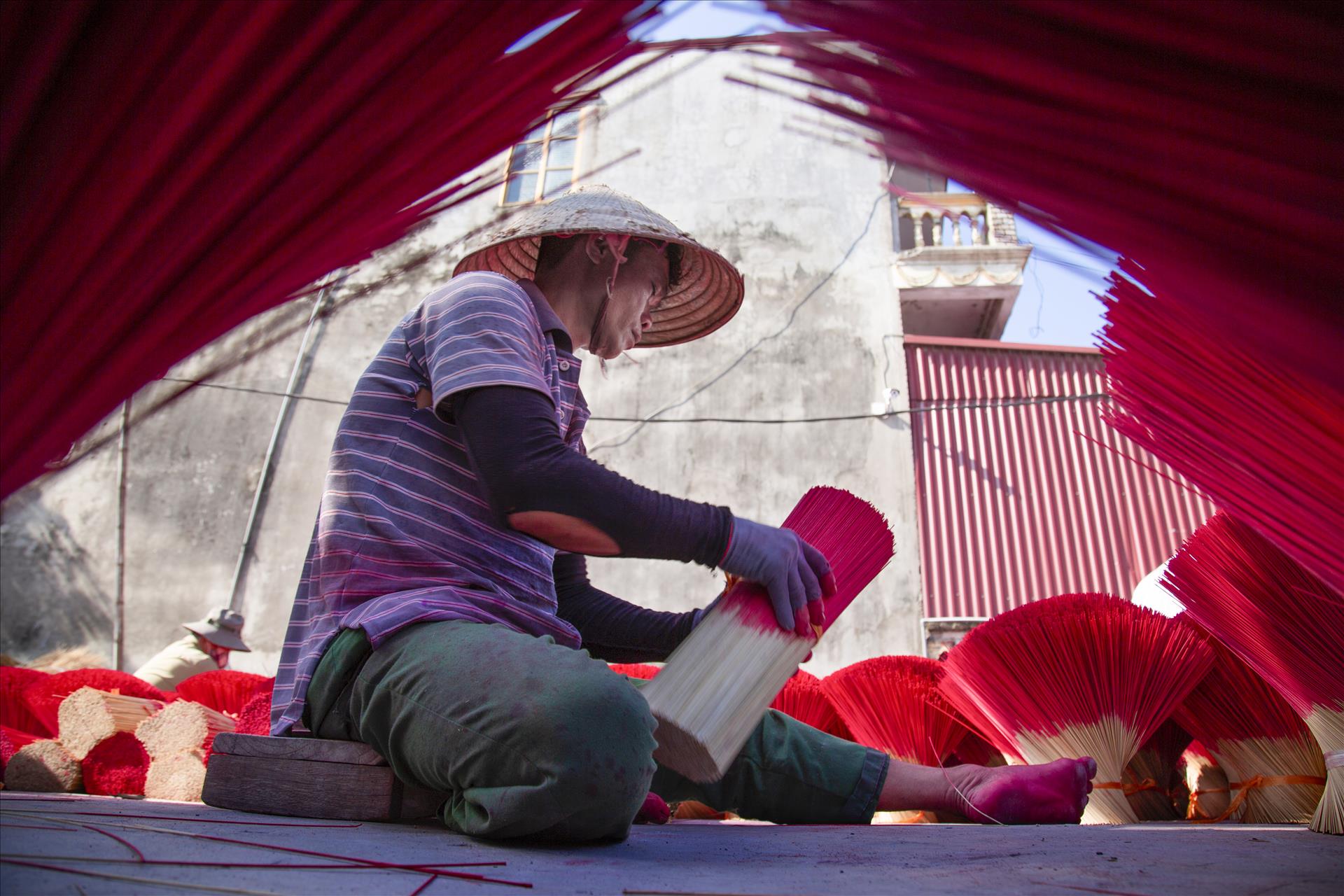
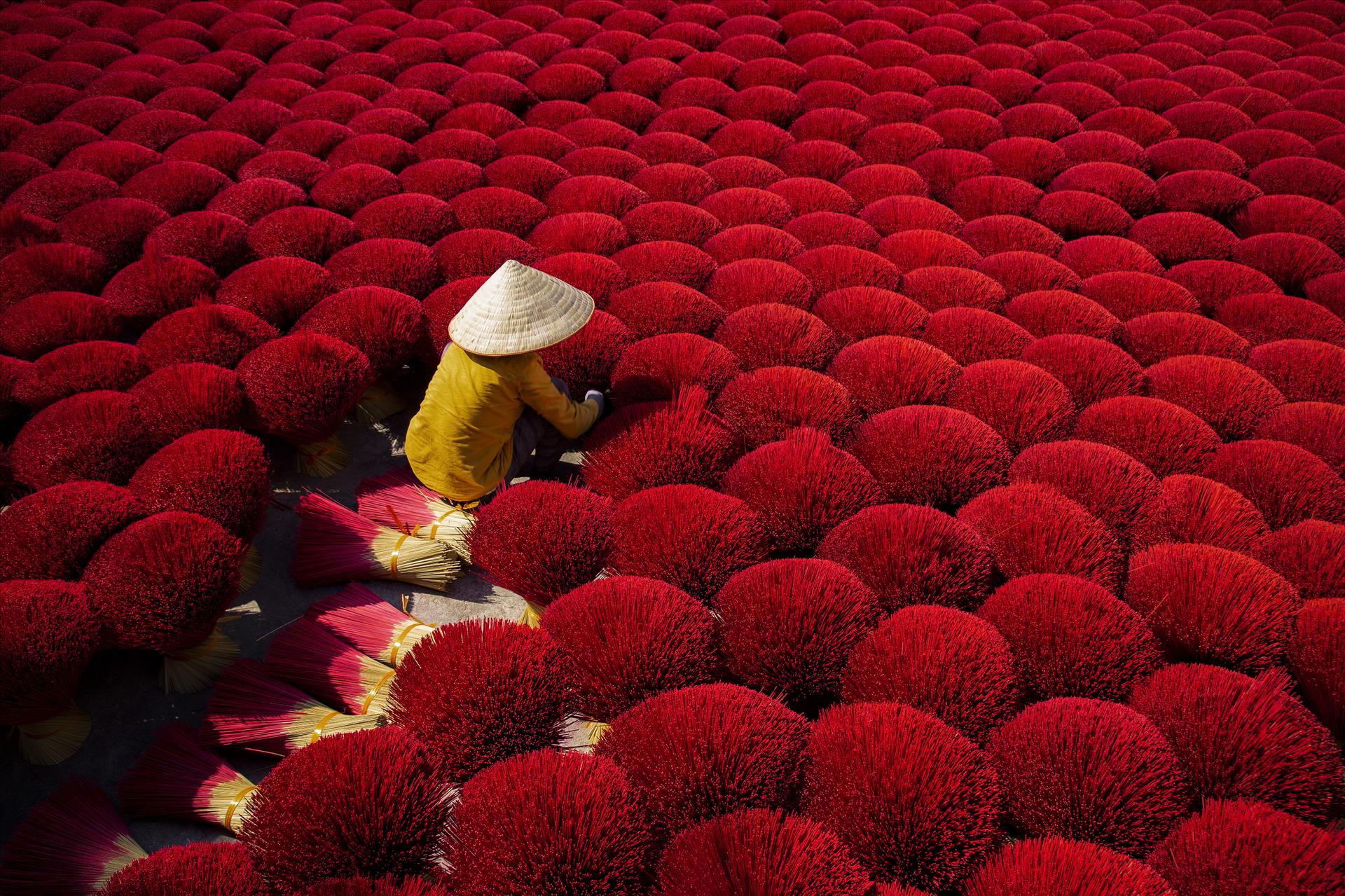
Mai, a fourth-generation incense maker, speaks with pride tempered by reflection. “To produce a truly fine batch of incense, craftsmen still rely on the dedication and experience handed down from our ancestors, especially in selecting ingredients such as agarwood, cinnamon, and star anise to preserve a natural, safe fragrance,” she said. “Modern machinery helps ease the workload and improves productivity and consistency, but the soul of the craft still lies in human hands and sensibility”.
By investing in new technology, the village has significantly increased productivity, helping stabilize incomes that often range from 500,000 to 700,000 dong (approximately 20 - 28 US dollars)/day. This adaptability underscores how a traditional craft village can remain relevant, actively renewing itself rather than standing apart from the rhythms of modern life.
Incense products from Quang Phu Cau are now exported to China, India, Malaysia, and the United Kingdom. At the same time, craft village tourism brings dual benefits to the community - boosting the local economy while helping preserve long-standing cultural traditions.
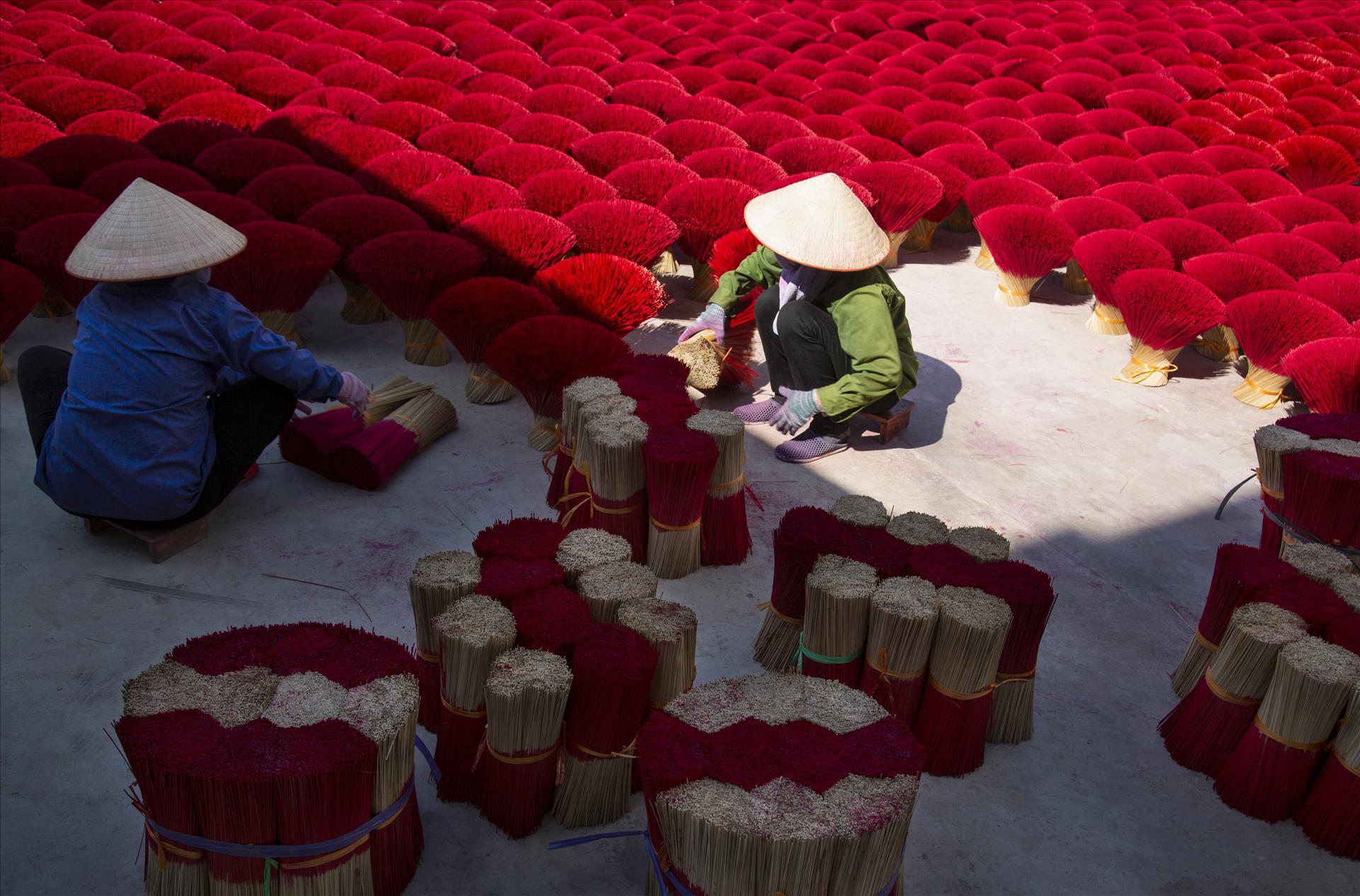

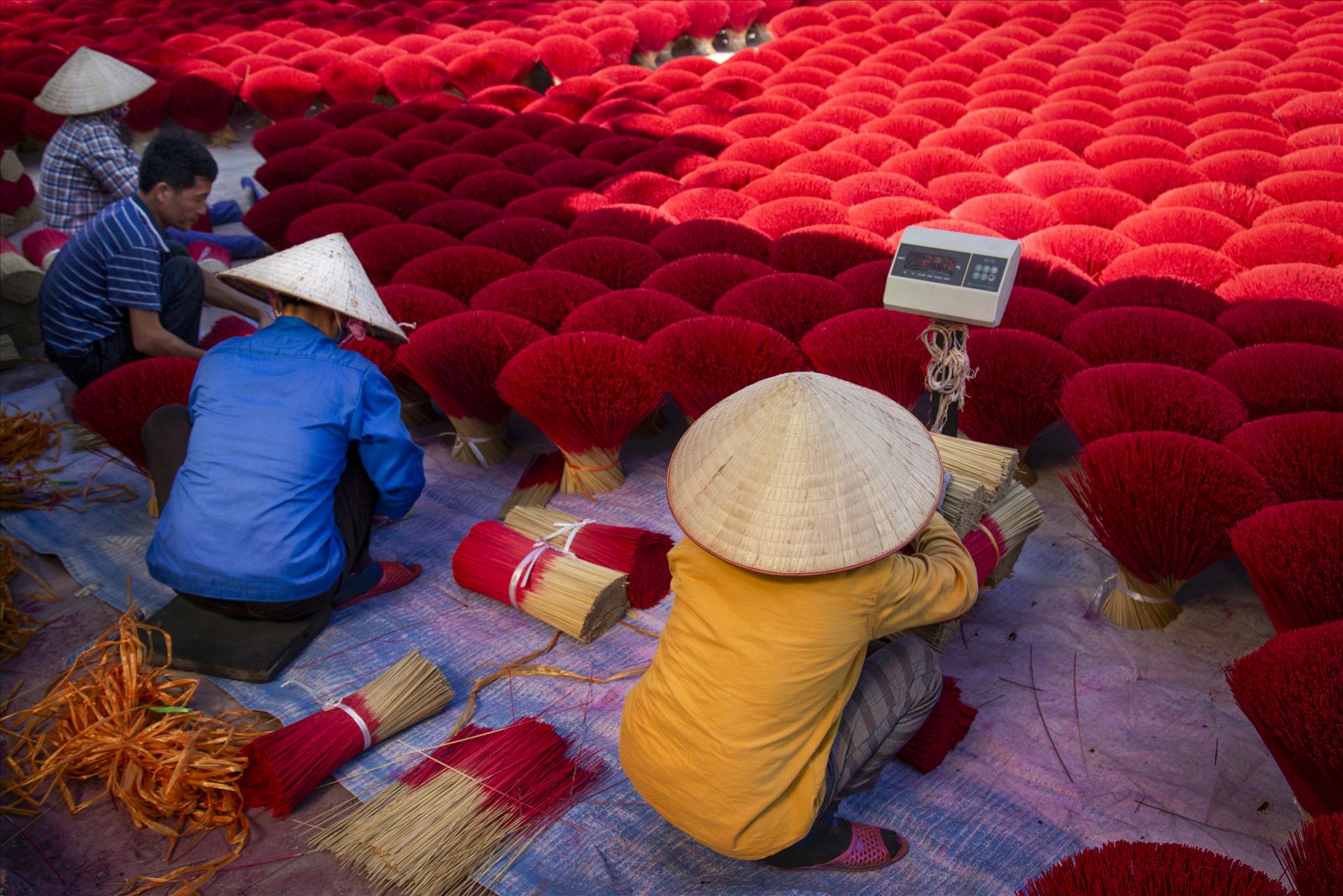
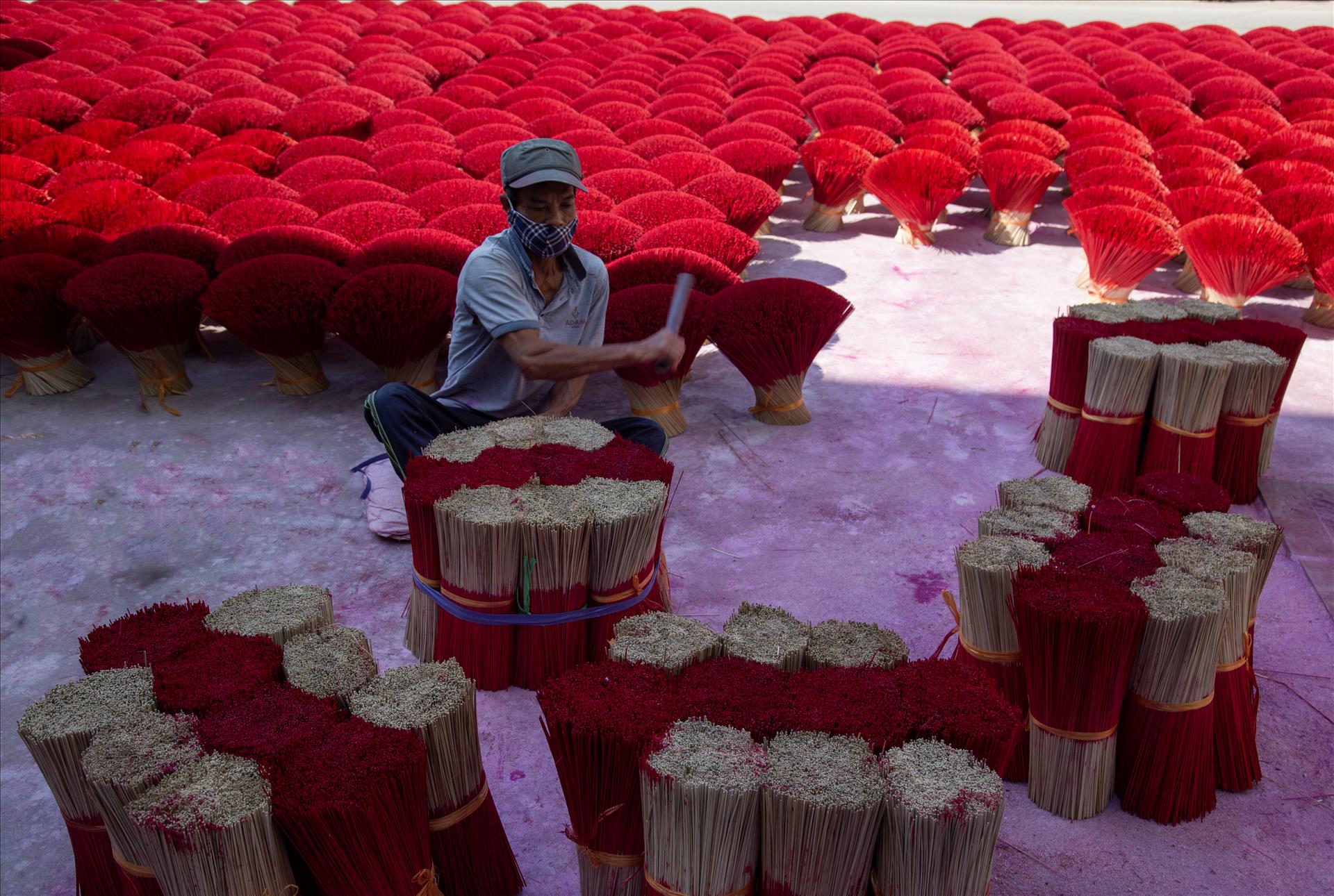
In recent years, Quang Phu Cau has also captured the public’s attention for its striking visual appeal. Beyond producing safe, herbal-based incense, the village’s drying yards and narrow lanes have become vibrant open-air galleries. Bundles of red, yellow, and green incense sticks are carefully arranged into the S-shaped map of Vietnam, the national flag, and other imaginative forms, creating scenes that are at once traditional and contemporary.
Hung, a veteran artisan, recalls that in the past incense was simply laid out to dry across open fields, all in natural hues. Today, he said, color has brought a renewed sense of joy to the craft itself. An increasing number of visitors now come not only to purchase incense or take photographs, but also to learn about the production process and try their hand at certain stages. The emergence of craft-based tourism sites reflects how residents are sharing their heritage through the lens of everyday modern life.
Amid the pace of urbanization, Quang Phu Cau’s incense village stands as a vivid example of how cultural preservation can go hand in hand with economic development. Hanoi’s decision to designate the village as a key craft-tourism destination not only creates new opportunities for the local community but also helps safeguard the shared memories of Tet and spring that remain central to Vietnamese life.
By Nguyen Huu Thong Translated by Nguyen Tuoi