As the Lunar New Year approaches and spring begins, Quan ho singers gather for festivals and invite one another home for intimate, elaborate meals that follow the ancient traditions of the Kinh Bac region. In the world of Quan ho, while song and ritual take center stage, the feast prepared for visiting singers is a unique cultural highlight - a testament to a code of conduct and etiquette preserved through generations.
As the Lunar New Year approaches and spring begins, Quan ho singers gather for festivals and invite one another home for intimate, elaborate meals that follow the ancient traditions of the Kinh Bac region. In the world of Quan ho, while song and ritual take center stage, the feast prepared for visiting singers is a unique cultural highlight - a testament to a code of conduct and etiquette preserved through generations.
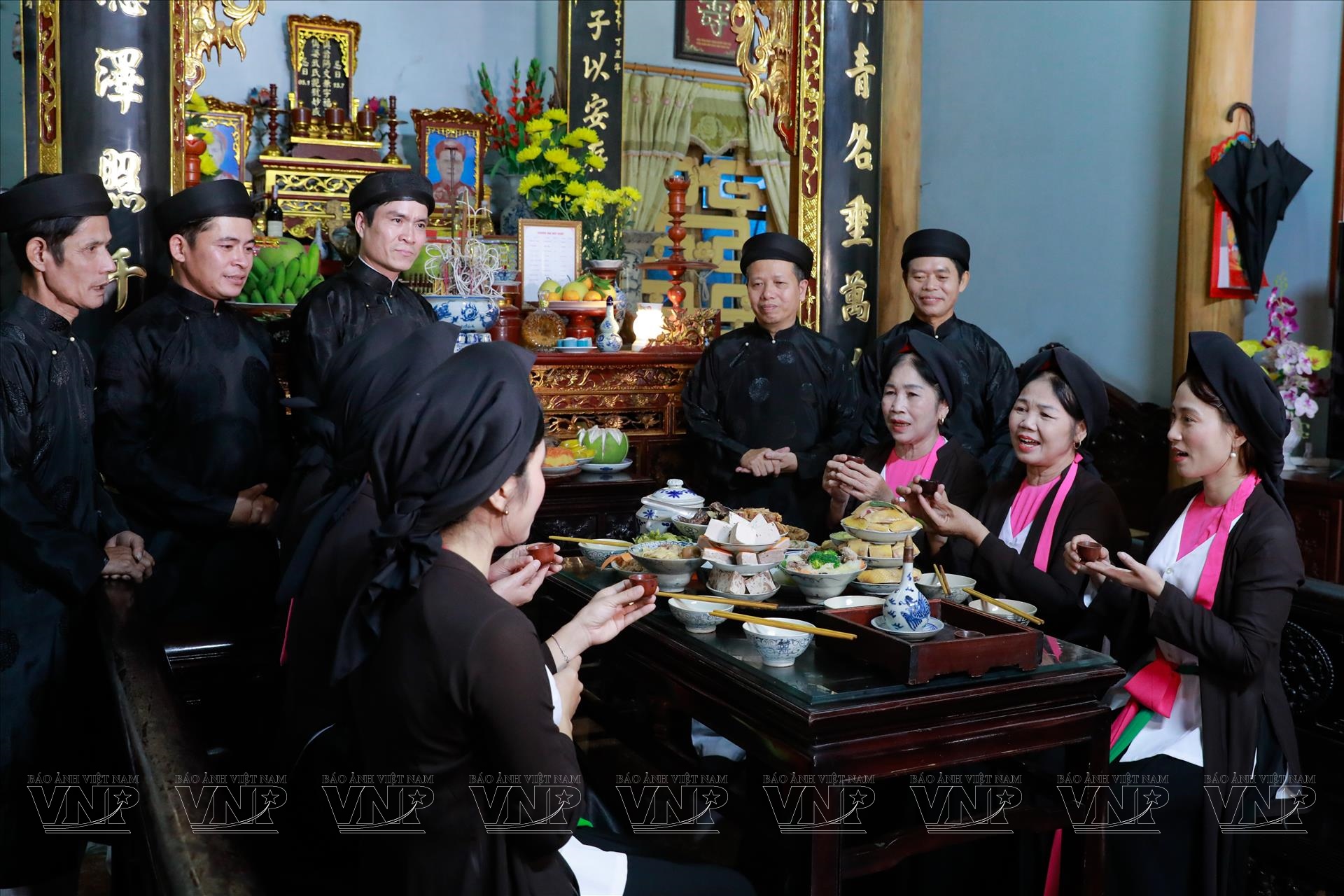
After the early spring singing sessions, Hoai Trung residents welcome their singing partners into their homes. Photo: Viet Cuong/VNP
Hoai Trung (Lien Bao Commune, Bac Ninh Province) is one of the 49 Quan ho villages where families have maintained the traditional "playing" of Quan ho for centuries. A prime example is the Duong family, which has been performing for six generations. Artisans Duong Van Quyen and Nguyen Thi Hap were once the faces of the village’s ancient Quan ho traditions. Today, their son, Duong Duc Thang - Deputy Head of the Hoai Trung Quan ho Club - continues the legacy, working tirelessly to restore traditional performance styles and introduce this Quan ho tradition to the public.
The Duong family in Hoai Trung Village has maintained the tradition of the Quan ho meal for generations. Photo: Viet Cuong/VNP
According to Thang, preparing a truly authentic, ancient-style Quan ho feast is not a task for the impulsive. The elders said that even the chicken used to welcome friends must be raised using a strict three-year process. The roosters are carefully raised, caponized, and then "cage-fattened" to ensure perfect quality, waiting specifically for the Lim Festival to be served to guests. Every lien anh and lien chi (male and female singers) would traditionally raise their own chickens for these feasts, a practice that reflects their hearts, responsibility, and meticulous care.
A Quan ho feast can be arranged in one or three tiers, depending on the family's circumstances. However, four "staple" dishes are mandatory: chicken, gio-cha (Vietnamese pork sausages), stewed pigeon, and boiled pork tongue. Depending on the season, the host may add side dishes such as sautéed pork heart and kidneys or pan-seared meats. Notably, fish is almost always minced into cakes. This serves two purposes: it creates a distinct flavor and discreetly "hides" the ingredients. This is a subtle gesture of Quan ho etiquette - by not showing off expensive fish, the host ensures that if the guest invites them back later but cannot afford luxury ingredients, they will not feel embarrassed.
Following ancient customs, "the salt sits at the head of the tray, and the pickles at the tail," so these two items are always present. Duong Van Quyen once prepared a feast consisting of 19 different dishes - a testament to the incredible effort and respect the people of Hoai Trung hold for their singing partners.
A traditional Quan ho meal prepared by the people of Hoai Trung Village (Lien Bao Commune, Bac Ninh Province) during the spring
festival. Photo: Viet Cuong/VNP
The experience is not limited to the main meal. Quan ho singers also hold a "sub-feast" or "water party" around midnight. This is a tea-and-cake session intended to refresh the spirit for singing sessions that often last until dawn. While each village has its own specialties, the spirit remains the same: offering the very best local delicacies to friends.
Whether during the main feast or the midnight tea, communication and etiquette are paramount. The hosts stand at the four corners of the table - some pouring wine, others serving food - always offering invitations with a gentle, humble demeanor that embodies the philosophy of honoring the guest and the sentimental bond.
The Hoai Trung community continues to preserve and promote the rich heritage of Quan ho culture.
"The Quan ho traditions of our ancestors were elaborate and bound by many rules, but those are the very cultural values that must be preserved," Thang affirms. Today, the Hoai Trung singing community continues to strive to maintain these beautiful customs, ensuring that Quan ho culinary culture continues to flourish./.
By Viet Cuong/VNP
Translated by Hong Hanh