Recalling his childhood, Thach Sung said that when he was a child he usually went to the house of old Mec to learn drumming, playing music and performing Du ke, a traditional art form of singing and dancing of the Khmer people. Old Mec was an expert on performing Du ke dramas and all musical instruments of this ethnic group. Thanks to his aptitude and a great passion for Du ke theatre, he quickly developed a thorough grasp of the skills to sing, dance and act in many difficult Du ke plays.
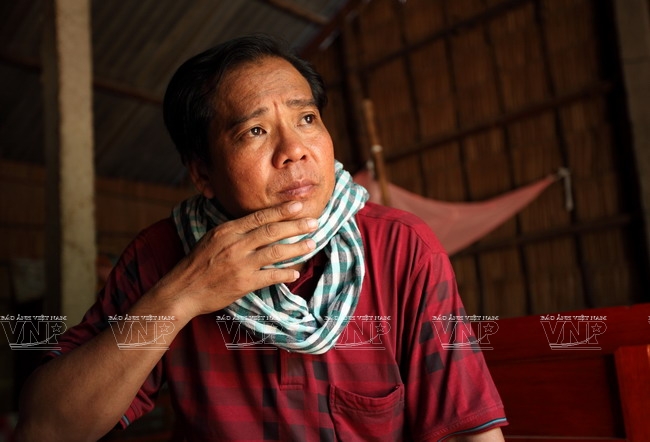
Emeritus Artist Thach Sung, April 2015. Photo: Nguyen Luan/VNP
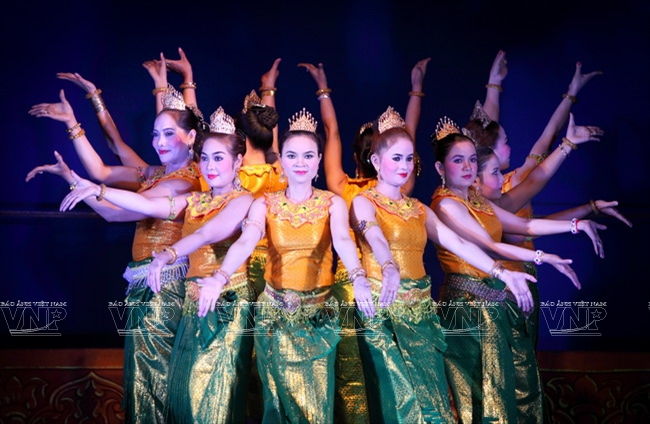
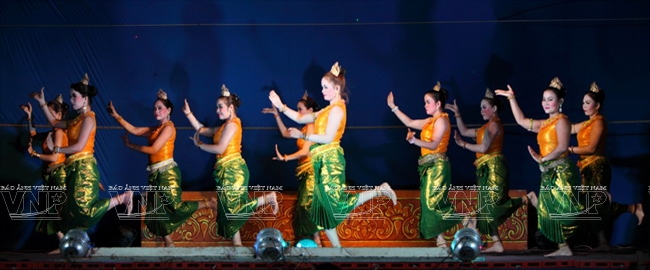
Du Ke pieces staged by Emeritus Artist Thach Sung. Photo: Nguyen Luan/VNP
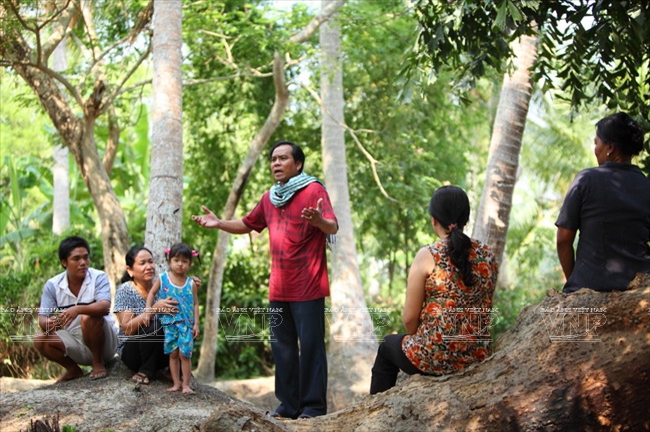 Emeritus Artist Thach Sung performs Du ke to serve the Khmer people in his home town. Photo: Nguyen Luan/VNP Emeritus Artist Thach Sung performs Du ke to serve the Khmer people in his home town. Photo: Nguyen Luan/VNP

Emeritus Artist Thach Sung teaches the art of Du ke
in Tra Vinh Province’s Cultural and Art School. Photo: Nguyen Luan/VNP
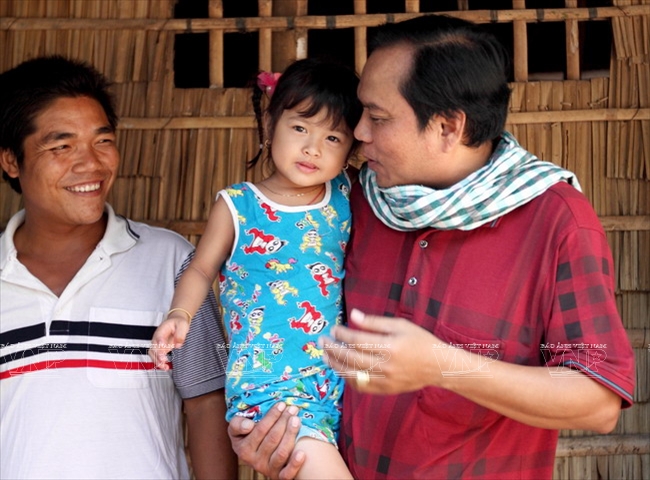
Emeritus Artist Thach Sung is popular among the Khmer community. Photo: Nguyen Luan/VNP |
Emeritus artist Thach Sung was born in 1964 in Duyen Hai District, Tra Vinh Province. He is deputy chief of Anh Binh Binh Art Troupe of Du ke and other folk art forms of the Khmer people in Southern Vietnam. He works as a stage director, a composer and an actor in many Du ke dramas. |
In 1983, he was invited to perform Du ke for Anh Binh Minh, a Khmer art troupe where he accumulated a lot of knowledge about this style of music theatre and learnt from veteran artists to improve his acting ability. Since then he has whole-heartedly devoted his life to the art. In 1985, he and the art troupe performed a Du ke play called “Moi tinh Bopha-Rangxay” (Bopha-Rangxay love affair) at the national professional theatre festival in the city of Quy Nhon, Binh Dinh Province, and won a gold medal.
The potential and possibility for reviving the somewhat dormant art form was seen this year when he and artists of the troupe performed for a total of 120 nights in 11 southern provinces with Khmer populations. They also performed Du ke in foreign countries like Cambodia and Laos. In 2013, he and the troupe participated in a festival held in the Vietnamese Ethnic Groups Culture and Tourism Village in Dong Mo, Son Tay, Hanoi with some Du ke dramas which left a long-lasting impression on the audience.
Besides performing Du ke, Thach Sung has composed several folk songs and staged Du ke plays, including “Princess Chaysoryvong”, “The Legend of Genie Takta” and “The Disastrous Sword” which won high praise from experts and audiences.
For his important contributions made in the last 30 years to preserving and developing Du ke in the cultural and spiritual life of the Khmer people, Thach Sung was given the title of “Emeritus Artist” in 2007. Anh Binh Minh Art Troupe was awarded the title “Labour Hero in the Doi moi period” in 2000.
At present, Thach Sung has opened a class to teach Du ke in Tra Vinh Province’s Cultural and Art School. It is the first and only one in the Southwestern region. “I hope that young generations will follow me and other artists to promote the Khmer theatre,” he said.
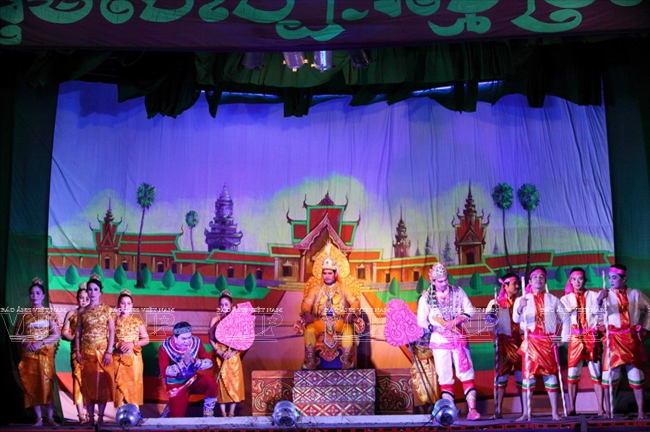
Emeritus Artist Thach Sung acts General Chieu Khun in the “Luoi kiem oan nghiet” drama. Photo: Nguyen Luan/VNP
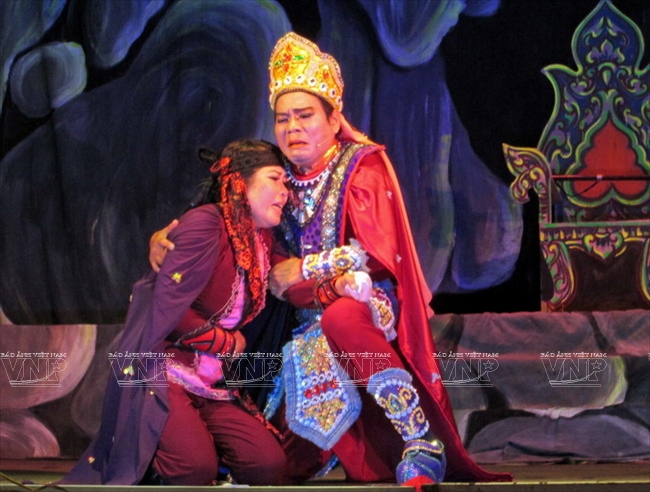
Emeritus Artists of Thach Sung and Thach Thi Ha in a Du Ke play. Photo: File
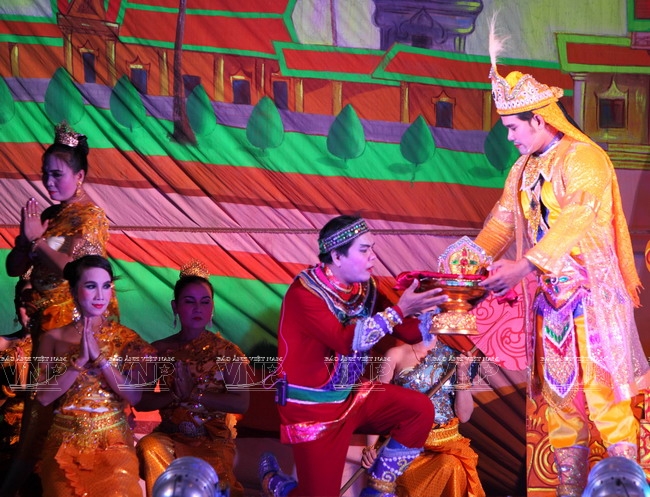
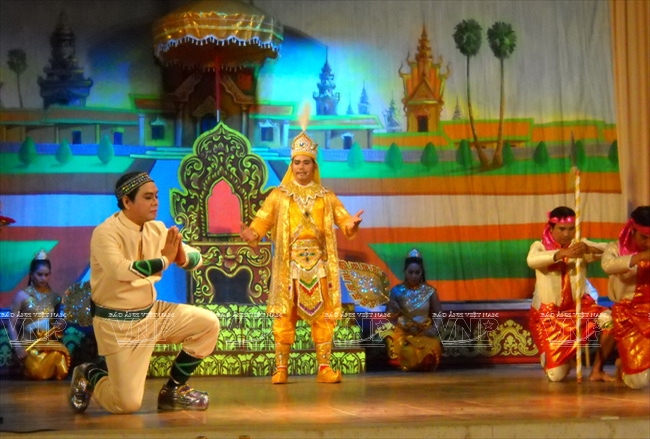
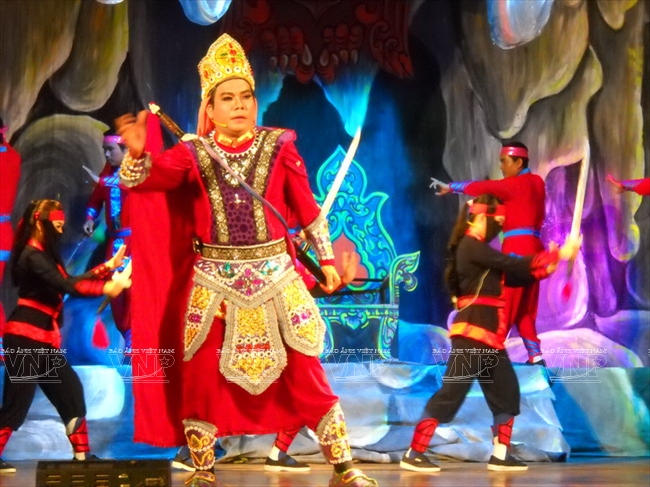
Emeritus Artist Thach Sung immerses himself in performing Du ke dramas on stage. Photo: Nguyen Luan/VNP |
Du ke is a popular form of folk art created by the Khmer in the Southwestern region of Vietnam. All performances are in praise of the good and beautiful things in life and critical of the forces of evil, but always with a happy ending. It is performed on holidays and festivals of Khmer people including Chol Chnam Thmay, Sen Dolta and Ooc-Om-Boc. The theatre art was recognised by the Ministry of Culture and Information as a national theatre art because it has a great advantage in comparison with others, reflecting a cultural interaction that sees one art form influenced by the other even as each retains its distinct characteristics. The art has been listed among the 12 intangible elements of cultural heritage nominated by the Ministry of Culture, Sports and Tourism to UNESCO for the 2012-2016 period.
Story: Son Nghia - Photos: Nguyen Luan &Files