Manh said: “In the past, when people got sick I told them to see the doctor and they said ‘no, I have the wizard.’ When a member of the family got a disease they invited the wizard to their house to make ceremonial offerings. After the ritual, if the sick did not recover from the disease, he/she would stretch out on the deathbed, persistently refusing to see the doctor. So at that time there were a large number of Lung Tao residents dying at home, even because of normal diseases, such as pneumonia.”
It was not until 2005, or one year after Manh came to Lung Tao, that things began to change. She recalled, that year a villager suffered heart failure and a member of his family went to the medical station to inform them. Then he was given emergency aid and transferred to the hospital. Thanks to this aid, he was saved.
After this case, the villagers had a more positive look of the doctor and the medical station. They followed the doctor’s advices, wearing warm clothes in winter to prevent pneumonia and maintaining personal and accommodation hygiene to avoid infection of diseases. Also, they told each other to invite the doctor, instead of the wizard, to their houses when they got sick.
The people’s awareness increased, but the medical station in Lung Tao Commune at that time was extremely poor, even Manh did not have a mobile first-aid kit until the end of 2011. The road in the commune was really a challenge for the medical workers who came from the plains like her. The hamlets were located a hill apart and some places took dozens of kilometers’ walk through the forest to reach. Yet, hearing about a villager falling sick at night, the doctors groped their way through the forest to his/her house. Manh said: “Once the villagers put their trust in us, if we did not come to them when they needed us, our long-standing efforts would have become useless.”
We could see the villagers’ warm affection for the medical workers when we followed Manh to examine Dinh Thi Kia, a 9th grader who is the daughter of Dinh Say phua in Lung Tao Commune.
Effectiveness of the Project 1816
To have a strong shift in Lung Tao Commune today, it is impossible not to mention Project 1816. In 2008, in response to the Party’s policies on sending intellectual cadres to the sparse areas, especially mountainous areas to help the people with economic, social and cultural development and life improvement, the Ministry of Health established Project 1816. The project was aimed at alternately sending professionals from the hospitals at higher levels to the hospitals at lower levels to improve the quality of healthcare, train on-site, transfer technology and enhance the professional skills of the local medical workers. The project has proven remarkably effective.
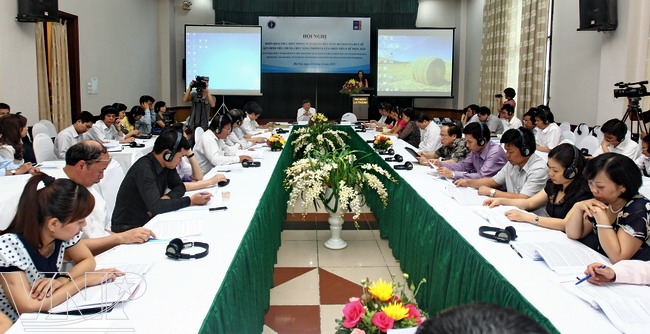
The Ministry of Health implements the project “the hamlet midwife” in mountainous provinces.
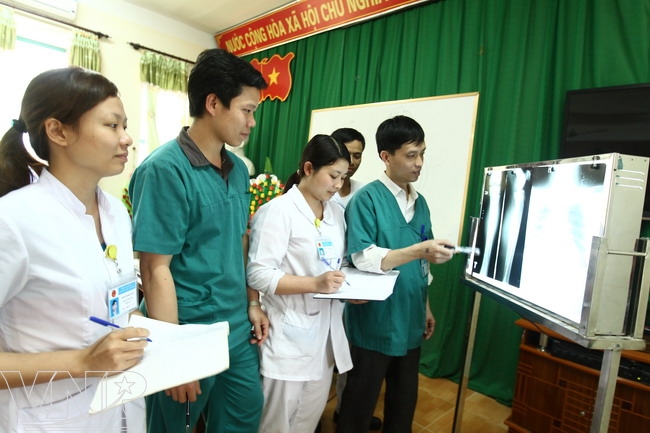
A training course for physicians, nurses and doctors is held at Yen Minh General Hospital.
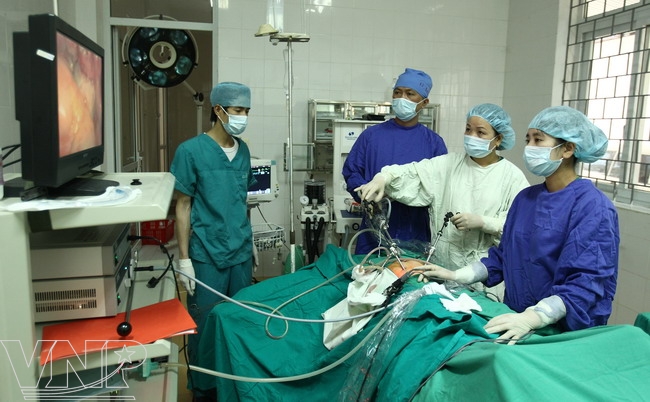
Doctor Nguyen Thi Ngoan (white shirt), Deputy Director of Yen Minh General Hospital,
performs endoscopic surgery of uterus cysts removal on a Dao woman.
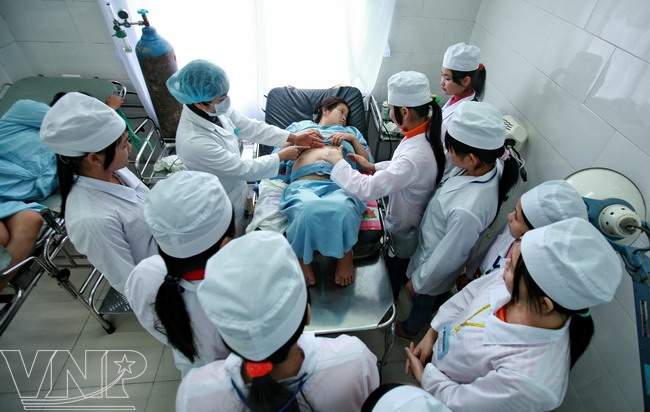
A training course for hamlet midwives at Ha Giang General Hospital.
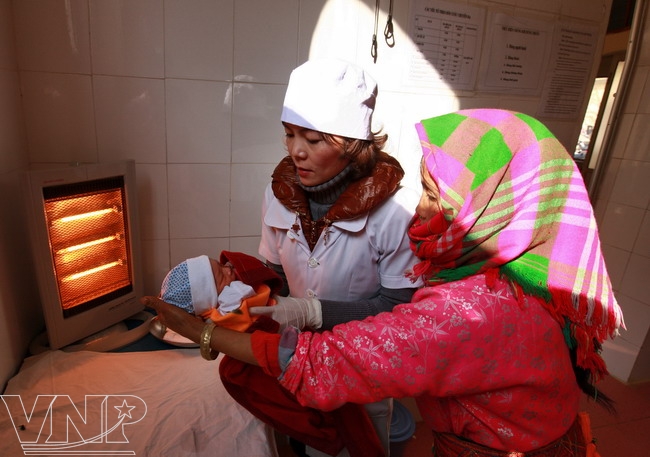
A doctor from the medical centre of Yen Minh District instructs a Mong woman on the techniques of taking care of a newborn baby.
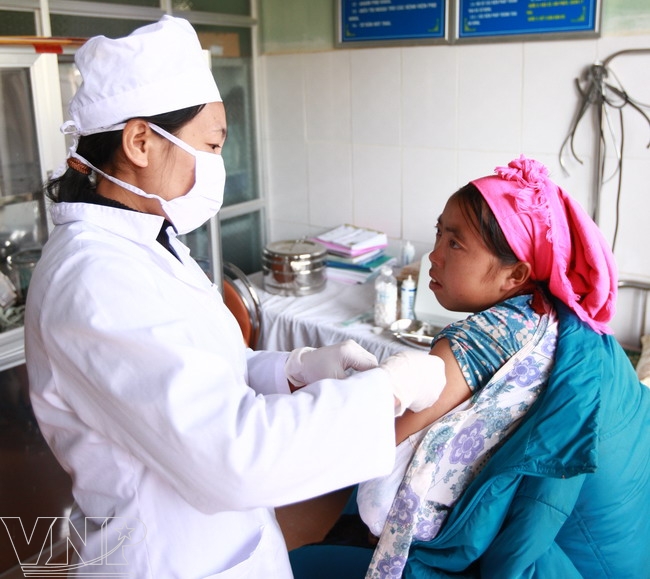
Regularly injecting a Mong woman with contraceptive drug in Lung Cu Commune, Dong Van District, Ha Giang Province.
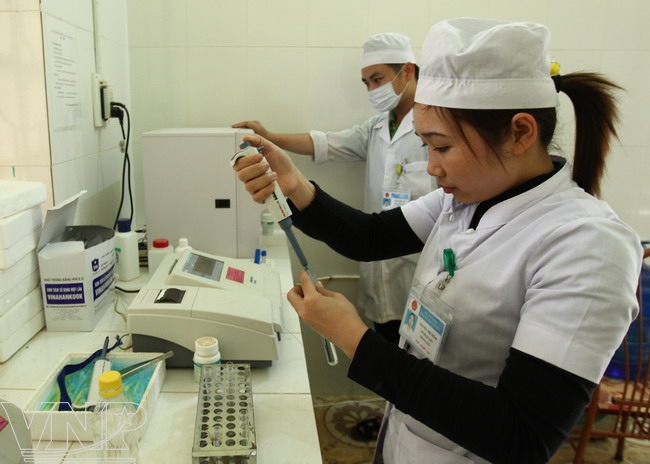
Blood analysis at the satellite clinic of the medical centre of Yen Minh District, Ha Giang Province.
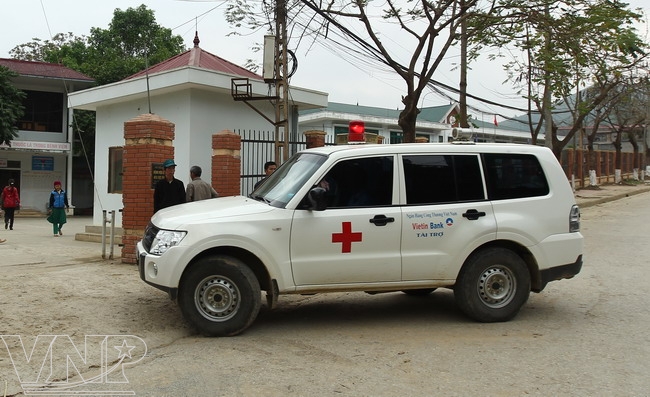
Thanks to ambulances of Yen Minh General Hospital, patients in remote hamlets are now given timely first aid.
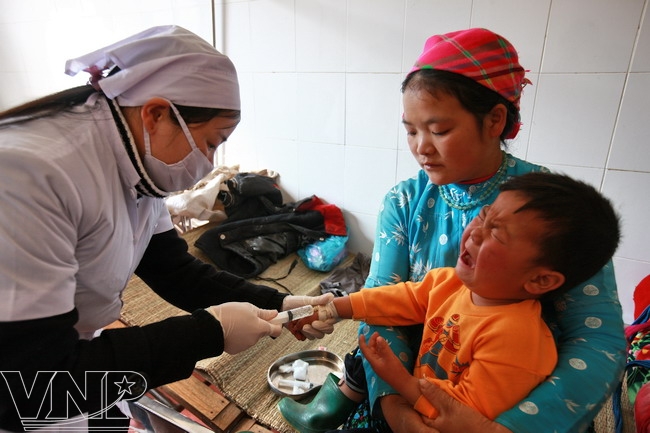
A clinic of Yen Minh General Hospital is established in Mau Due Commune, Yen Minh District.
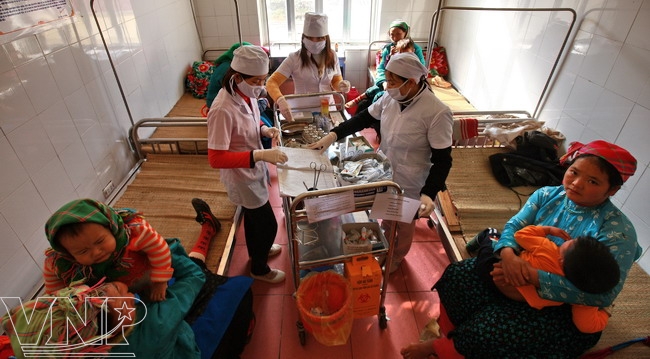
A treatment room for children in Yen Minh General Hospital in Ha Giang Province. |
The medical station in Lung Tao Commune, which experienced very difficult days, is now quite different. Due to the health support projects in the poor commune, this station has become a spacious facility with two floors. It has been equipped with six beds and eight offices. The contingent of staff consists of six people including one general doctor, one general nurse, a health care worker, a sister of charity and two cadres who are studying in Thai Nguyen General Hospital. There are 20 nurses in 16 hamlets, thus each hamlet has a permanent nurse. These nurses also work as the hamlet midwives. In addition, the whole commune has five midwives who are local women and have been trained in obstetrics for 18 months. So, the medical work in Lung Tao Commune has been ensured and much improved.
|
Some results of the Project 1816 (2008-2010 period):
- 72 hospitals have been involved in alternately sending their staff on missions.
- 3,665 medical workers have been sent alternately on missions.
- 2,504 medical techniques have been transferred.
- 1,453 training courses on professional skill improvement have been opened.
- 40,531 medical workers at lower levels have been trained to improve their professional skills.
- 802,486 patients have been given medical check-ups and treatment.
- 11,697 cases have been treated with surgery.
|
Now the hamlet residents do not need to go to Hanoi, which is both far and expensive, for medical treatment, because it takes them only one hour’s motorbike drive to reach Yen Minh District General Hospital. This is the largest medical centre in four mountainous districts of Ha Giang Province, including Dong Van, Meo Vac, Yen Minh and Quan Ba.
On the way back, we visited Yen Minh General Hospital. Dr. Nguyen Thi Ngoan, deputy director of the hospital said that she and other doctors of the hospital had successfully performed an operation on a patient with stomach bleeding, using an endoscopic technique. This new technique has been used in the hospital since late 2011.
She also said that previously the hospital was only able to apply the traditional surgical technique, leaving a long incision that takes a long time to recover from and is easy to cause dangerous complications after surgery, especially for the people living in the mountainous areas with poor sanitation due to obsolete practices. Since receiving the endoscopic surgery technique transferred by the hospital at the higher level, Yen Minh General Hospital has performed more than 160 operations. With this modern surgical technique the hospital has received an increasing number of patients from other districts, such as Quan Ba, Meo Vac and Dong Van. In the past the patients who needed surgery had to go to the provincial hospital or to the hospital in Hanoi. Now Yen Minh General Hospital can perform almost all endoscopic surgery, even in some difficult cases, such as appendectomy, cholecystectomy, hysterectomy and ovarian cysts removal.
Talking about Project 1816, Dr. Luong Dinh Cham, deputy director of Yen Minh General Hospital said that delegations of excellent specialized doctors from the large hospitals and central hospitals often come to the district hospital to give medical check-ups and treatment for the local people. Thanks to this project, every year the doctors of Yen Minh Hospital are trained in the central hospitals to improve their professional skills and meet the requirements of the new techniques applied in the hospital. The hospital always takes the lead and is active in training the medical workers in the hamlets. All staffs of 15 medical stations in the commune have been trained at the district general hospital to improve their skills.
Doctor Cham confided: “The hospital has attached importance to training examination and diagnosis skills and some necessary skills for the doctors in the hamlets because the examinations and treatment at this level are very important, especially with the conditions of difficult transport in the mountainous areas. If the medical workers in the commune and hamlets have good professional skills, they can deal with urgent cases while waiting for the ambulance of the district hospital to take the patients to the hospital at higher level for treatment.”
Although we stayed in Lung Tao Commune for only several days, we really saw the values and meaning of the medical work in the mountainous areas while we followed the doctors to the hamlets to give medical checkups and treatment for the local people and witnessed the work of the doctors in Yen Minh General Hospital. The programme of the State and the Ministry of Health on providing the medial facilities in the mountainous areas with the effective and timely support from the large hospitals at higher levels is practical to help improve healthcare for the local people and reduce the burden of the hospitals at higher levels. This success is not only of social significance but also shows the great humanity of the health sector in Vietnam.
Story: Thao Vy - Photo: Hoang Ha