TOANPHAT Irradiation Plant (TPI) has become the first irradiation facility in Vietnam approved by the US Animal and Plant Health Inspection Service (APHIS) to operate both Gamma and X-ray irradiation technologies for the phytosanitary treatment of fresh fruit exports to the US.
The milestone enhances the TPI's treatment capacity while strengthening Vietnam's post-harvest infrastructure as demand for Vietnamese fruit in the US continues to grow.
APHIS has officially approved the use of X-ray irradiation technology at TPI in Phu An Thanh Industrial Park, Tay Ninh Province, under the phytosanitary treatment program for fresh fruit exported to the US. The facility had previously been approved by APHIS to conduct phytosanitary treatment using Gamma irradiation technology with a Cobalt-60 source.
APHIS (USDA) officially approves the use of X-ray irradiation technology at Toan Phat Irradiation Plant.
The approval to operate both technologies means more than the addition of another treatment line, but marks a significant enhancement to Vietnam's post-harvest facilities. The dual-technology capability enables exporters to select the most suitable treatment method, optimize processing capacity and maintain operations even during peak seasons. This flexibility helps reduce cold-storage costs, preserve fruit quality and improve the competitiveness of Vietnamese exporters.
For fresh fruits including pomelo, mango, dragon fruit, longan, lychee, rambutan and star apple, irradiation is a mandatory phytosanitary requirement for access to the US. Consequently, the treatment capacity of irradiation facilities has a direct impact on delivery schedules and exporters' ability to fulfill orders.
According to the Vietnam Fruit and Vegetable Association, Vietnam's fruit and vegetable exports exceeded USD 8.5 billion in 2025, the highest so far. Exports to the US alone reached approximately USD 547 million, up over 50% year-on-year.
Statistics from the US International Trade Commission (USITC) show that in 2025 Vietnam accounted for nearly 1.5% of the US s total imports of fruits, vegetables and processed horticultural products, indicating substantial room for further growth in this market. At the same time, these figures highlight the need for Vietnam to further strengthen post-harvest facilities to meet increasing market demand.
 APHIS phytosanitary officers conduct fresh fruit inspection procedures at Toan Phat Irradiation Plant.
To obtain APHIS approval for the use of X-ray irradiation technology, TPI underwent a comprehensive evaluation covering equipment, operating procedures, dose control, consignment identification, traceability and security measures, as well as other technical requirements under the US pre-export phytosanitary treatment program.
The simultaneous operation of Gamma and X-ray technologies allows the company to select the most appropriate treatment option for each product type, packaging configurations and production plan. When one system undergoes maintenance or demand increases sharply, the other system still operates, reducing the risk of shipment delays during peak export seasons.
However, the addition of X-ray technology does not mean that all products or packaging configurations can automatically switch between Gamma irradiation using a Cobalt-60 source and X-ray irradiation. Each treatment configuration must continue to comply fully with the technical requirements, irradiation doses and control procedures approved by the competent authorities.
In 2025, TPI treated nearly 5,670 tons of fruit exported to the U S using Gamma irradiation technology with a Cobalt-60 source. Once the X-ray system is officially commissioned, the facility's treatment capacity is expected to nearly double, significantly expanding its ability to handle and process export consignments, particularly during peak export periods.
APHIS experts evaluate the X-ray irradiation system at Toan Phat Irradiation Plant.
Becoming the first facility in Vietnam approved by APHIS to operate Gamma and X-ray technologies marks an important step forward not only for Toan Phat Irradiation Plant but also for Vietnam's fruit and vegetable industry. It represents an important addition to Vietnam's post-harvest facilities and further strengthens the country's capacity to support growing fresh produce exports.
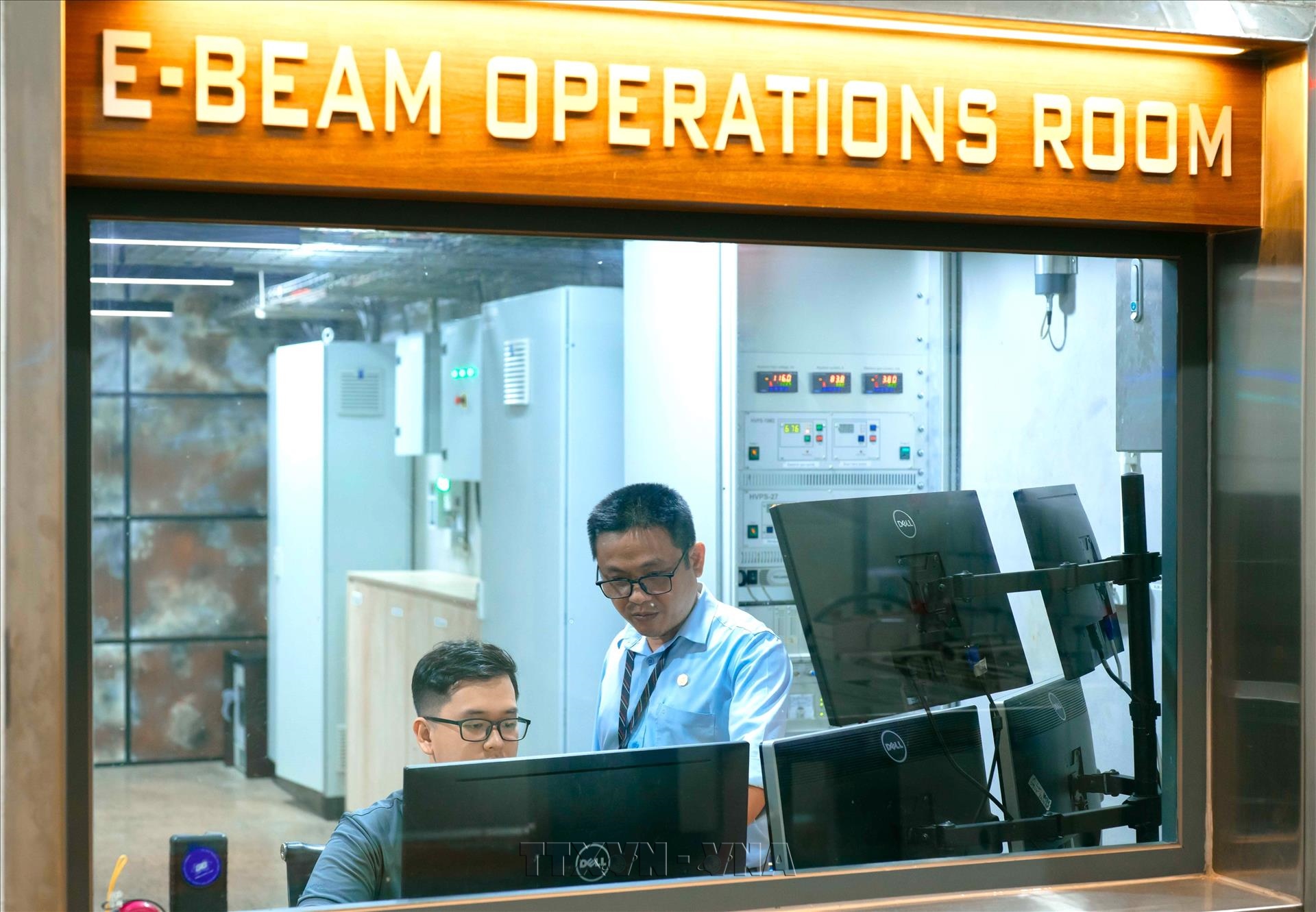
The operation of X-ray irradiation technology will help Toan Phat Irradiation Factory double its fresh fruit irradiation capacity. Photo: VNA
As export competitiveness increasingly depends on quality, speed and compliance with technical requirements, expanding internationally approved irradiation capacity will provide a stronger platform for Vietnamese fresh fruit to increase its market share in premium global markets.